Topkapi Palace
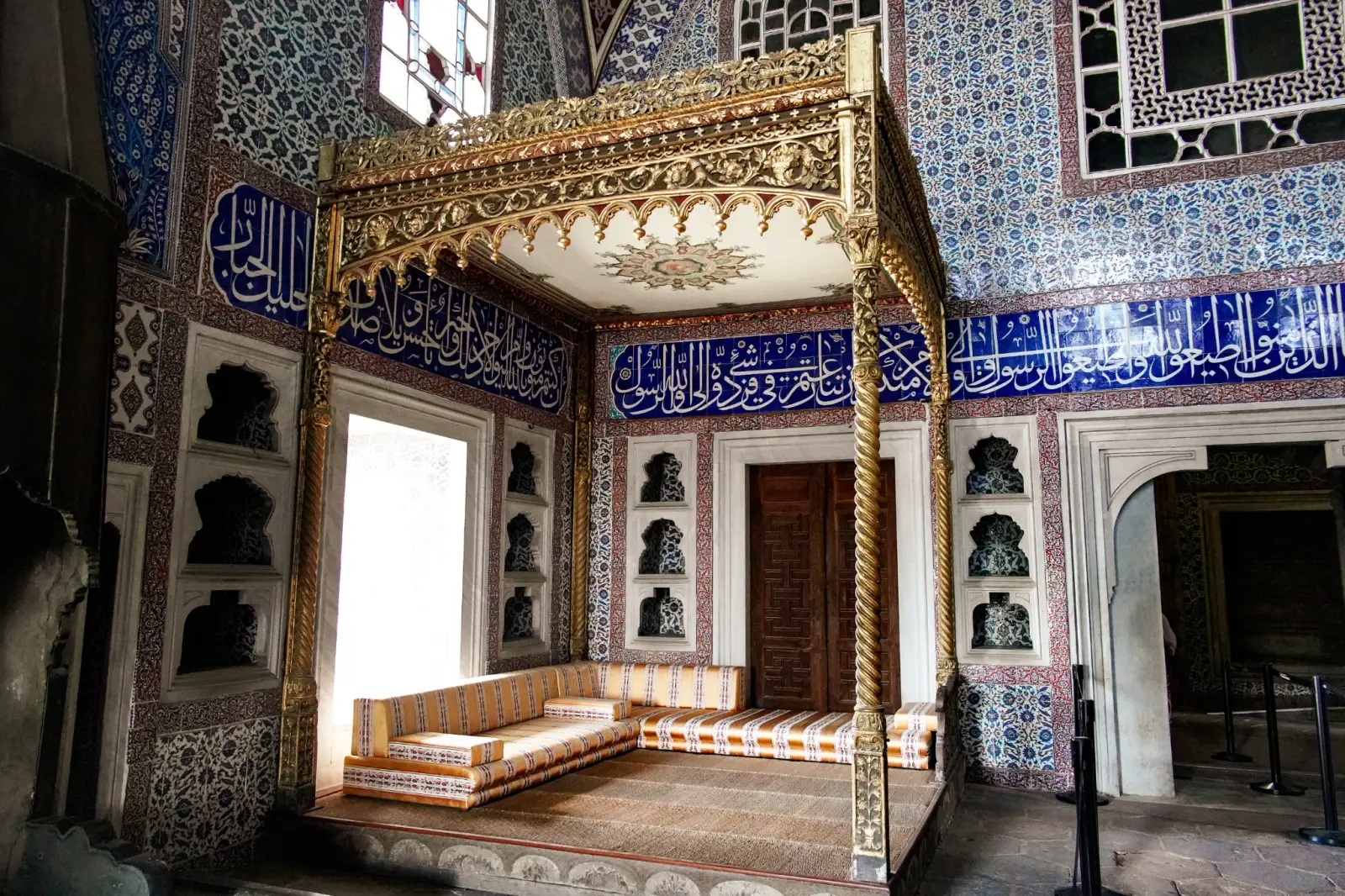
The Privy Chamber of Murad III: İznik tiles, a canopied seat and calligraphic bands — the finest classical interior in the Harem.

The Imperial Harem of Topkapi Palace

Step inside the private world of the Ottoman dynasty and discover one of the most fascinating parts of Topkapi Palace.

The Imperial Harem was home to the sultan, the Queen Mother, imperial consorts, princes, princesses and the attendants responsible for the daily life of the royal household. More than a private residence, it was a carefully organised institution shaped by family life, education, ceremony and strict palace hierarchy.

Built and expanded over several centuries, the Harem consists of interconnected apartments, courtyards, baths, kitchens, passageways and ceremonial rooms. Its architecture reveals both the privacy of imperial life and the changing artistic tastes of the Ottoman court.

Today, visitors can walk through many of these historic spaces and experience a side of Topkapi Palace that cannot be understood through its public courtyards and state rooms alone.

Explore the Harem

What Was the Imperial Harem?

The word harem refers to a private or protected space. Within the Ottoman palace, it described the residential quarters reserved for the sultan’s family and the members of the imperial household who served them.

The Harem was not simply a place of seclusion. It functioned as a royal residence, an educational environment and a highly regulated household with its own administration, traditions and daily routines.

Access was strictly controlled. Residents lived within a network of apartments and shared spaces arranged according to rank and responsibility. Doors, corridors, courtyards and guarded entrances created clear boundaries between different parts of the complex.

At the centre of this structure stood the Valide Sultan, or Queen Mother, who held the highest position in the Harem after the sultan.
A Palace Within the Palace

The Harem was gradually developed at Topkapi Palace from the sixteenth century onward and continued to change under successive sultans.

Rather than being planned and constructed all at once, it grew through the addition of new rooms, apartments and courtyards. This explains its complex layout, in which narrow passages suddenly open into decorated chambers, small courtyards or private terraces.

Different architectural periods can be seen throughout the complex. Classical Ottoman tiles and carved wooden doors appear alongside later Baroque and Rococo decoration, showing how the Harem was adapted to new lifestyles and artistic fashions.

In this sense, the Harem is not one building but a palace within the palace.

Who Lived in the Harem?

The population and organisation of the Harem changed over the centuries, but its principal residents and officials included:

  • The sultan
  • The Valide Sultan
  • The sultan’s consorts
  • Princes and princesses
  • Female attendants and trainees
  • The Chief Black Eunuch and other eunuch officials
  • Servants assigned to kitchens, baths, laundry rooms and household duties

Each group occupied different parts of the complex. The size, position and decoration of their rooms reflected their place within the imperial household.

The Valide Sultan

The Valide Sultan was the mother of the reigning sultan and the most senior woman in the palace. She supervised the organisation of the Harem, managed a large household and could exercise considerable influence through her access to the sultan and members of the dynasty.

Her apartments were therefore among the largest and most richly decorated residential spaces in the Harem.

Imperial Consorts

The status of the sultan’s consorts depended on their position within the dynasty and whether they had given birth to an imperial child. Senior consorts received private rooms or apartments and were supported by their own attendants.

Their lives were regulated by palace ceremony, household responsibilities and the wider interests of the dynasty.

Princes and Princesses

Ottoman princes and princesses spent part of their lives within the Harem. They were raised under close supervision and received an education appropriate to their position.

Princes studied subjects such as religion, language, literature, history and court protocol. Princesses also received extensive education and later often married prominent members of the Ottoman administrative elite.

Female Attendants

Many female attendants entered the palace through the Ottoman system of enslavement. This historical reality was part of the social and political structure of the period.

Within the palace, attendants received training in areas such as language, religion, court etiquette, music, embroidery and household administration. They progressed through a clearly defined hierarchy according to experience, responsibility and their role within the imperial household.

Many were eventually freed and left the palace through arranged marriages, often to members of the Ottoman administrative or military establishment.

The Black Eunuchs

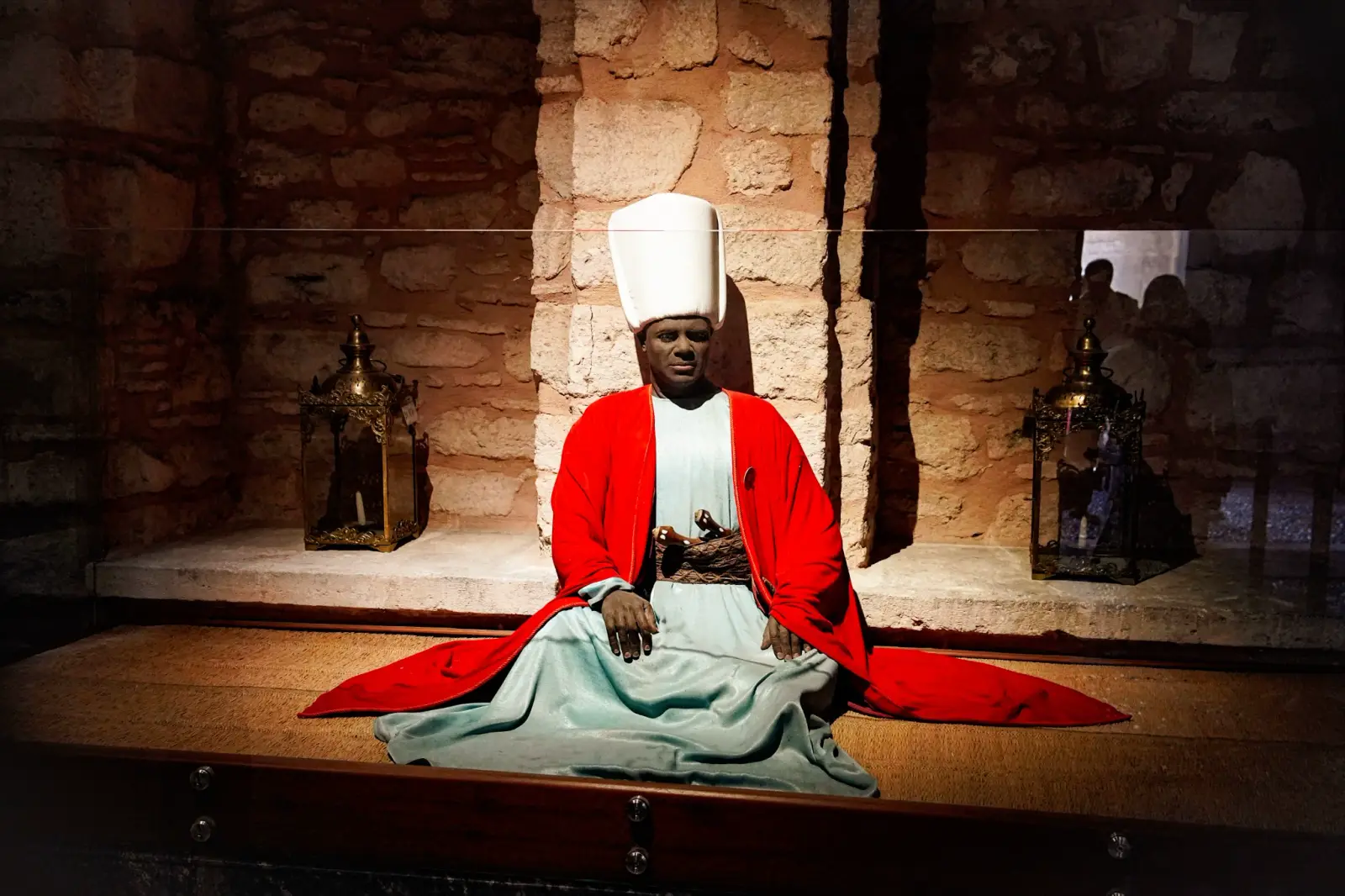
The Black Eunuchs guarded the entrances to the Harem and managed communication between its residents and the rest of the palace. They also performed important administrative and ceremonial duties.

The most senior official was the Chief Black Eunuch, known as the Darüssaade Ağası. His position gave him direct access to the sultan and responsibility for important religious and charitable foundations connected with the imperial household.

The eunuchs themselves were also part of the historical system of slavery, and their quarters formed the controlled entrance between the public palace and the private Harem.

Life Inside the Harem

Daily life in the Harem followed an organised rhythm shaped by education, work, worship, ceremony and household service.

Residents did not all share the same experience. Rank determined where a person lived, what duties they performed, how they dressed and which parts of the complex they could enter.

The Harem contained the facilities required for a large royal household, including:

  • Residential apartments and dormitories
  • Kitchens and food-storage areas
  • Baths and washing facilities
  • Laundry rooms
  • Prayer spaces
  • Classrooms and training areas
  • Courtyards used for light, air and recreation
  • Ceremonial halls for dynastic occasions

Education formed an important part of palace life. Attendants were trained not only for domestic service but also in the customs, discipline and artistic culture of the Ottoman court.

Special occasions such as births, weddings, religious celebrations and the accession of a new sultan brought their own ceremonies and changed the normal routine of the household.

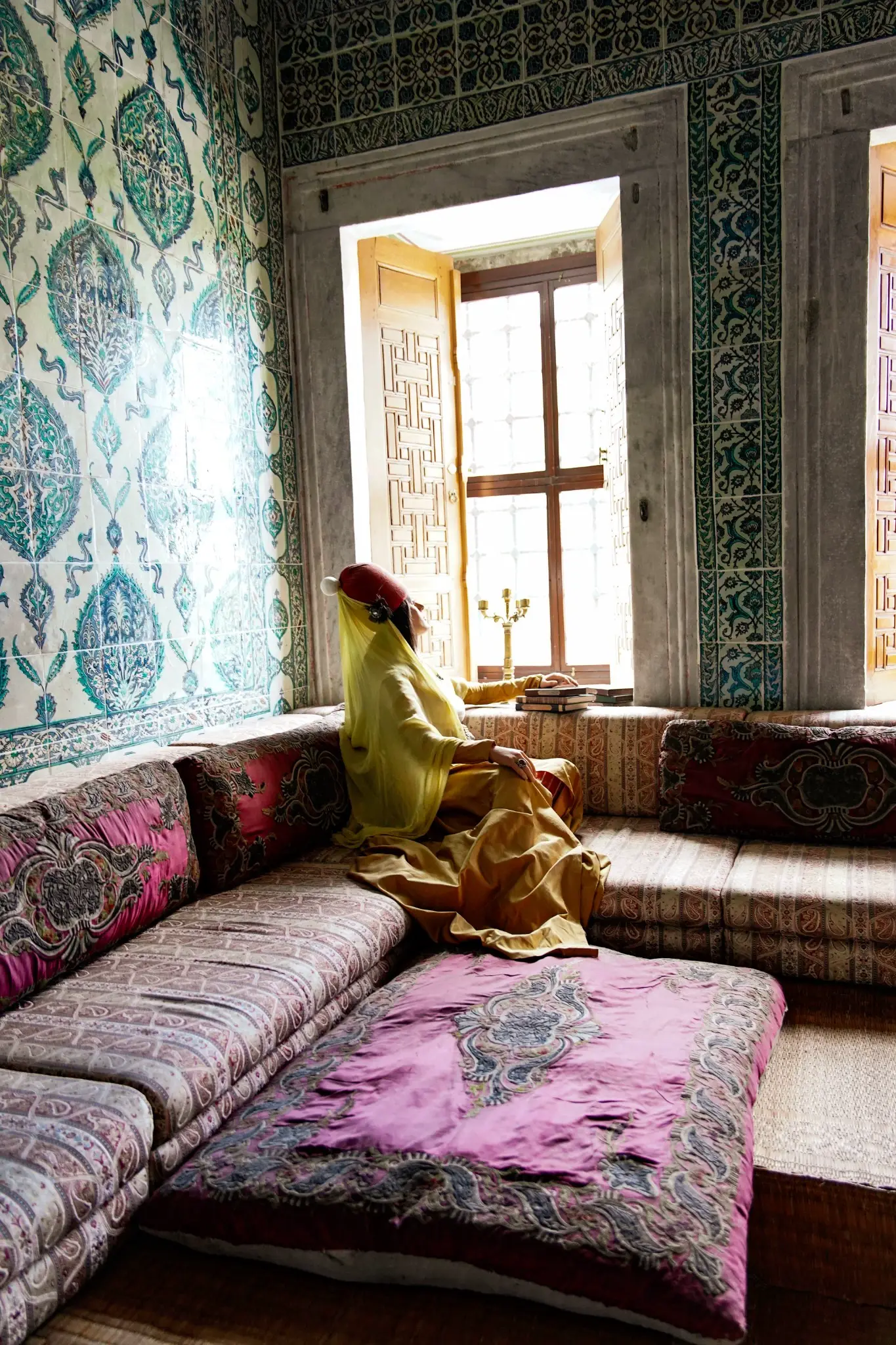
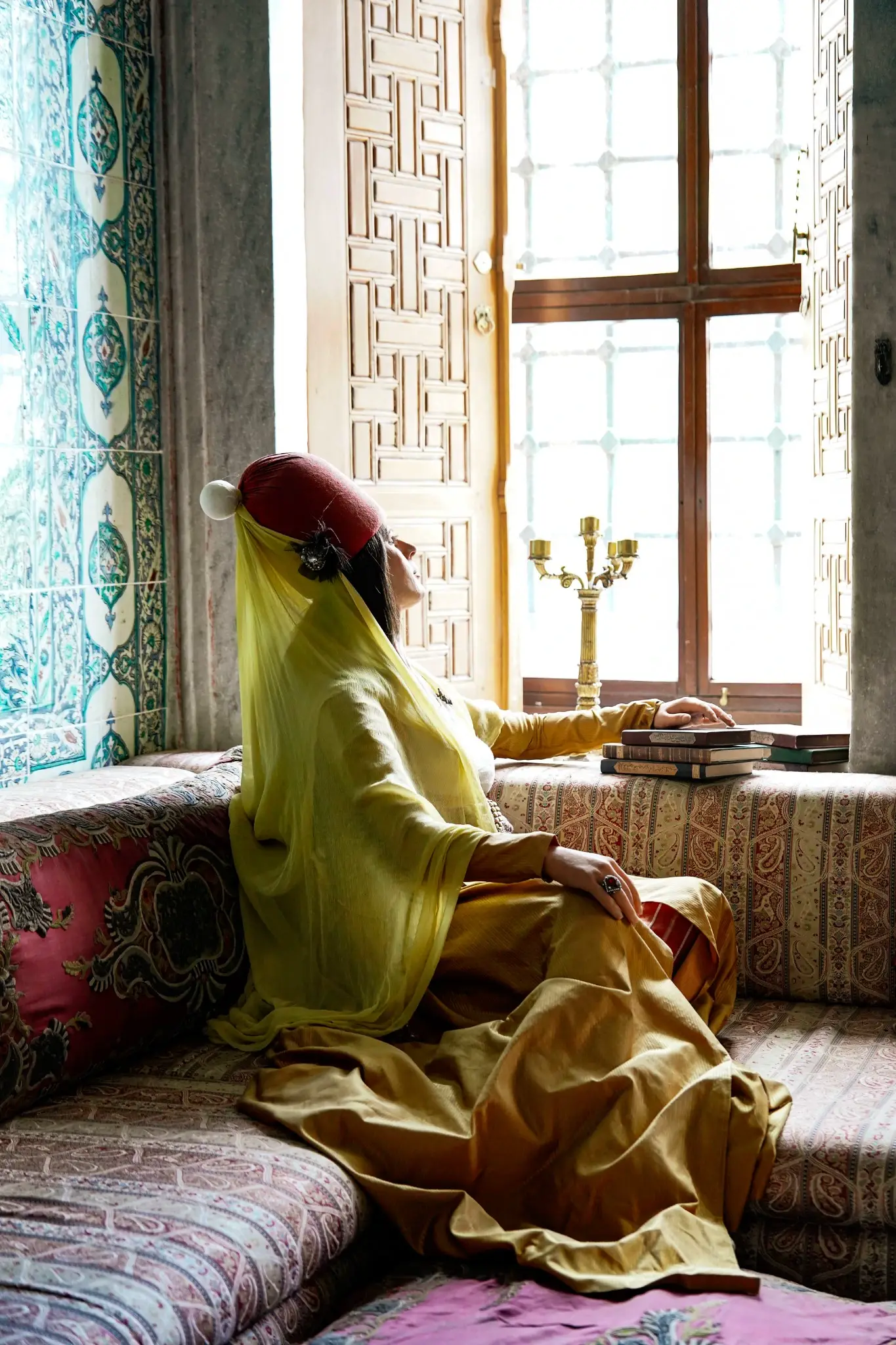
A costumed figure reading at a Harem window, calligraphic panels on the wall behind.
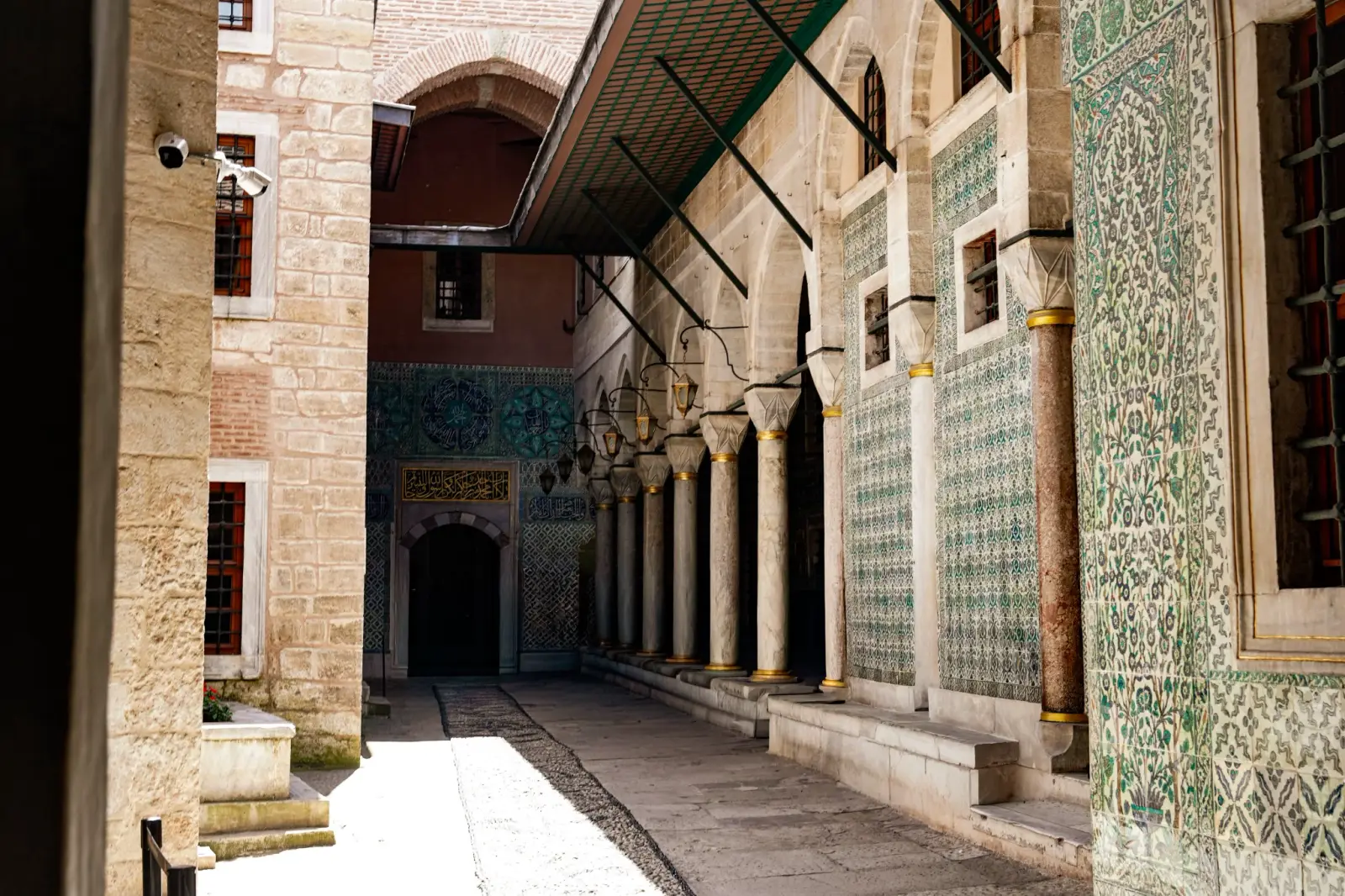
The Courtyard of the Black Eunuchs: a narrow tiled colonnade guarding the entrance to the Harem.

Architecture, Privacy and Hierarchy

The design of the Harem reflects the importance of privacy and controlled movement.

Its rooms are arranged around small courtyards and linked by guarded doors, covered passages and narrow corridors. Windows, screens and upper-level openings allowed light and ventilation while limiting direct views into private spaces.

Architecture also communicated rank. Service areas are generally practical and restrained, while the apartments of the Valide Sultan, the sultan and senior members of the dynasty contain elaborate tiles, inscriptions, stained-glass windows, carved woodwork and gilded decoration.

The result is a complex in which domestic life, ceremony, security and imperial status are expressed through the organisation of space.

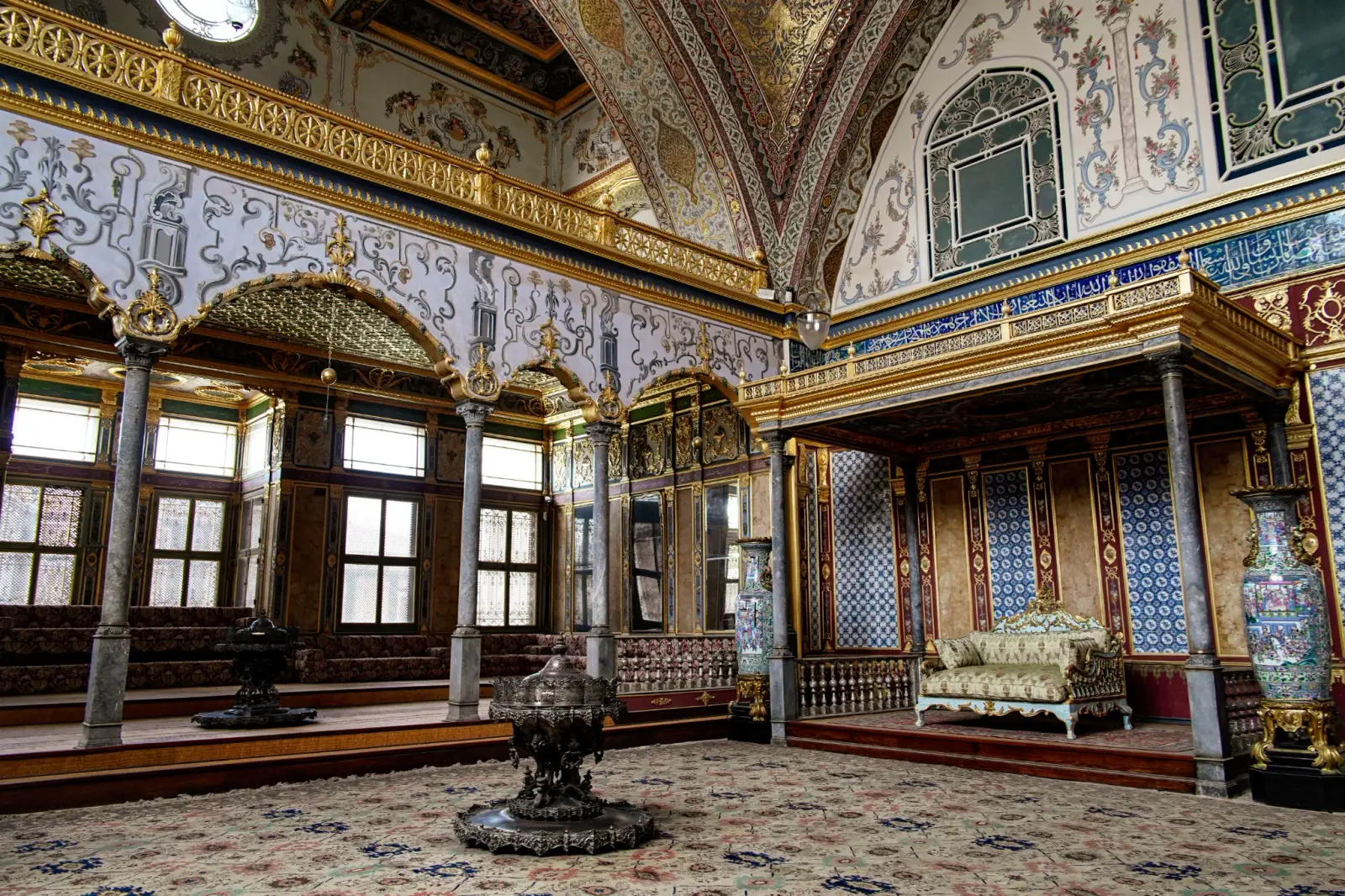
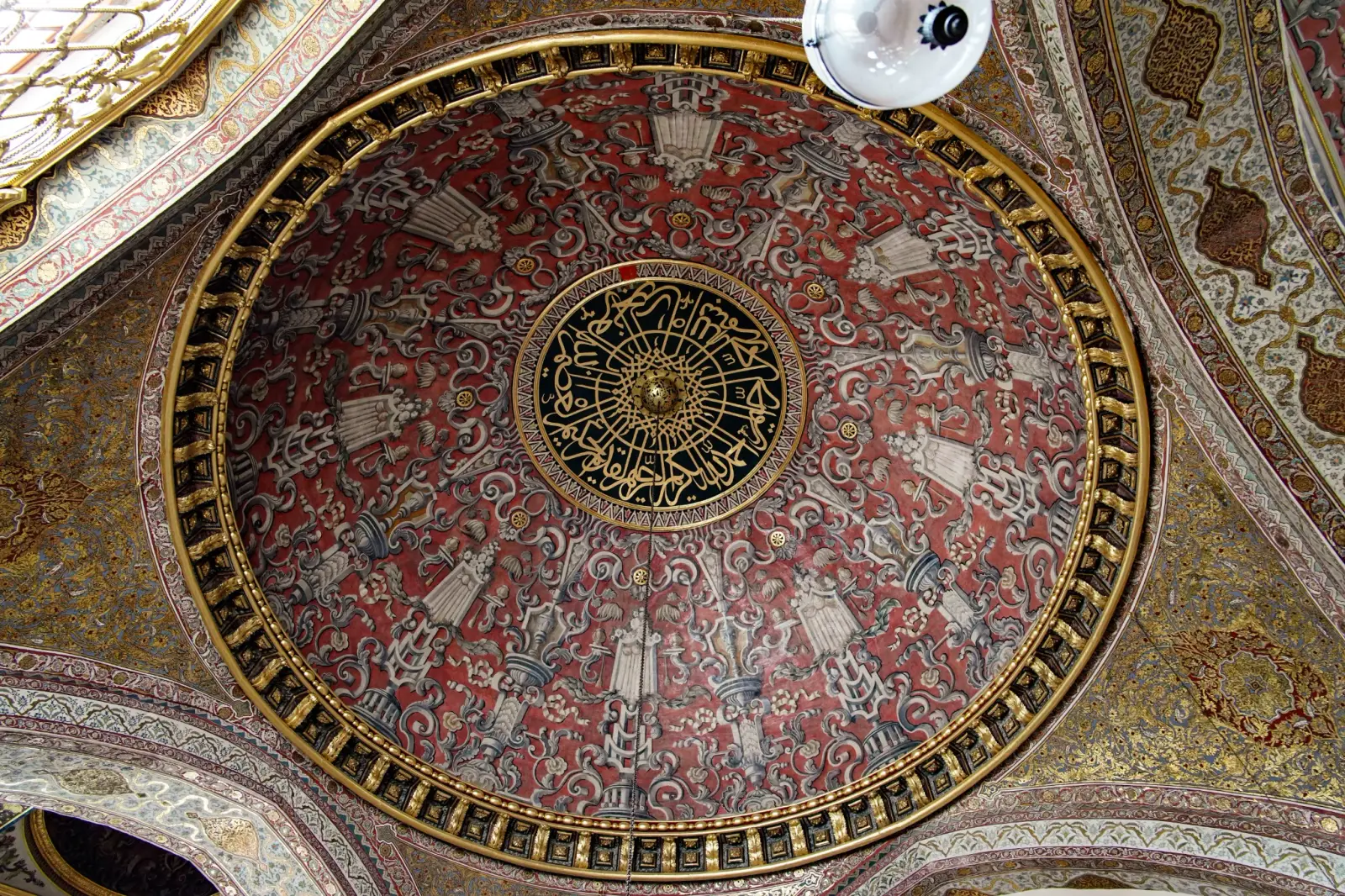
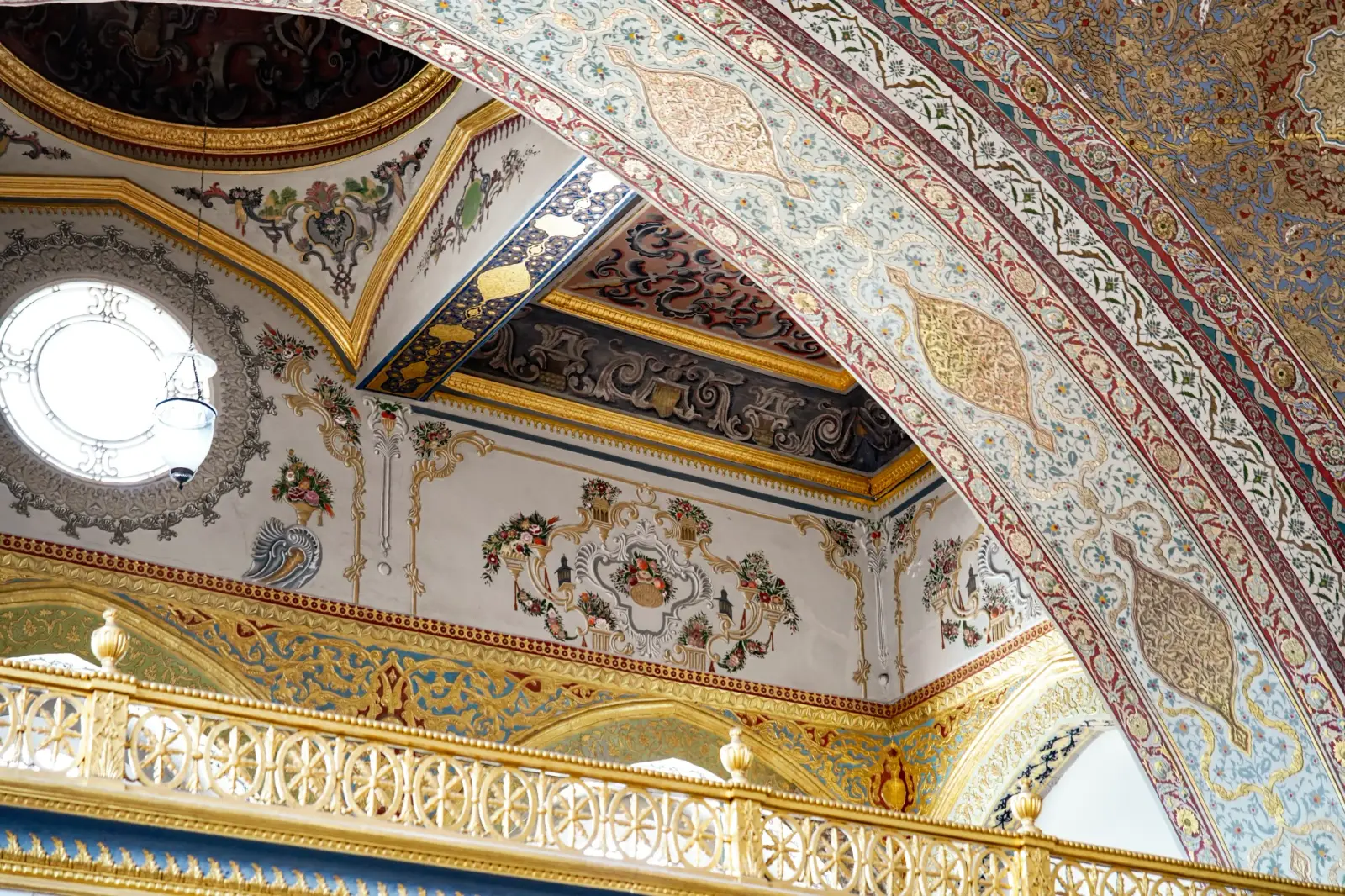
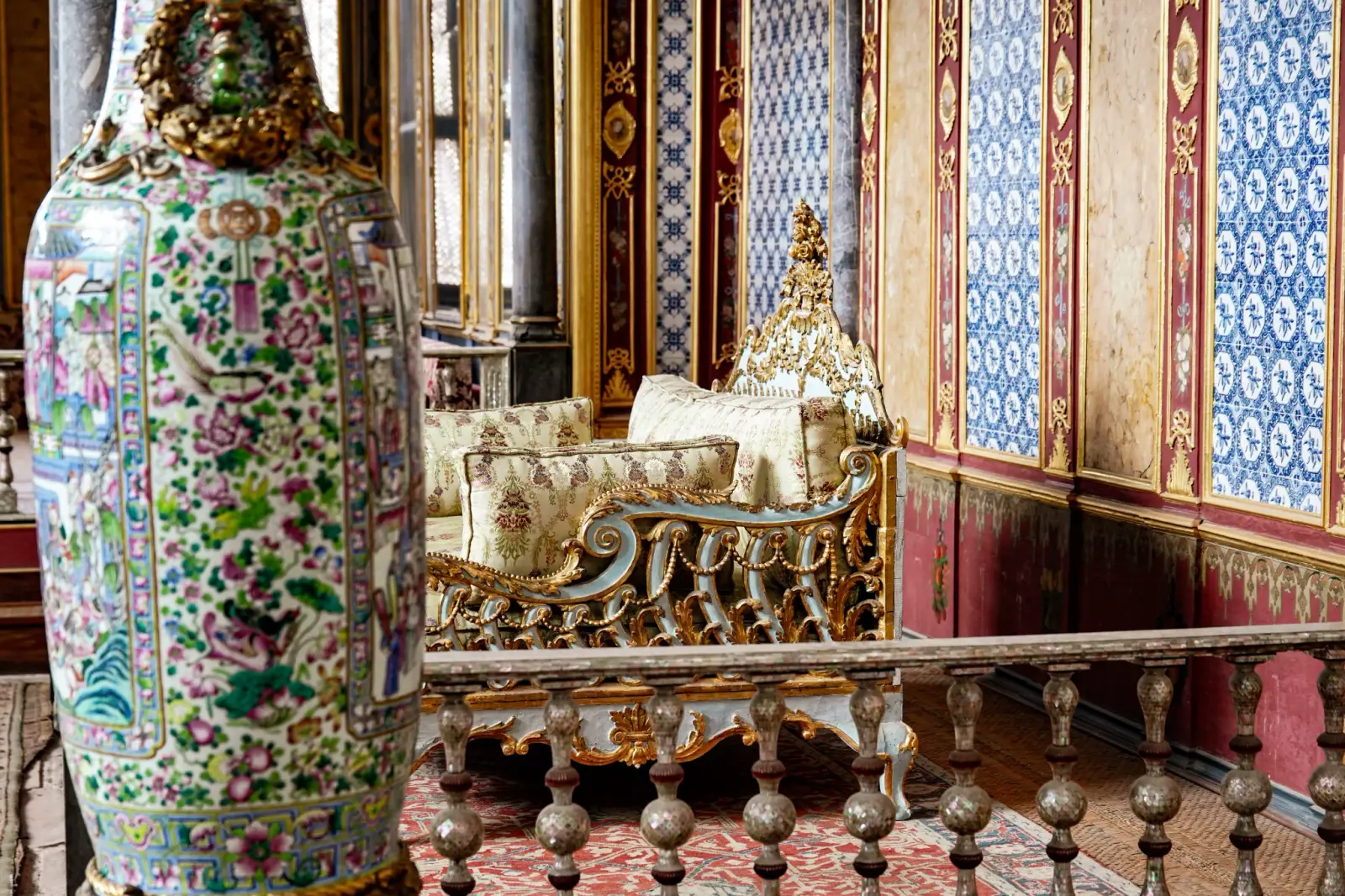
The Imperial Hall from the side: columns, tiled walls and the raised seat of the sultan.Looking up into the painted dome of the Imperial Hall.The gilded gallery of the Imperial Hall, from which musicians and members of the household watched.The sultan's raised seat in the Imperial Hall, a Chinese vase beside the balustrade.

What to See Inside the Harem

The visitor route passes through a sequence of service areas, residential courtyards and royal apartments. The exact route may change when individual rooms are undergoing conservation, but the following spaces form the heart of the Harem experience.

  1. 01

    Gate of Carts

    The traditional entrance to the Harem from the Second Courtyard is known as the Gate of Carts.

    Its name is associated with the carriages used by members of the imperial household. Beyond the gate, visitors enter a controlled passage that once separated the administrative areas of the palace from the private royal residence.

    This entrance immediately shows that movement into the Harem was closely supervised.

  2. 02

    Courtyard of the Black Eunuchs

    One of the first major spaces on the route is the Courtyard of the Black Eunuchs.

    The courtyard is lined with the residential and administrative rooms of the eunuch officials who guarded the Harem. Its long, relatively narrow design reflects its function as a secure transition between the outer palace and the dynastic apartments.

    Look for the historic tiles, inscriptions and the arrangement of doors leading towards the private sections of the complex.

    The Courtyard of the Black Eunuchs: a narrow tiled colonnade guarding the entrance to the Harem.
  3. 03

    Apartments of the Chief Black Eunuch

    The Chief Black Eunuch occupied rooms close to the principal entrance, allowing him to supervise access and communication.

    His apartments demonstrate the authority of the office. Although located within a service area, they are more prominent and carefully decorated than the quarters of lower-ranking officials.

    A costumed figure of a Black Eunuch of the Harem, in a red robe and tall white cap, in the eunuchs' quarters.
  4. 04

    Concubines’ and Consorts’ Courtyard

    The Courtyard of the Concubines and Consorts was one of the centres of everyday Harem life.

    Surrounding it were dormitories, apartments and the facilities used by female attendants and senior consorts. Its architecture reveals the contrast between communal service areas and the more private rooms assigned to women of higher rank.

    Restored sections now help visitors understand how the household functioned beyond its famous ceremonial rooms.

    A costumed figure seated at a Harem window, İznik tiles and cushions around her.
  5. 05

    Baths and Daily-Life Areas

    The Harem contained several baths serving different groups within the household.

    Restored areas around the Concubines’ and Consorts’ Courtyard include a bath, laundry, kitchen, pantry, coffee hearth and residential quarters. Together, they provide a more complete picture of daily routines within the Harem.

    These spaces are particularly valuable because they show the practical side of palace life: food preparation, washing, storage, training, rest and household service.

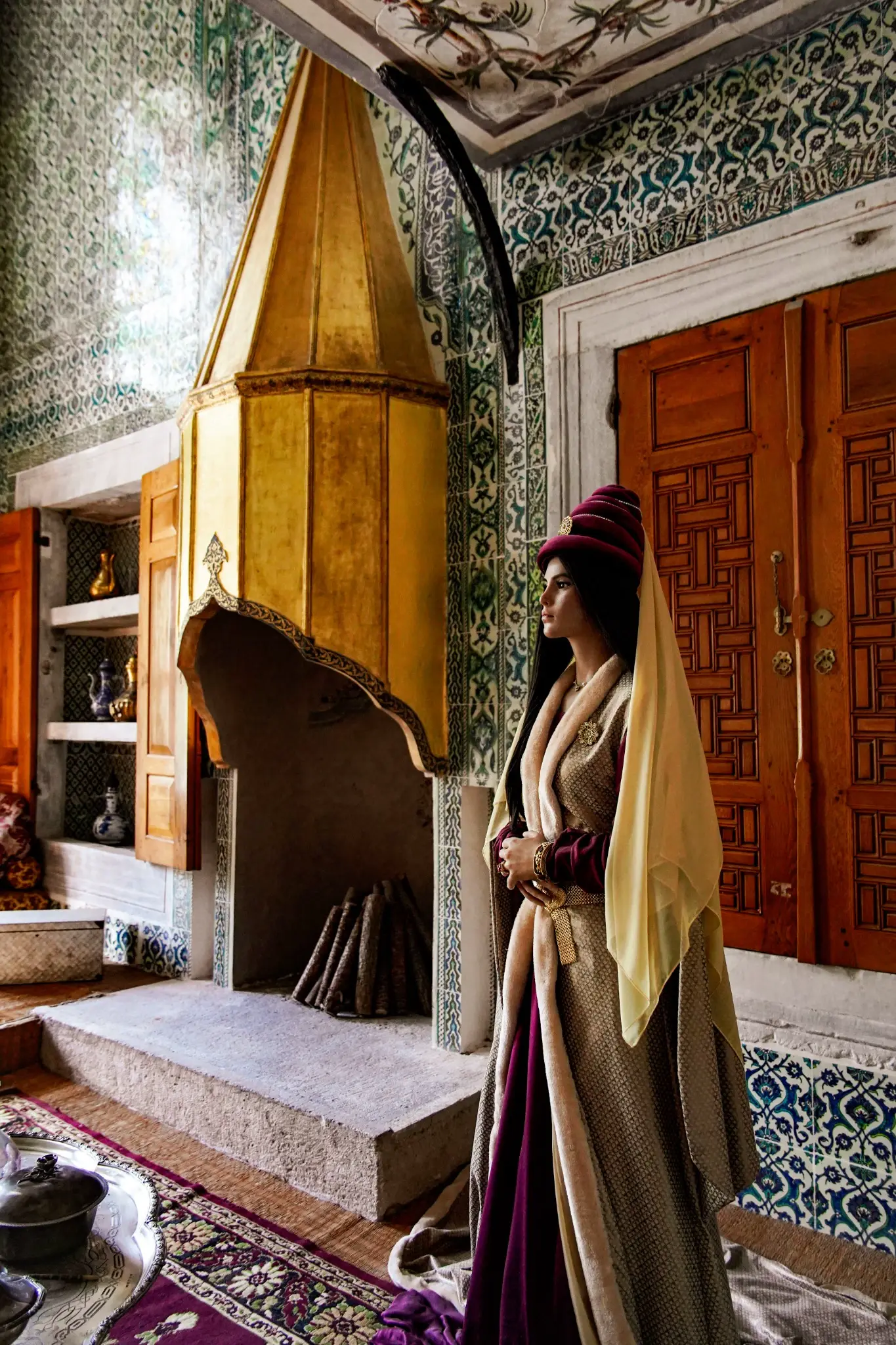
    A costumed figure beside the conical hood of a Harem fireplace.
  6. 06

    Apartments of the Valide Sultan

    The apartments of the Queen Mother were located at the centre of the Harem, reflecting her senior position within the imperial family.

    The suite included reception rooms, private chambers and service areas. Rich İznik tiles, decorative fireplaces, inscriptions and later painted ornament reveal how the apartments were altered and redecorated over time.

    These rooms were both a private residence and a place from which the Valide Sultan managed her household and received members of the dynasty.

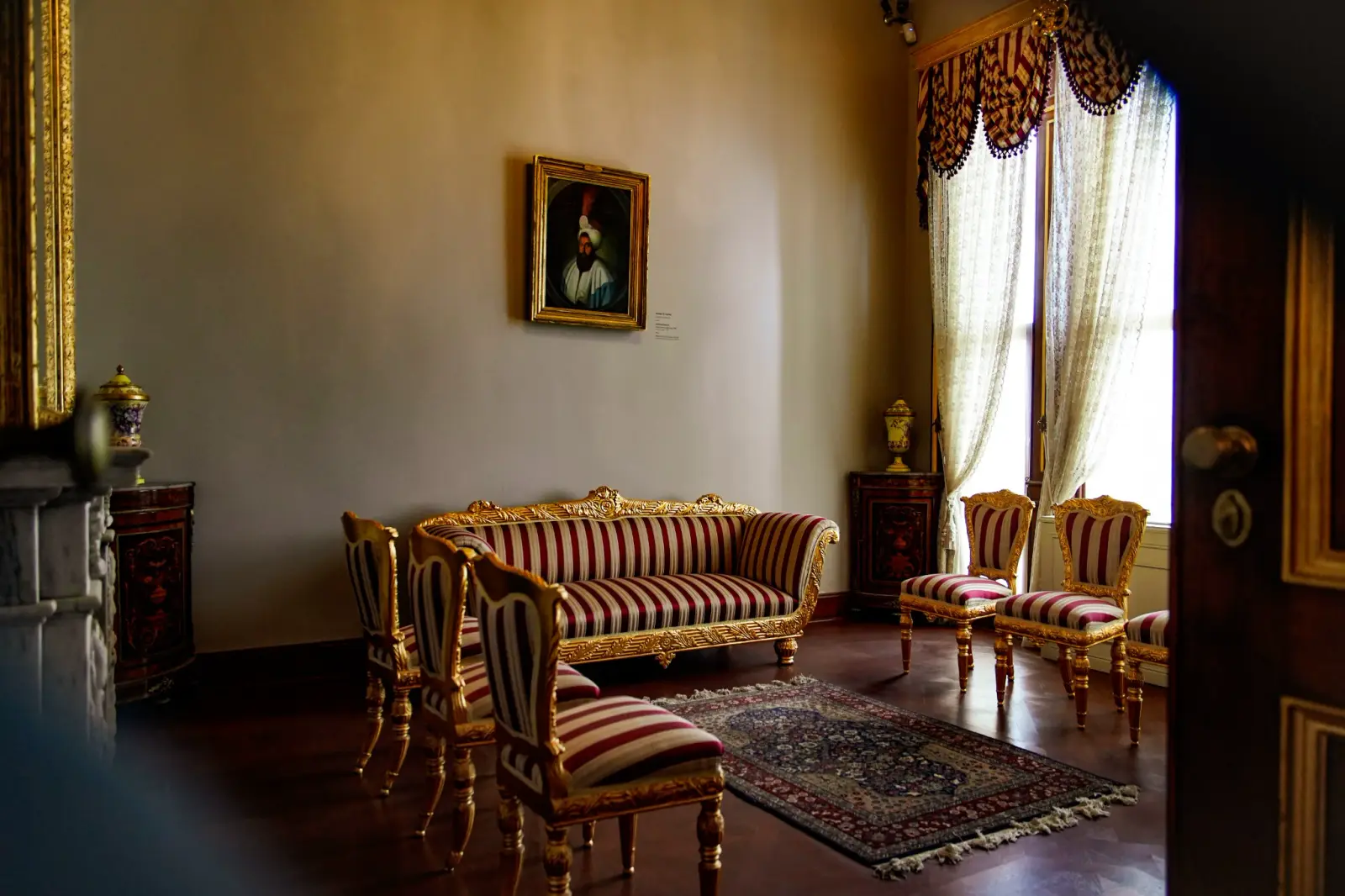
    A nineteenth-century Harem salon — striped upholstery and a framed portrait, the European taste of the late court.
  7. 07

    Baths of the Sultan and the Valide Sultan

    The adjoining baths of the sultan and the Queen Mother are among the most refined private spaces in the Harem.

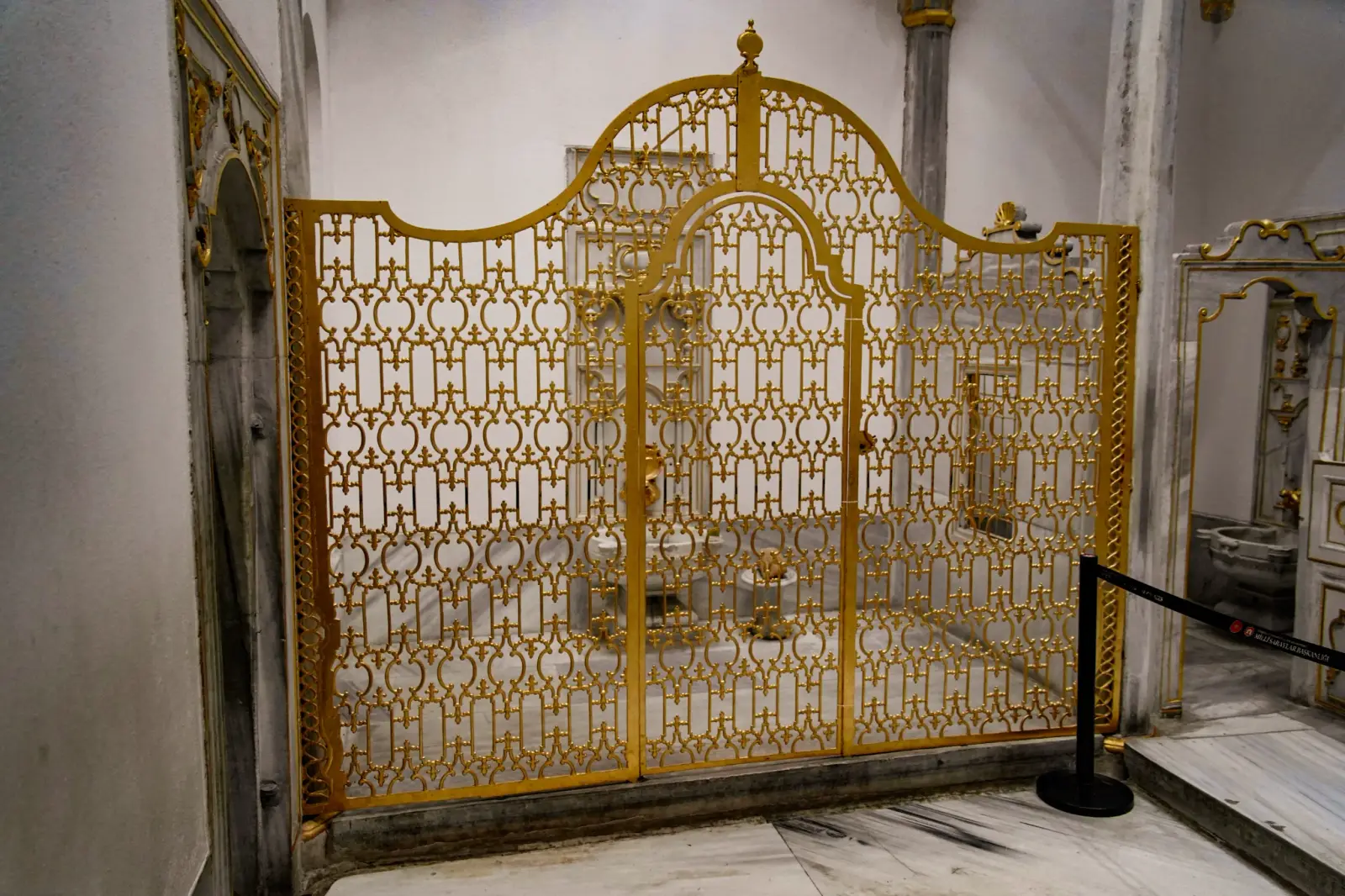
    Built in the tradition of Ottoman bath architecture, they include separate sections for changing, warm bathing and hot bathing. Marble surfaces, fountains and decorative metal screens combine luxury with privacy and security.

    Their position close to the principal royal apartments reflects the importance of bathing in daily palace life.

    The gilded metal screen of the sultan's bath in the Harem, worked to let steam through but not sight.
  8. 08

    Imperial Hall

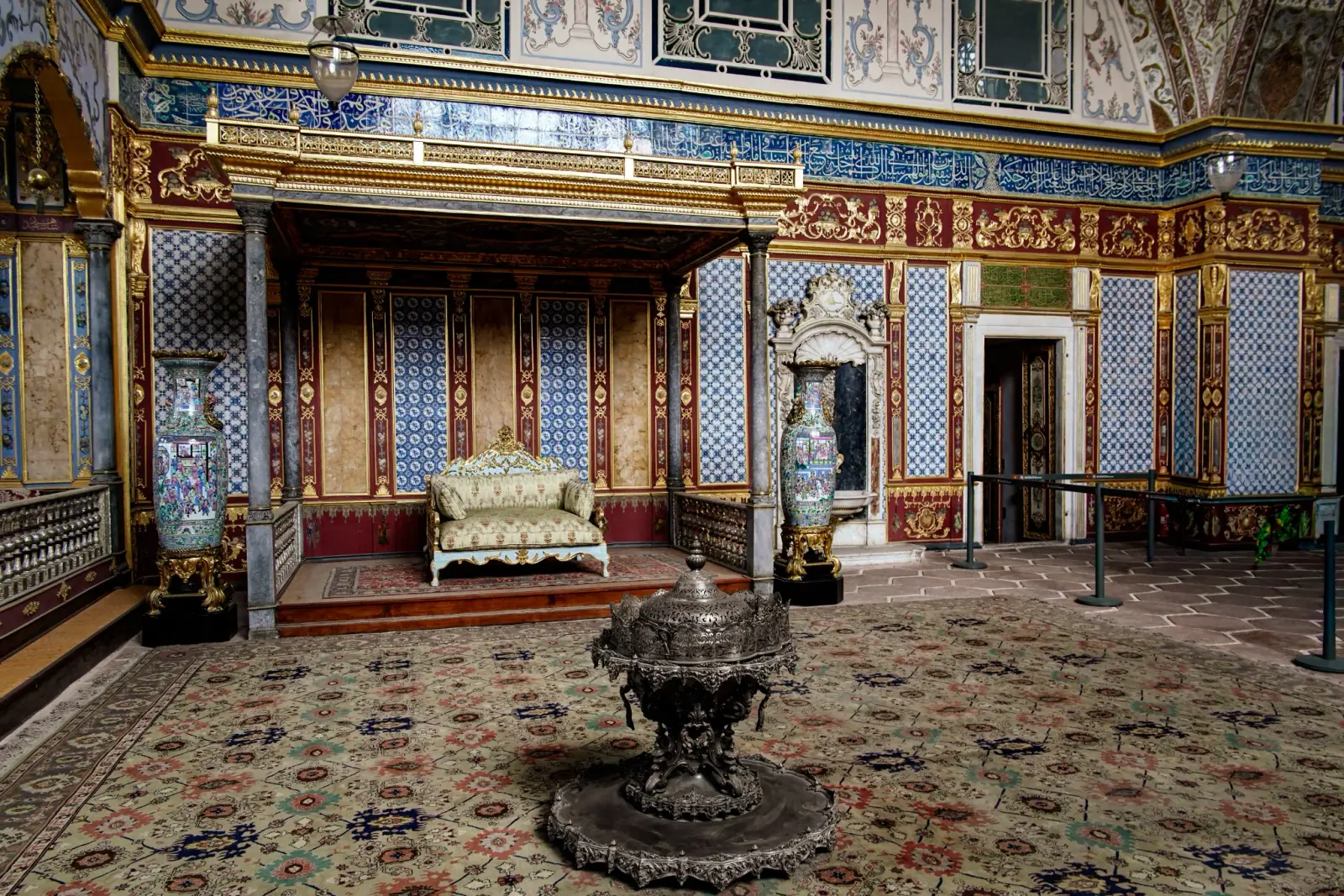
    The Imperial Hall, also known as the Sultan’s Hall, is the largest and most ceremonial room in the Harem.

    It was used for dynastic gatherings, receptions, celebrations and entertainment attended by the sultan and members of the imperial family. Its high dome, tiled walls, decorative gallery and raised seating area create one of the most impressive interiors in the complex.

    The room was altered several times, and its present appearance combines elements from different periods of Ottoman decoration.

    The Imperial Hall with its bronze brazier, the largest ceremonial room in the Harem.
  9. 09

    Privy Chamber of Sultan Murad III

    Built for Sultan Murad III in the late sixteenth century, this chamber is one of the finest surviving examples of classical Ottoman interior design.

    The room is known for its exceptional İznik tiles, domed ceiling, marble fountain and harmonious proportions. Water once flowed within the chamber, providing both a cooling effect and a sense of privacy by masking conversations.

    Unlike some later rooms in the Harem, the chamber largely preserves the artistic character of the classical Ottoman period.

    The Privy Chamber of Murad III: İznik tiles, a canopied seat and calligraphic bands — the finest classical interior in the Harem.
  10. 10

    Privy Chamber of Sultan Ahmed I

    The nearby chamber of Sultan Ahmed I is smaller and more intimate.

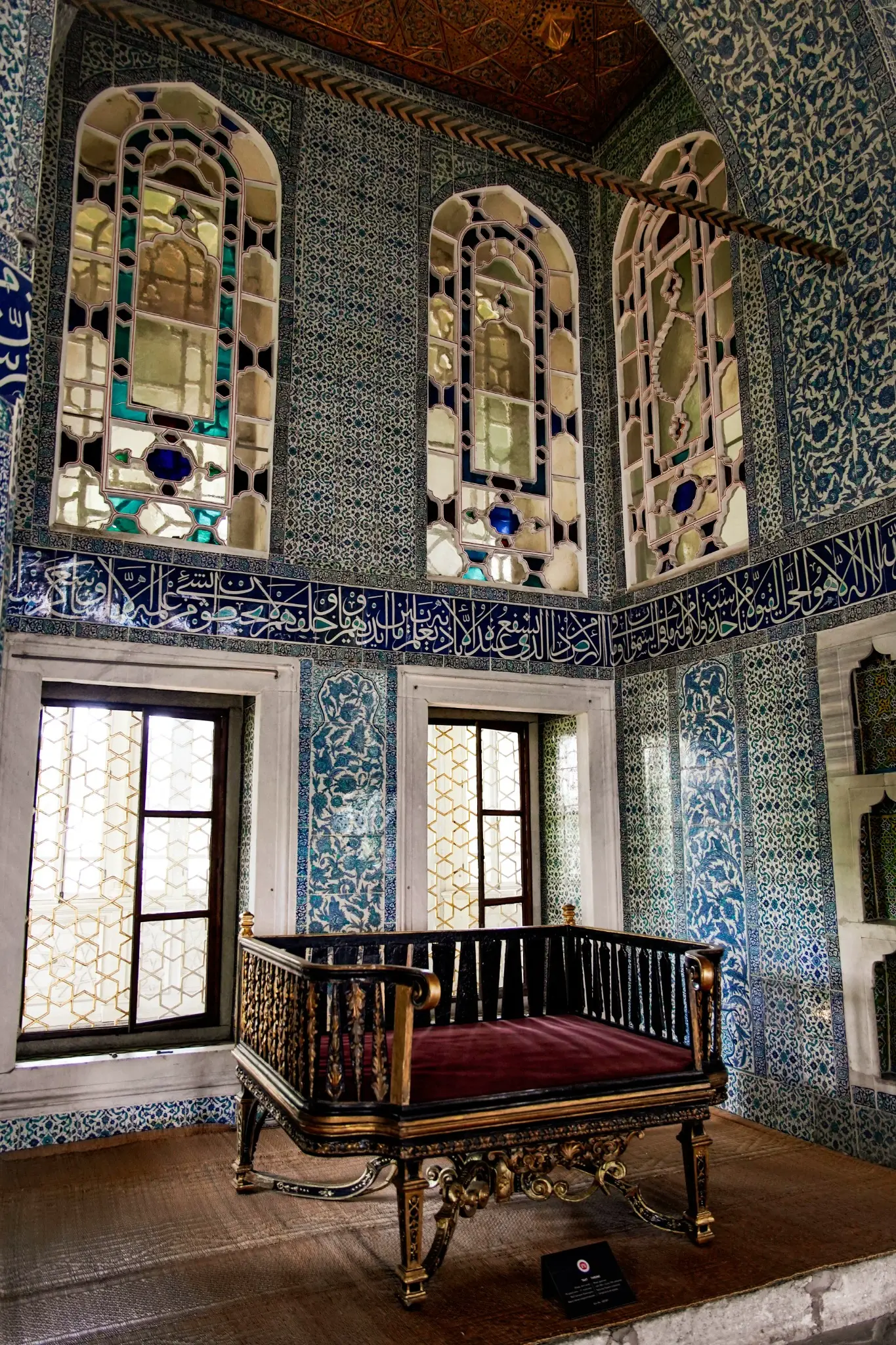
    Its walls are decorated with high-quality İznik tiles featuring floral patterns and calligraphic panels. The room illustrates how individual sultans added their own private spaces to the developing Harem complex.

    A tiled Harem chamber, stained glass above a low wooden seat.
  11. 11

    Fruit Room of Sultan Ahmed III

    The Fruit Room is one of the most distinctive interiors in the Harem.

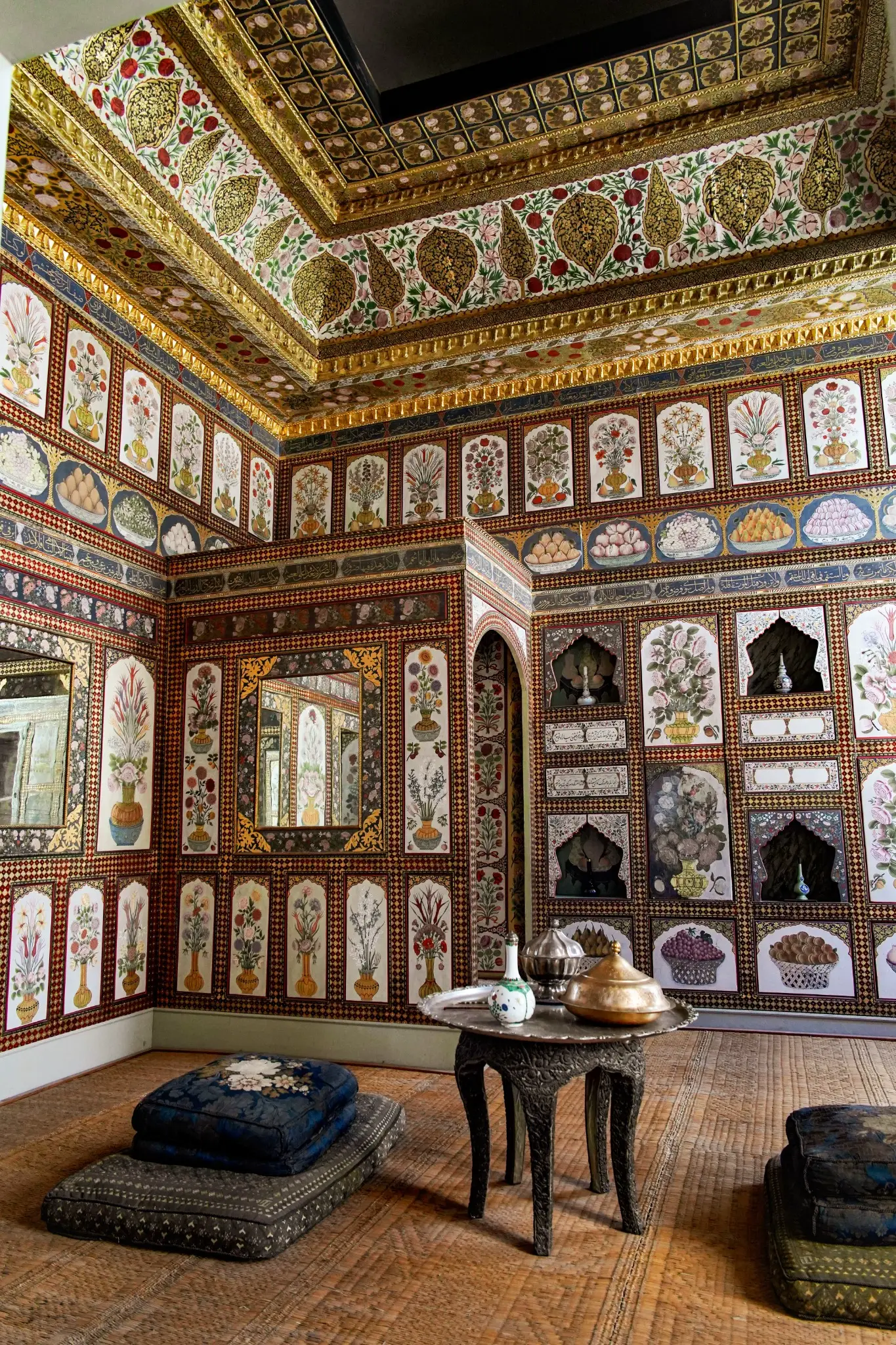
    Created during the reign of Sultan Ahmed III, it is decorated with painted arrangements of flowers, fruit bowls, vases and garden scenes. These colourful compositions reflect the artistic taste associated with the early eighteenth-century Tulip Era.

    Its light and playful decoration contrasts strongly with the formal tilework of the older royal chambers.

    The Fruit Room of Ahmed III, its panels painted with flowers, bowls of fruit and garden scenes.
  12. 12

    Twin Kiosk and Princes’ Apartments

    The Twin Kiosk consists of two adjoining rooms associated with the accommodation of Ottoman princes.

    Its interiors combine stained glass, woodwork, fireplaces and decorative tiles. The rooms provide insight into the controlled environment in which princes lived while remaining close to the imperial family.

    The elegant decoration also shows that restricted palace life could still take place within highly refined surroundings.

    A costumed figure reading at a Harem window, calligraphic panels on the wall behind.
  13. 13

    Courtyard of the Favorites

    The Courtyard of the Favorites occupies a terrace overlooking the lower palace gardens and the surrounding city.

    Apartments around the courtyard were associated with senior women of the Harem. Compared with the more enclosed service courtyards, this area feels brighter and more open.

    Its views and elevated position made it one of the most attractive residential parts of the complex.

  14. 14

    The Golden Road

    The Golden Road is a long passage connecting several important sections of the Harem.

    It linked the eunuchs’ quarters, the Queen Mother’s apartments, the sultan’s private rooms and the areas occupied by the consorts. Despite its name, the corridor is architecturally restrained.

    Walking through it helps visitors understand how the Harem’s many courtyards and apartments were connected while still allowing access to be carefully controlled.

  15. 15

    Kuşhane Kitchen

    Located along the Golden Road, the Kuşhane Kitchen was used in connection with meals prepared or served for the sultan.

    Its restored display includes metal vessels and kitchen objects that help illustrate food preparation and service within the private household.

    The kitchen adds an important everyday dimension to a route otherwise dominated by formal halls and royal apartments.

Understanding the Harem Beyond the Myths

For centuries, European travellers and artists portrayed the Ottoman Harem as a mysterious world of luxury and entertainment. Many of these images were produced by people who had never entered an imperial Harem and reflected Orientalist fantasy rather than direct observation.

The surviving architecture presents a more complex reality.

The Harem was certainly a privileged royal residence, but it was also a place of strict discipline, labour, education and hierarchy. Its residents lived under rules shaped by dynastic responsibility and palace protocol.

Understanding both its splendour and its connection to historical systems of enslavement allows visitors to see the Harem more accurately — not as a legend, but as a functioning institution within the Ottoman court.

Visiting the Topkapi Palace Harem

Where Is the Harem Entrance?

The visitor entrance is located in the Second Courtyard of Topkapi Palace, near the Imperial Council Chamber and the Tower of Justice.

Signs within the courtyard direct visitors towards the controlled Harem entrance.

Do I Need a Separate Ticket?

Access to the Harem is controlled separately from the main palace route, and not every Topkapi Palace ticket includes Harem admission.

Check the inclusions of your chosen ticket before your visit. If Harem access is not included, an additional ticket may be required.

How Long Should I Allow?

Allow approximately 45 to 60 minutes for the Harem.

Visitors who wish to examine the tiles, decoration and restored daily-life areas in detail may prefer to spend longer. During busy periods, movement through narrower rooms and corridors can also take additional time.

When Is the Best Time to Visit?

The Harem can become crowded because much of the route passes through narrow corridors and relatively small rooms.

Visiting earlier in the day generally offers a quieter experience and makes it easier to appreciate the architecture and decoration.

Is the Entire Harem Open to Visitors?

No. The Harem is a large and complex historic structure, and only the designated visitor route is accessible.

Individual rooms may close temporarily for conservation, restoration or operational reasons. The route can therefore change without notice.

Accessibility

The historic layout includes uneven surfaces, narrow passages, thresholds and changes in level. Some sections may be difficult to access for visitors with limited mobility.

Visitors requiring step-free access should check the current arrangements before entering.

Photography

Photography rules may vary between rooms and can change to protect sensitive interiors and objects.

Follow the signs and instructions provided by museum staff. Flash, tripods and professional photography equipment may be restricted.

Frequently Asked Questions

Is the Harem included in every Topkapi Palace ticket?

No. Ticket inclusions vary, and some admission options do not include the Harem. Confirm that Harem access is clearly listed before purchasing.

Can I visit only the Harem?

The Harem is located inside Topkapi Palace, so visitors must first enter the palace grounds. The applicable palace admission requirements still apply.

Was the Harem only for the sultan’s wives?

No. It was home to a much larger imperial household that included the Queen Mother, consorts, princes, princesses, female attendants, eunuch officials and other servants.

Did the sultan live permanently in the Harem?

The sultan had private rooms within the Harem but also used other parts of the palace for government, ceremony, worship and recreation.

What is the most impressive room in the Harem?

The Imperial Hall is the largest ceremonial interior. The Privy Chamber of Murad III is especially important for its classical Ottoman architecture and İznik tiles, while the Fruit Room is known for its colourful eighteenth-century decoration.

Can children visit the Harem?

Yes. However, the route includes narrow passages, historic thresholds and rooms where visitors are expected to move quietly and avoid touching the decoration.

Can I take a stroller inside?

Access with a stroller may be difficult because of narrow corridors, steps and changes in floor level. Current instructions from museum staff should be followed.

Is the Harem worth visiting?

Yes. The Harem provides essential context for understanding the Ottoman dynasty, the private life of the palace and the architectural development of Topkapi Palace.

Its intimate rooms, courtyards and decorative details offer a very different experience from the palace’s open courtyards, collections and state chambers.

The Imperial Hall from the side: columns, tiled walls and the raised seat of the sultan.

Explore the Private World of Topkapi Palace

Walk through the courtyards, apartments and ceremonial rooms of the Imperial Harem and discover how the Ottoman dynasty lived behind the public spaces of the palace.

Choose a ticket that includes Harem admission and experience one of the most remarkable sections of Topkapi Palace.

View tickets