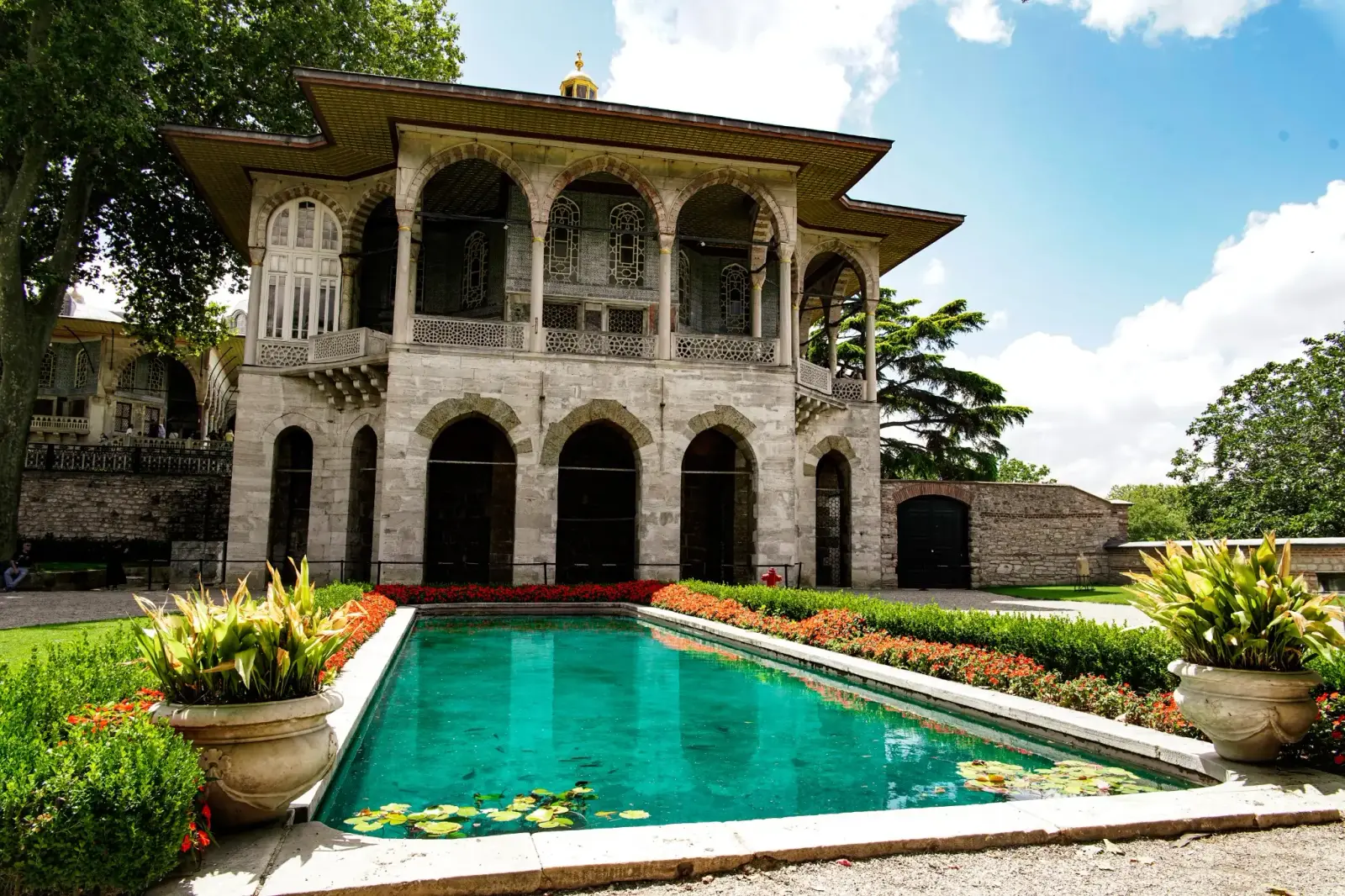
Fourth Courtyard
Imperial Gardens and Pavilions
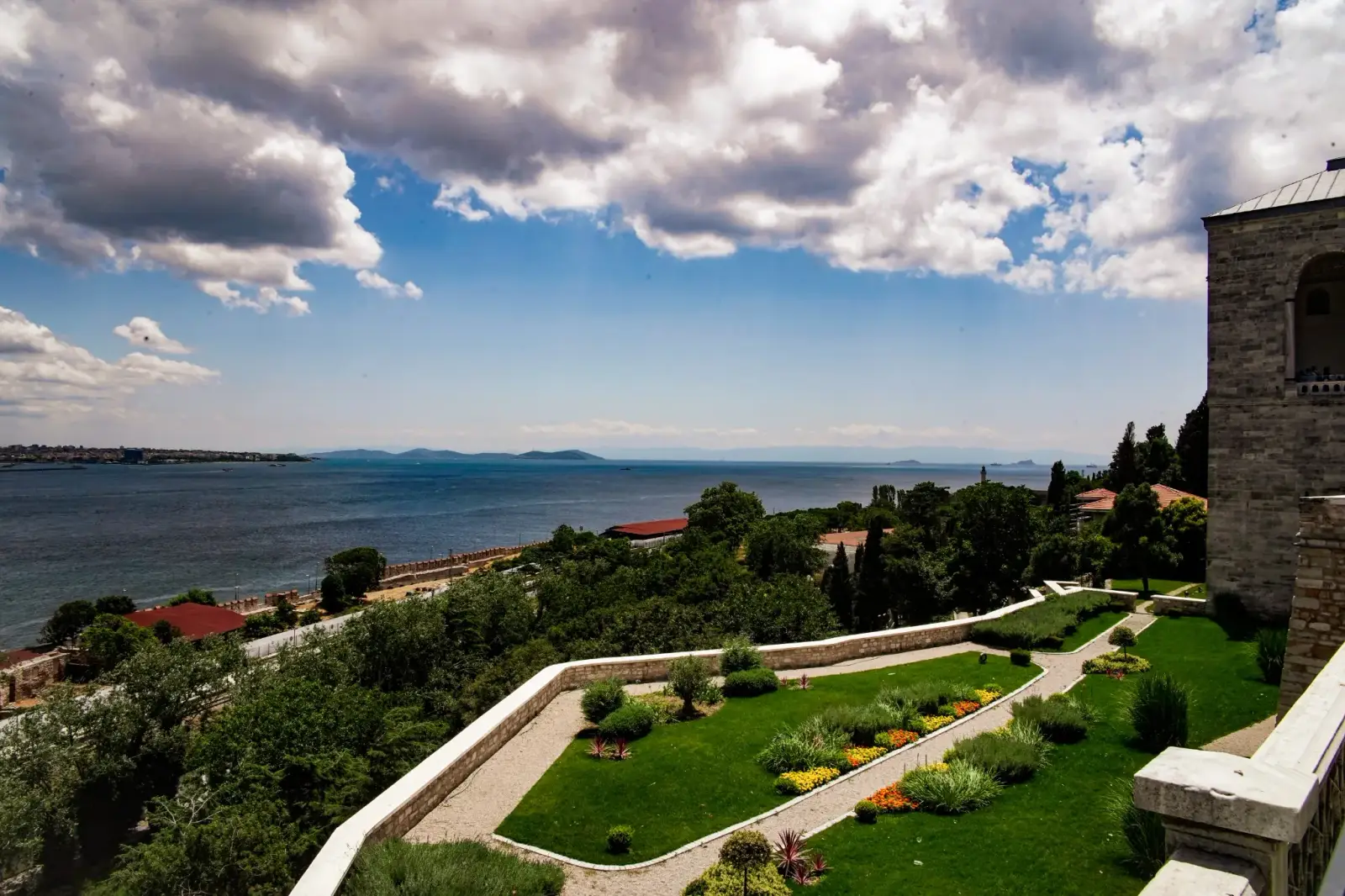
The Fourth Courtyard formed the most private and peaceful part of the palace. Its terraced gardens, fountains and pavilions provided spaces for rest, private receptions and contemplation.
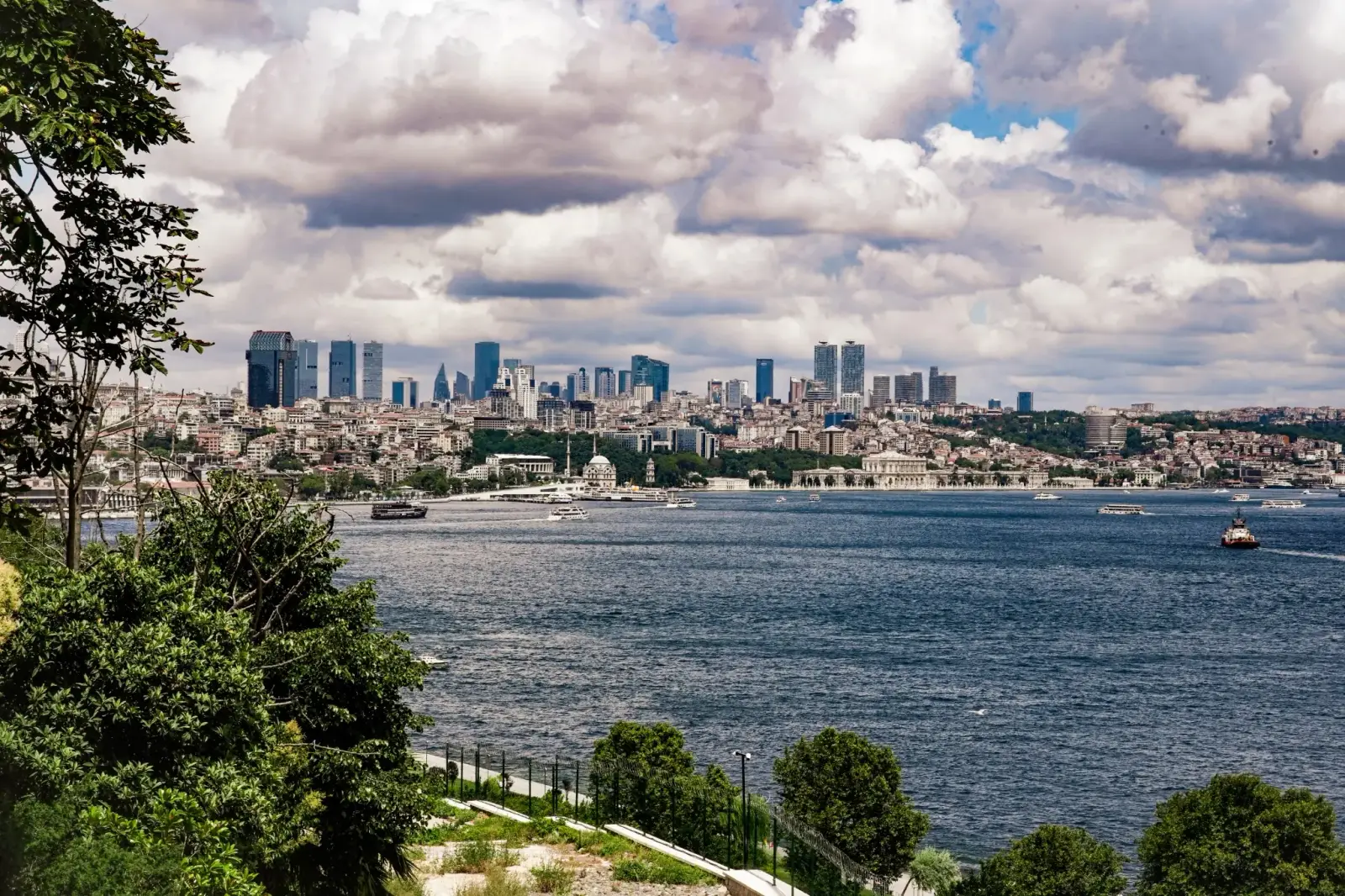
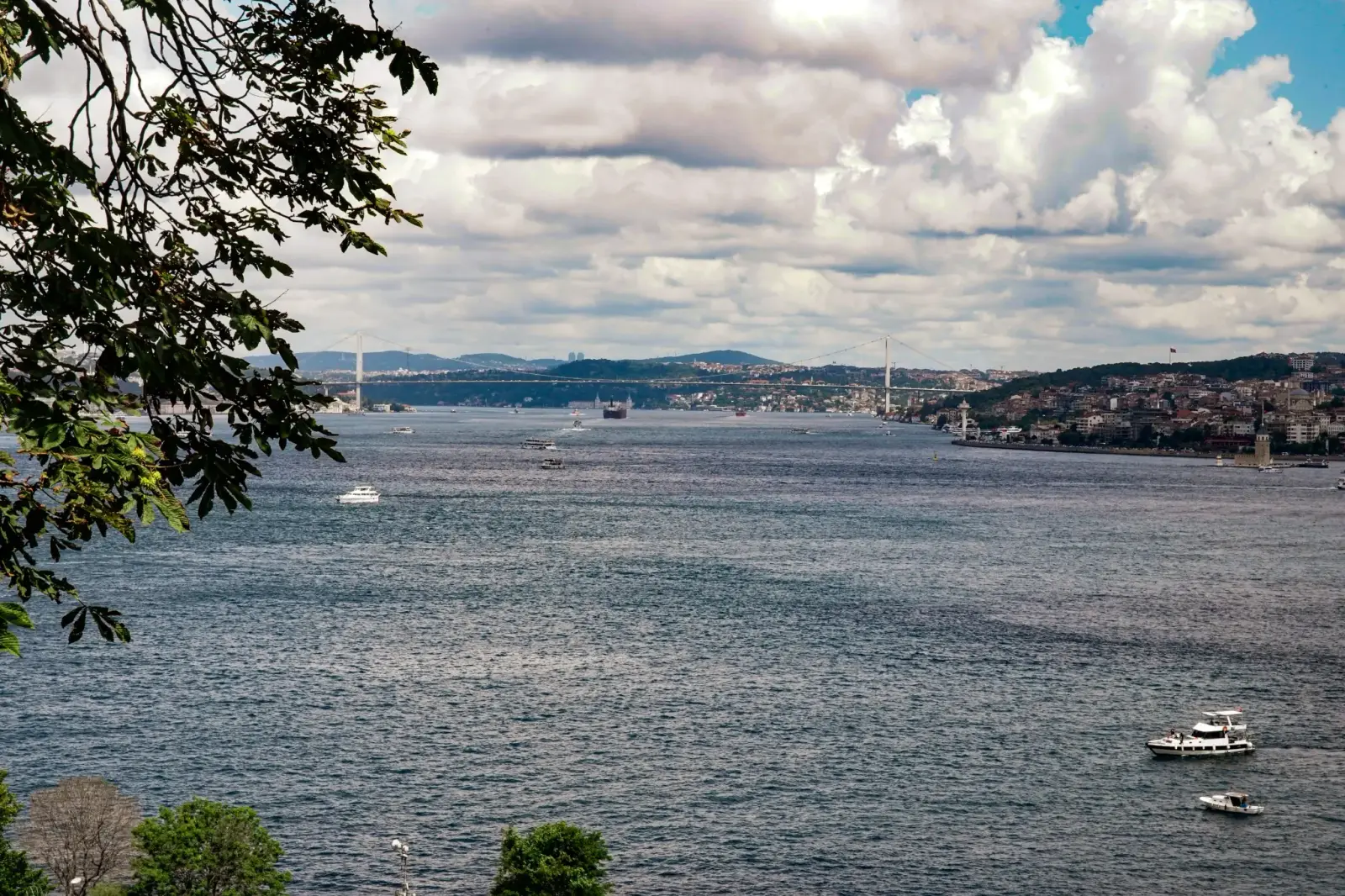
From its elevated terraces, visitors can see the Bosphorus, Golden Horn and Asian shore of Istanbul.
Baghdad Pavilion
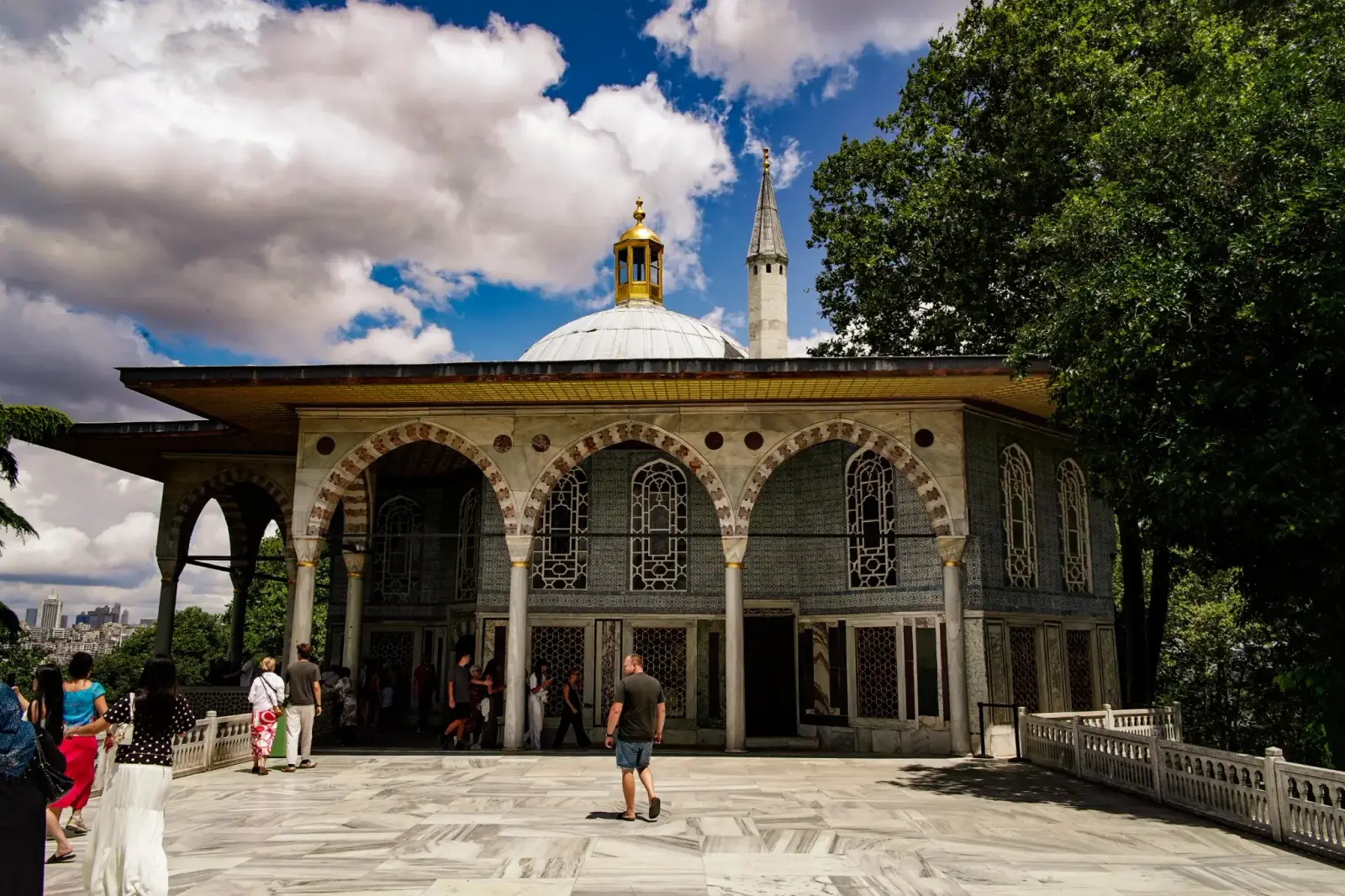
The Baghdad Pavilion was commissioned by Sultan Murad IV and constructed in 1638–1639 to commemorate the Ottoman reconquest of Baghdad from the Safavids in late 1638. Situated on the marble terrace of the Fourth Courtyard, it served as both a victory monument and a private pleasure kiosk where the sultan could rest, take coffee after morning prayers, enjoy panoramic views and occasionally hold informal gatherings. In later centuries it was used as a library for the Privy Chamber, with books endowed by sultans such as Abdülhamid I and Selim III, and as a place for quiet prayer and reflection on special religious nights.
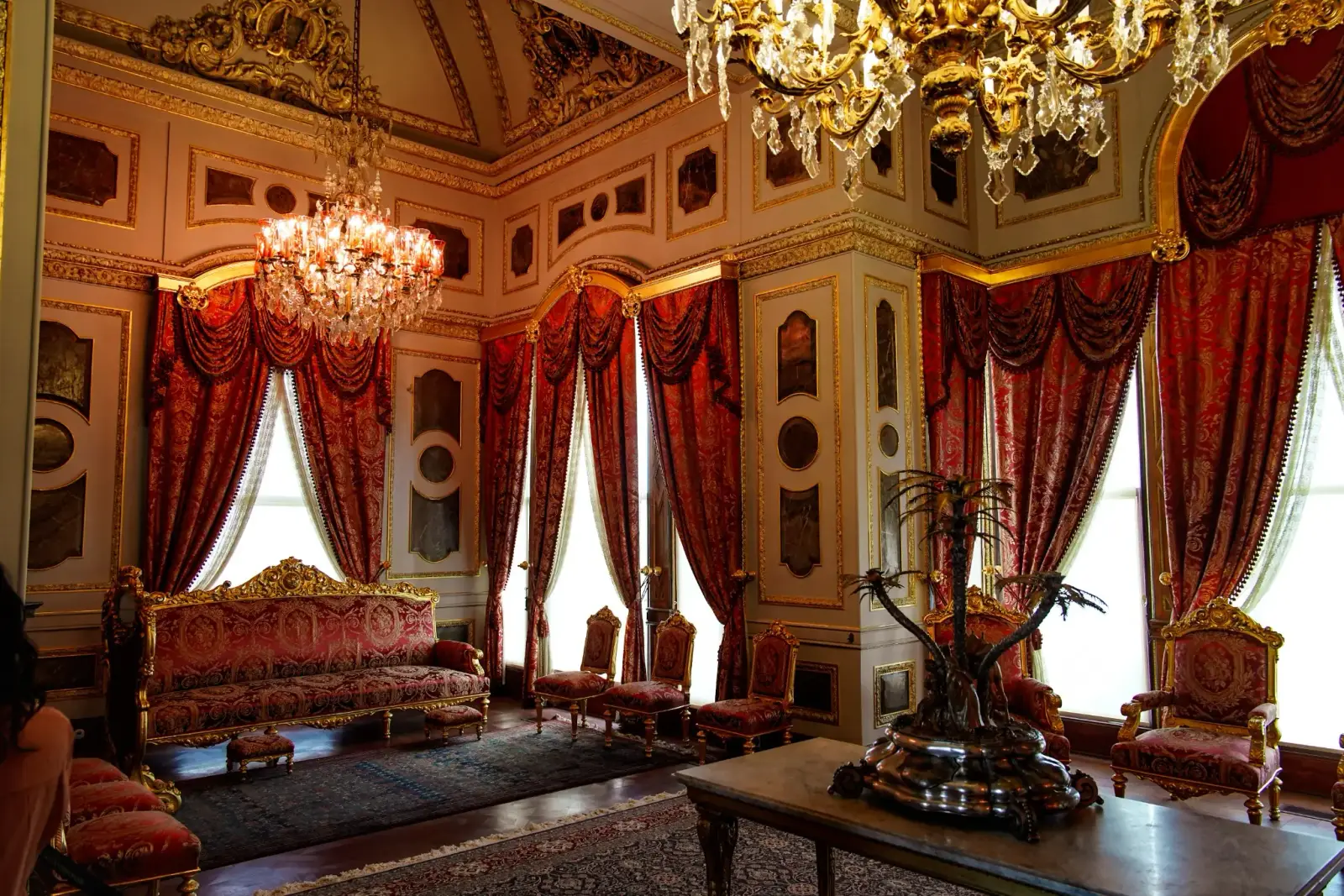
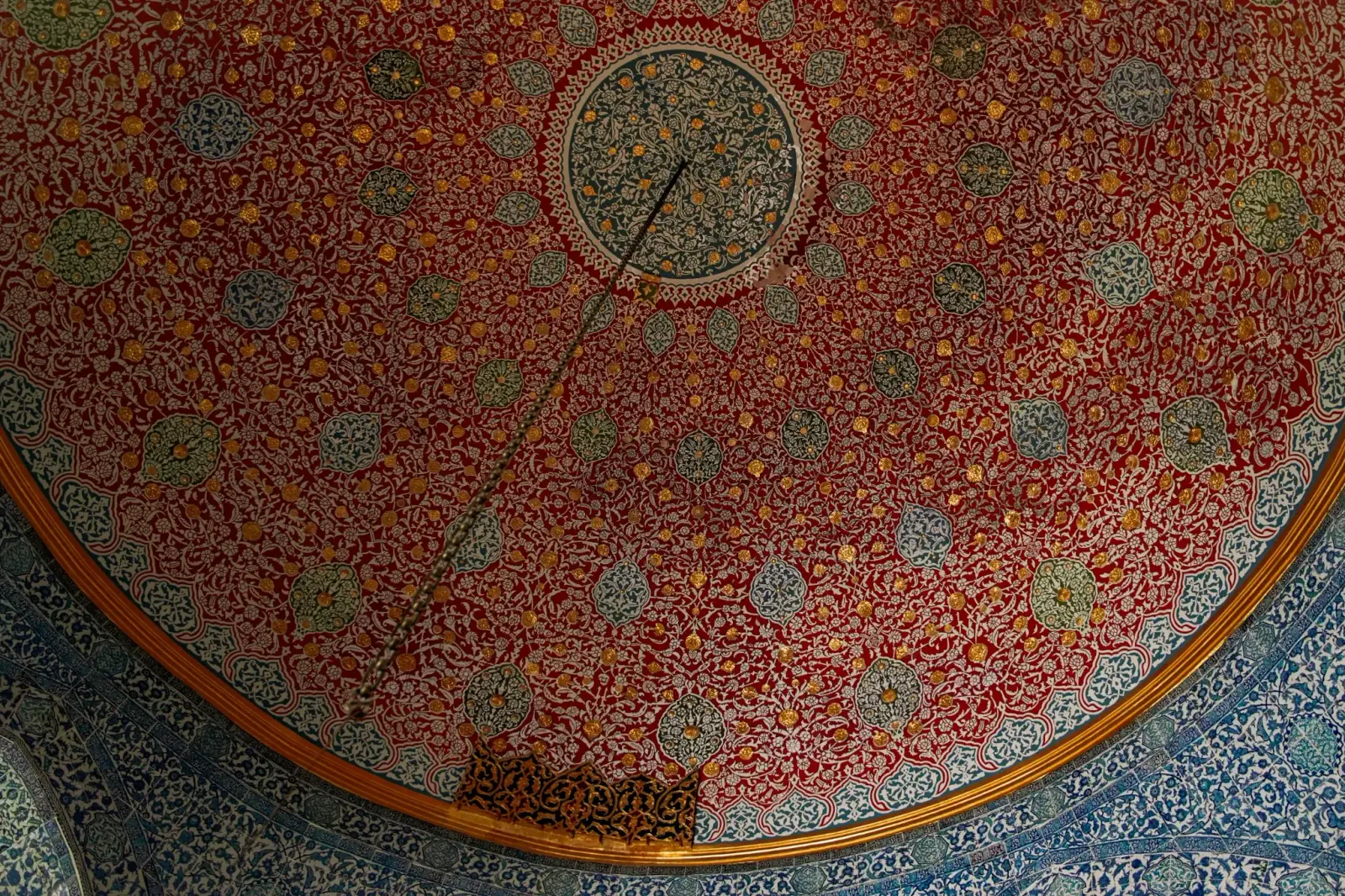
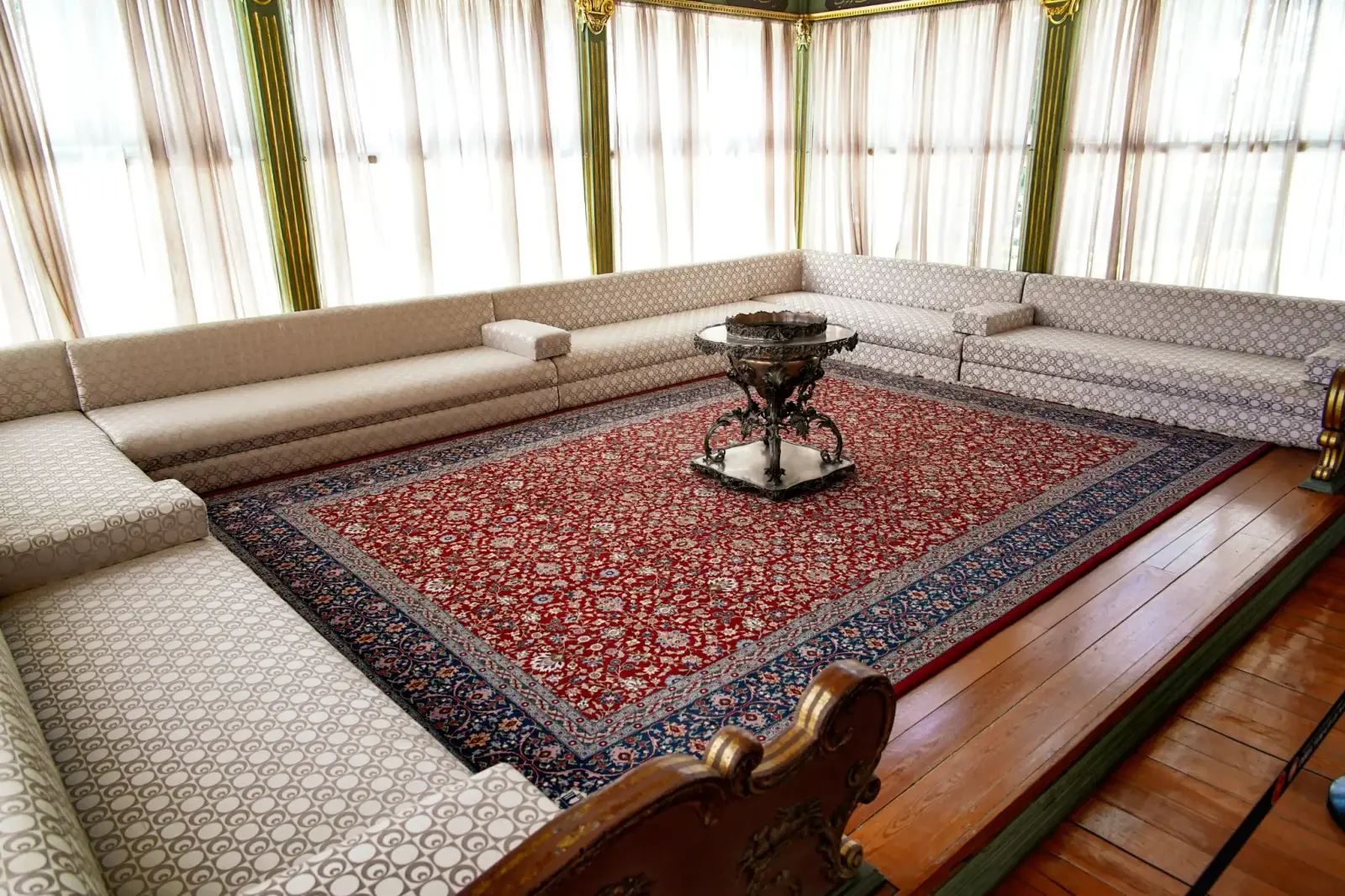
It is one of the last and finest examples of classical Ottoman kiosk design: an octagonal structure with four projecting rectangular iwans opening into a central domed hall, raised on a high arcaded basement and surrounded by a columned portico. The exterior features marble cladding with strips of porphyry and verd antique, while the portico panelling shows Cairene Mamluk influence. Inside, the walls are covered with outstanding 17th-century İznik tiles, the recessed cabinets and window shutters are richly inlaid with mother-of-pearl, tortoiseshell and ivory, and a gilded fireplace hood stands near the entrance; the dome is decorated with traditional Ottoman motifs in gold leaf. The wide arches of the portico were deliberately designed to frame the spectacular views of the Golden Horn, the Bosphorus and the Sea of Marmara.
Today the Baghdad Pavilion remains fully preserved and open to visitors as part of the Topkapi Palace Museum’s Fourth Courtyard itinerary, closed on Tuesdays. Guests can enter the kiosk to admire the original tilework, mother-of-pearl inlaid cabinets, gilded dome and fireplace, and stand on the terrace to experience the same sweeping vistas the sultans once enjoyed. It is especially prized for its near-intact classical interior and its role as a serene viewpoint overlooking Istanbul’s historic waterways, making it one of the most photographed and atmospheric highlights of the outer palace gardens.
Revan Pavilion
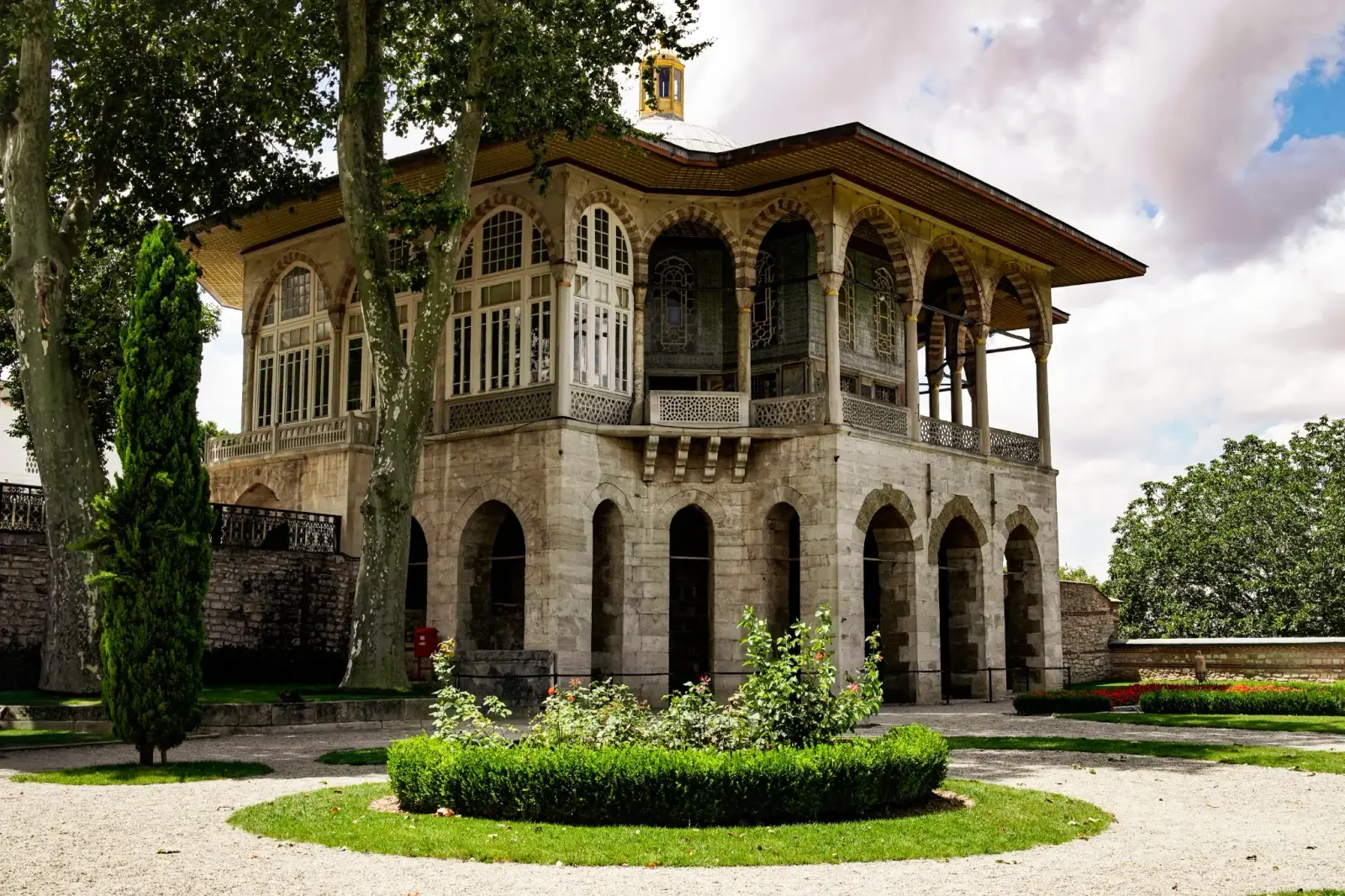
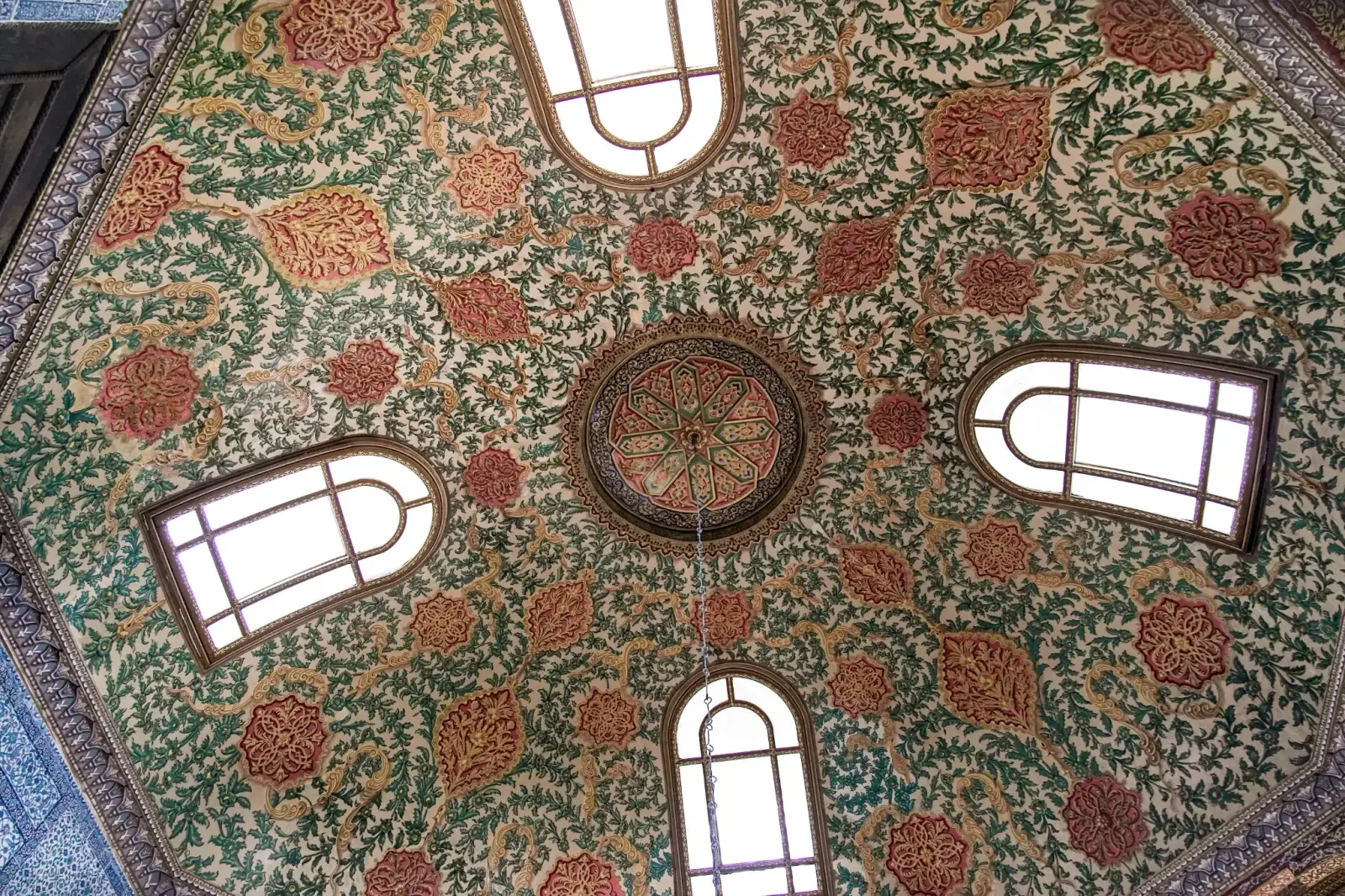
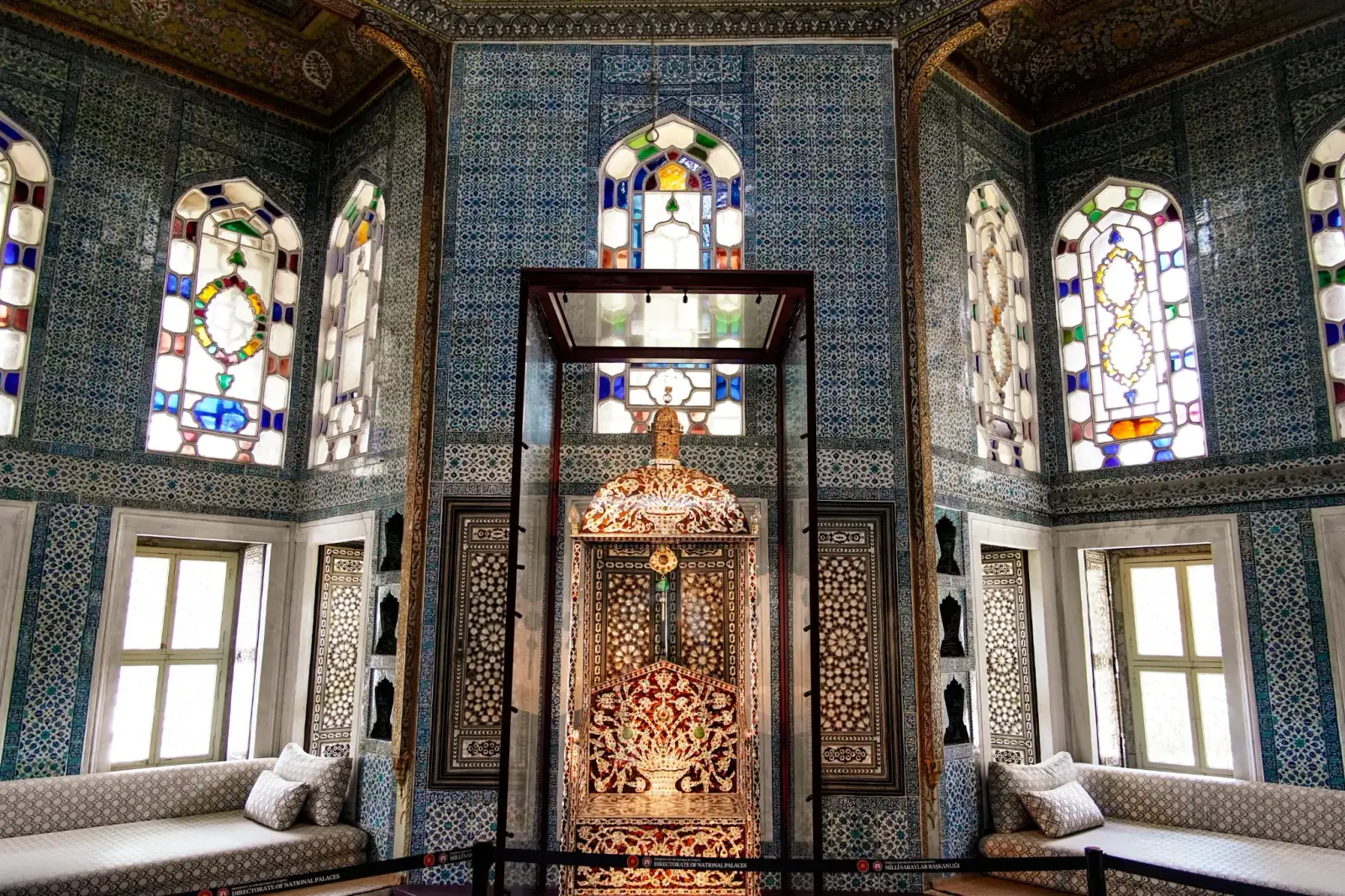
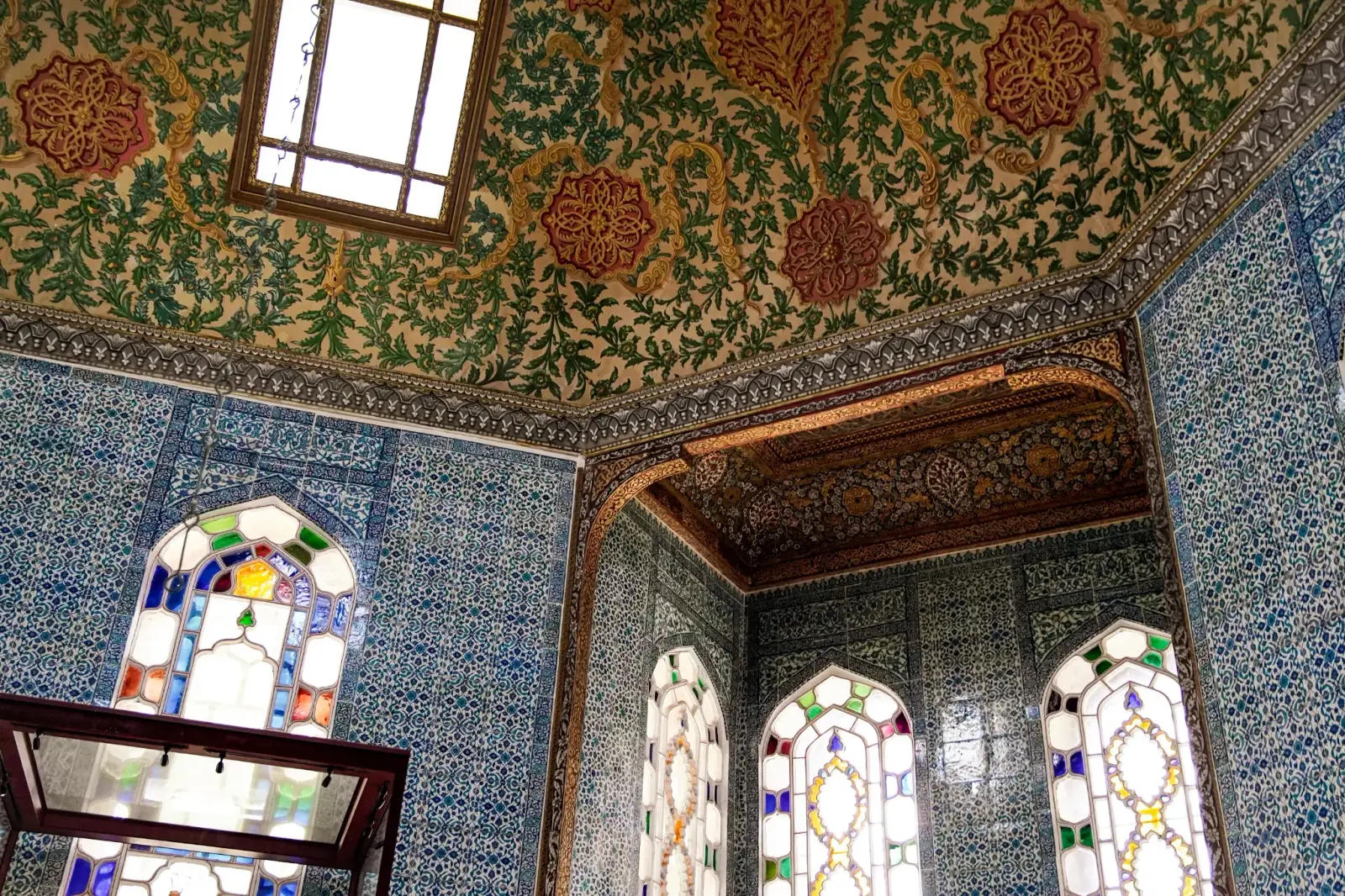
The Revan Pavilion was built by Sultan Murad IV in 1635–1636 on the marble terrace of the Fourth Courtyard to commemorate the Ottoman conquest of Revan during his eastern campaign of 1635. It originally served as a private pleasure kiosk for the sultan, offering rest and panoramic views just like the Baghdad Pavilion. In later use it became known as the Sarık Odası, where the ceremonial turbans representing the sultan’s authority were stored and prepared by the Tülbent Gulamı. During Ramadan the Sacred Relics were temporarily transferred here while the Privy Chamber was cleaned, and the grand vizier sometimes presented official reports to the sultan in this space. Under Mahmud I in the mid-18th century it was converted into a library for the pages of the Has Oda, a function that continued until the palace became a museum.
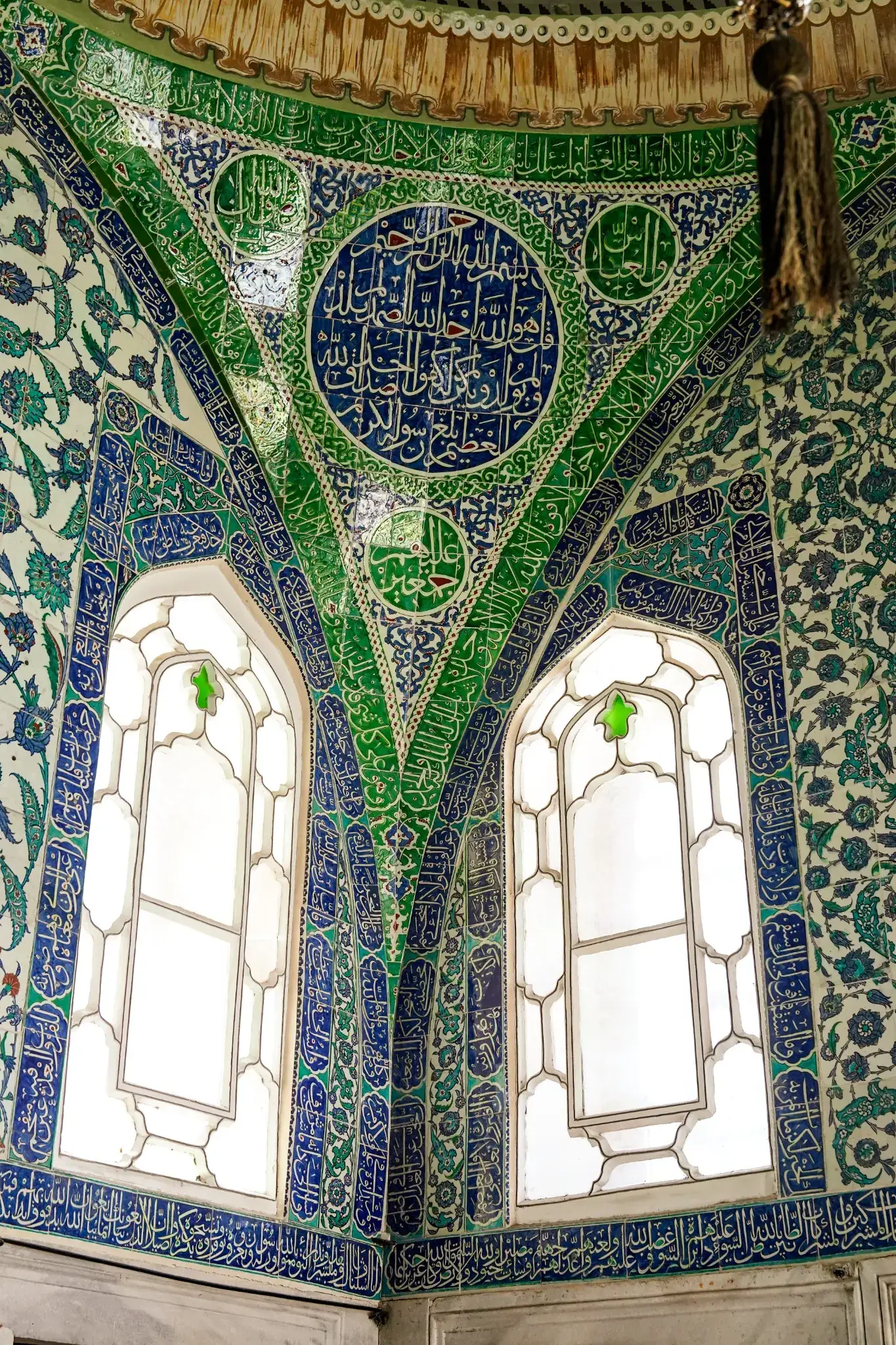
The pavilion is an elegant octagonal structure with three projecting iwans, constructed of cut stone and raised slightly above the terrace. Its walls feature double rows of windows — rectangular below and pointed-arched above — while a relatively low dome, approximately 7.70 metres in diameter and without a drum, is pierced by four windows at its base. The exterior combines red, green and black marble panels on the lower walls with blue-dominated İznik tiles higher up; the portico columns have muqarnas capitals, and the arches alternate white with green or red stone. Inside, the decoration includes fine stained-glass upper windows, mother-of-pearl inlaid window shutters and cabinets, and a gold-leafed dome with painted leather ceiling panels, creating a luminous and refined classical Ottoman interior.
Today the Revan Pavilion is fully open to visitors as part of the Topkapi Palace Museum’s Fourth Courtyard route. Guests can enter to admire the original tilework, stained-glass windows, mother-of-pearl inlays and gilded dome, while the surrounding terrace provides excellent views toward the Golden Horn and the adjacent Circumcision Room and Baghdad Pavilion. Its compact scale, well-preserved classical details and historical associations with both military victory and palace ritual make it a quiet yet highly atmospheric highlight of the outer imperial gardens.
Circumcision Room
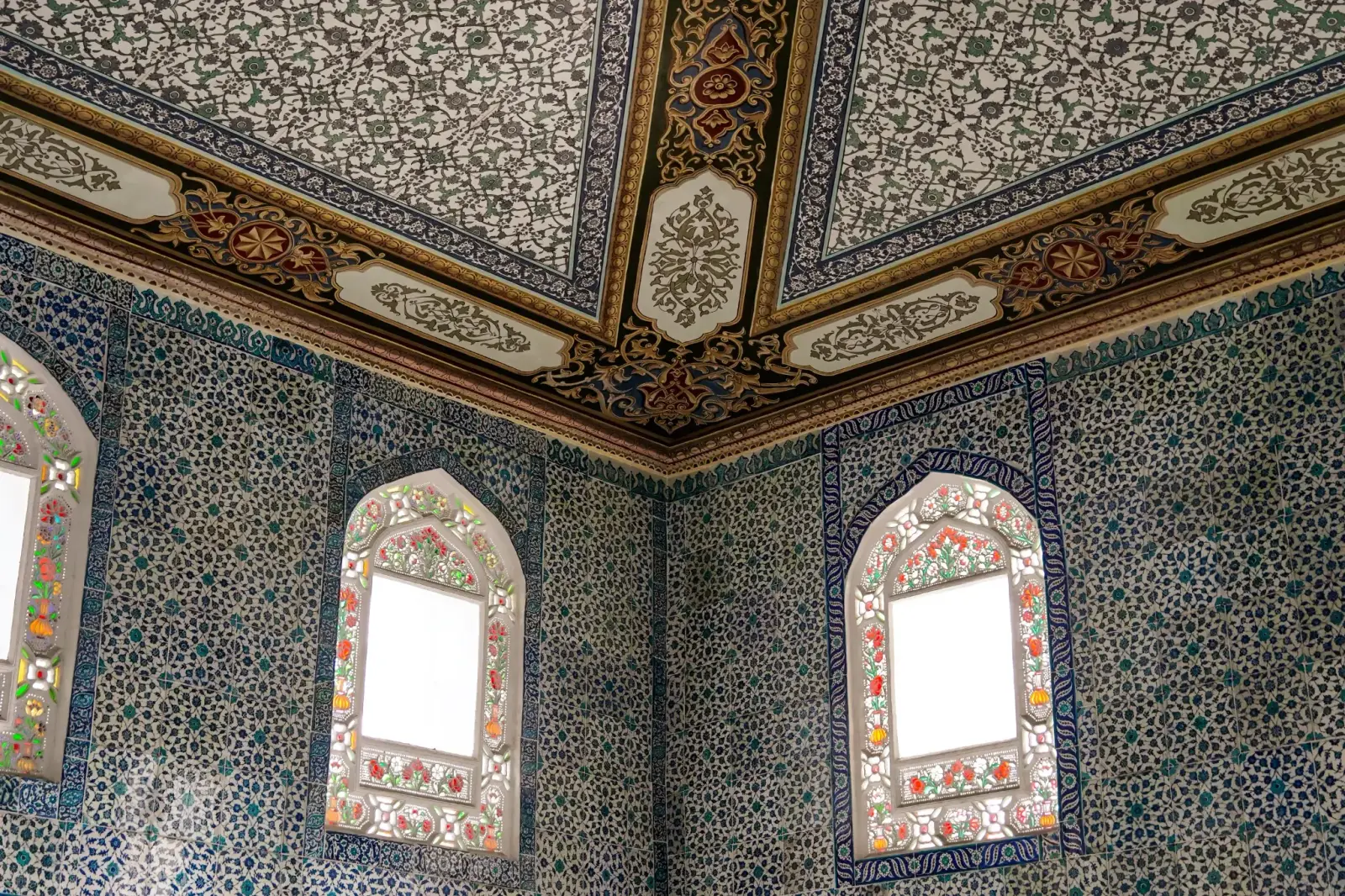
The Circumcision Room was constructed or substantially remodelled in 1640–1641 under Sultan Ibrahim I on the marble terrace of the Fourth Courtyard, near the Revan and Baghdad pavilions. It served as the dedicated chamber for the sünnet — circumcision — ceremonies of the young Ottoman princes, an important Islamic rite of passage that marked their formal entry into manhood and the beginning of their preparation for possible future rule. The room was also used at times by the sultan for rest and prayer, and its location on the open terrace allowed the ceremonies to take place in a relatively private yet ceremonially elevated setting within the palace’s innermost garden zone.
This room is a single, relatively simple rectangular chamber with large windows and a tiled fireplace, but its exterior is one of the most striking features of the Fourth Courtyard. The façades are entirely clad in high-quality İznik tiles of mixed periods, many of them recycled from earlier 16th-century imperial buildings of Süleyman the Magnificent’s reign. These include rare large-scale tile panels that once adorned ceremonial structures in the Second and Third Courtyards; the reuse of such prestigious tiles reflects both practical economy and a deliberate reverence for the classical golden age of Ottoman ceramic art. Inside, the decoration continues with İznik tiles, stained-glass windows that cast coloured light, and a gilded fireplace hood.
Today the Circumcision Room is fully open to visitors as part of the Topkapi Palace Museum’s Fourth Courtyard itinerary. Guests can view the extraordinary exterior tile panels up close — especially the famous blue-and-white compositions — and enter the chamber to see the interior tiling, fireplace and windows. Its compact scale, the quality and historical layering of its ceramic decoration, and its position overlooking the Golden Horn make it a highlight for anyone interested in Ottoman tilework and palace ceremonial life.
İftar Pavilion
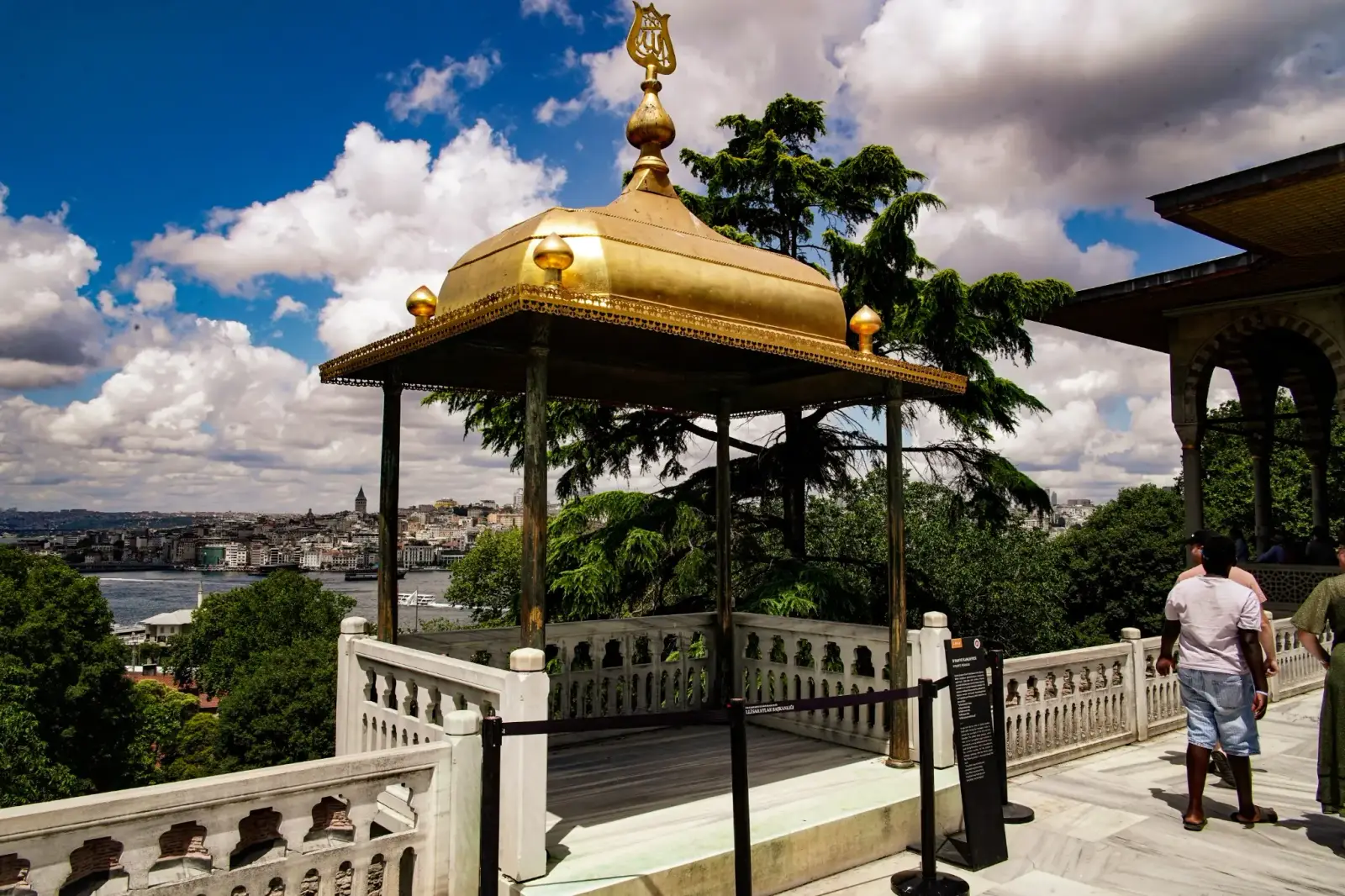
The İftar Pavilion was commissioned around 1640 by Sultan Ibrahim I and built as a small projecting structure on the edge of the marble terrace of the Fourth Courtyard, between the Baghdad Pavilion and the Circumcision Room. It was specifically designed as a private place for the sultan to break his daily fast during the holy month of Ramadan while watching the sunset over the Golden Horn and the city. The pavilion also served on summer evenings as a cool, open belvedere where the sultan could rest, receive informal greetings from palace officials or watch performances in the gardens below. Its elevated and open position made it ideal for quiet reflection at the sacred moment of iftar.
The pavilion is a delicate, open-sided gazebo rather than a closed room. It consists of a small marble platform projecting outward from the terrace, covered by a distinctive gilded copper canopy supported on slender columns. The roof takes the form of a ridged cradle vault inspired by Indian and Chinese styles and is richly gilded, so that it glows in the evening light; this has earned it the popular nickname of the Golden Cage. The entire structure is oriented to frame panoramic views of the Golden Horn, Galata and the lower palace gardens, turning the surrounding landscape into an integral part of the architectural experience.
The İftar Pavilion remains fully accessible and is one of the most photographed spots in the Fourth Courtyard of the Topkapi Palace Museum. Visitors can stand on or beside the small platform to enjoy the same sweeping vistas of the Golden Horn that the sultans once contemplated at sunset. The gleaming gilded canopy, the delicate open structure and its dramatic position on the edge of the terrace make it a favourite viewpoint and a vivid reminder of the intimate intersection of imperial life and religious observance within the palace gardens.
Sofa Mosque
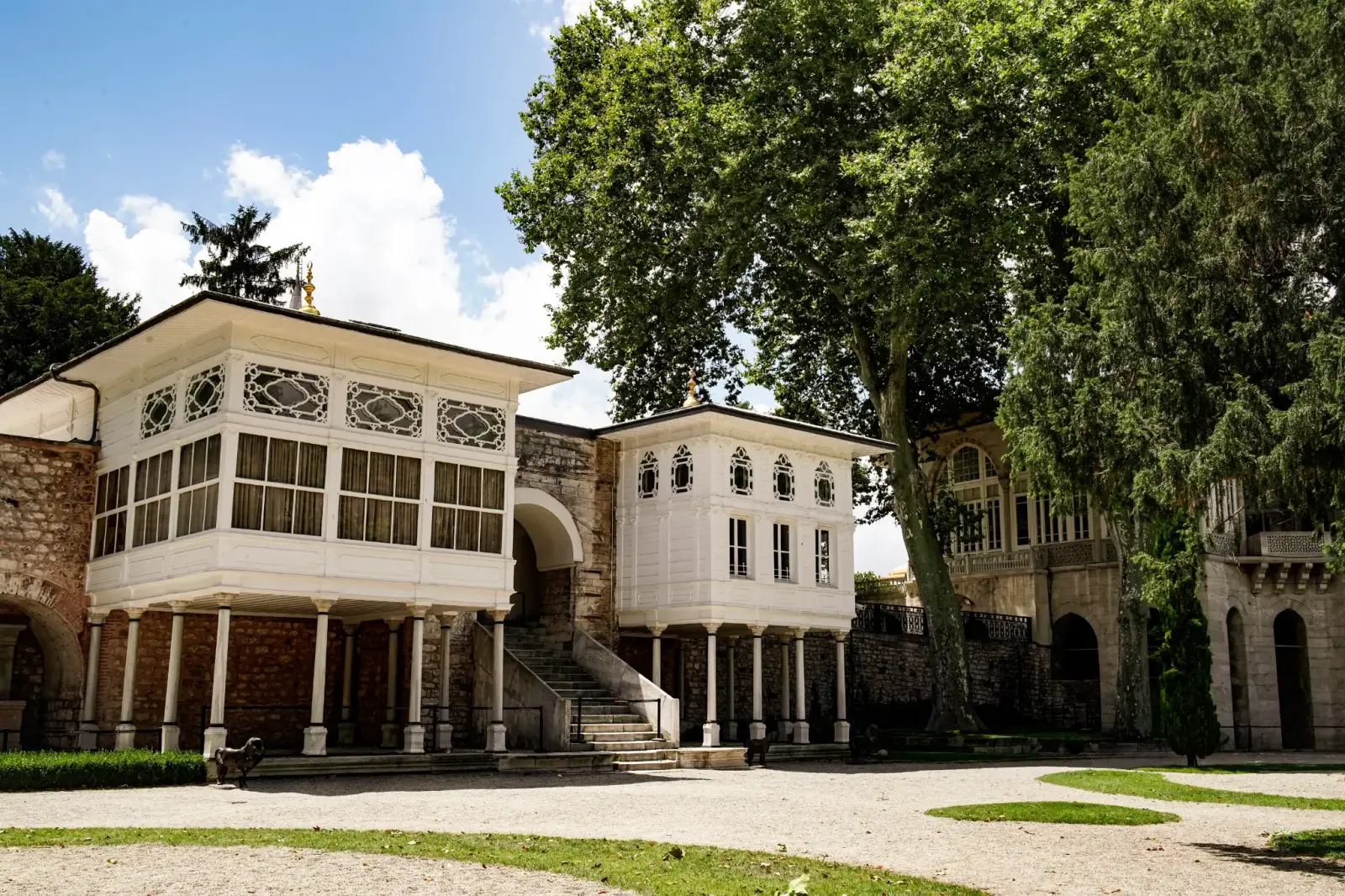
The Sofa Mosque is a small 19th-century mosque located in the south-eastern part of the Fourth Courtyard, near the Mecidiye Pavilion and the former site of earlier service structures. It was commissioned by Sultan Mahmud II primarily for the use of the personnel of the Sofa Ocağı, the corps or dormitory responsible for the maintenance and cleaning of the Imperial Sofa and related areas. An earlier small mosque, or mescit, had existed on or near the site since at least the 16th century for the same group of palace servants; Mahmud II had the previous building replaced, and the present structure was later repaired under his son Abdülmecid I around 1858–1859. Its importance lies in providing a dedicated place of worship for the lower-ranking staff of the outermost imperial garden zone, reflecting the hierarchical organisation of religious facilities within the palace complex.
The mosque served the daily prayer needs of the Sofa Ocağı personnel and other servants working in the Fourth Courtyard and its gardens. As a modest private oratory rather than a grand imperial mosque, it was intended for the practical use of these staff members rather than for the sultan or high officials, who had access to larger or more private prayer spaces elsewhere in the palace. It continued this function into the later Ottoman period, until the palace was converted into a museum.
It is a small, rectangular building constructed in the Empire style that characterised late Ottoman architecture under Western influence. It is built of cut stone, features a flat lead-covered dome and has a single-balcony minaret. Large windows open on three façades and the interior of the dome is colourfully decorated. There is a small gallery, and an inscription in talik script records the restoration carried out under Abdülmecid I in 1858–1859. The overall design is simple and horizontal, consistent with its utilitarian purpose and the Empire aesthetic of the period.
The Sofa Mosque stands as a modest but intact element of the Fourth Courtyard within the Topkapi Palace Museum. Visitors can view its exterior while exploring the area around the Mecidiye Pavilion and the lower terraces; the small scale, Empire-style details, single minaret and the restoration inscription are the principal features of interest. Although it is not a major exhibition space, it provides a quiet reminder of the practical religious facilities that served the palace’s working staff, and completes the picture of the 19th-century additions to the outermost imperial gardens.
Marble Terrace
The Marble Terrace, also known as the Imperial Sofa or Marble Sofa, forms the elevated core of the Fourth Courtyard and represents the most private and contemplative zone of Topkapi Palace. Its origins trace back to the early layout of the palace under Mehmed II in the 15th century, when a terrace and pool already existed near the Privy Chamber. It was significantly widened and remodelled toward the Golden Horn during the reigns of Murad IV and Ibrahim I in the first half of the 17th century, acquiring much of its present form. This marble-paved platform, with its pool and surrounding pavilions, held great importance as the sultan’s personal outdoor sanctuary — an architectural expression of imperial seclusion, leisure and the ideal of a paradisiacal garden overlooking the waters that defined Istanbul.
The terrace served primarily as a private recreational and ceremonial space for the sultan and his immediate entourage. It was used for rest, informal gatherings, musical and theatrical entertainments, and quiet reflection. During Ramadan the nearby İftar Pavilion allowed the sultan to break his fast while watching the sunset; the terrace also hosted temporary displays of the Sacred Relics during the annual cleaning of the Privy Chamber, and provided a vantage point from which the sultan could observe sports and games such as javelin, archery or wrestling performed in the lower gardens. Its open yet elevated character made it ideal for both solitary enjoyment of the landscape and carefully controlled courtly activities.
From the Marble Terrace the views are among the most spectacular in the entire palace. Looking north and north-west, one sees the Golden Horn — Haliç — with the historic districts of Galata and Beyoğlu beyond. To the east and north-east the Bosphorus stretches toward the Asian shore and Üsküdar. To the south the Sea of Marmara opens out, with the Princes’ Islands sometimes visible on the horizon. The terrace thus commands a near-complete panorama of the three bodies of water that meet at Sarayburnu, framing the historic peninsula, the European and Asian shores and the maritime approaches to the city in a single, carefully composed vista.
Today the Marble Terrace remains fully accessible as a central highlight of the Fourth Courtyard within the Topkapi Palace Museum. Visitors can walk the marble paving, view the decorative pool and explore the surrounding structures — the Baghdad Pavilion, Revan Pavilion, Circumcision Room and the small gilded İftar Pavilion — while enjoying the same panoramic views of the Golden Horn, Bosphorus and Sea of Marmara that the sultans once contemplated. It is especially popular for photography at different times of day and offers one of the most memorable open-air experiences in the palace complex.