
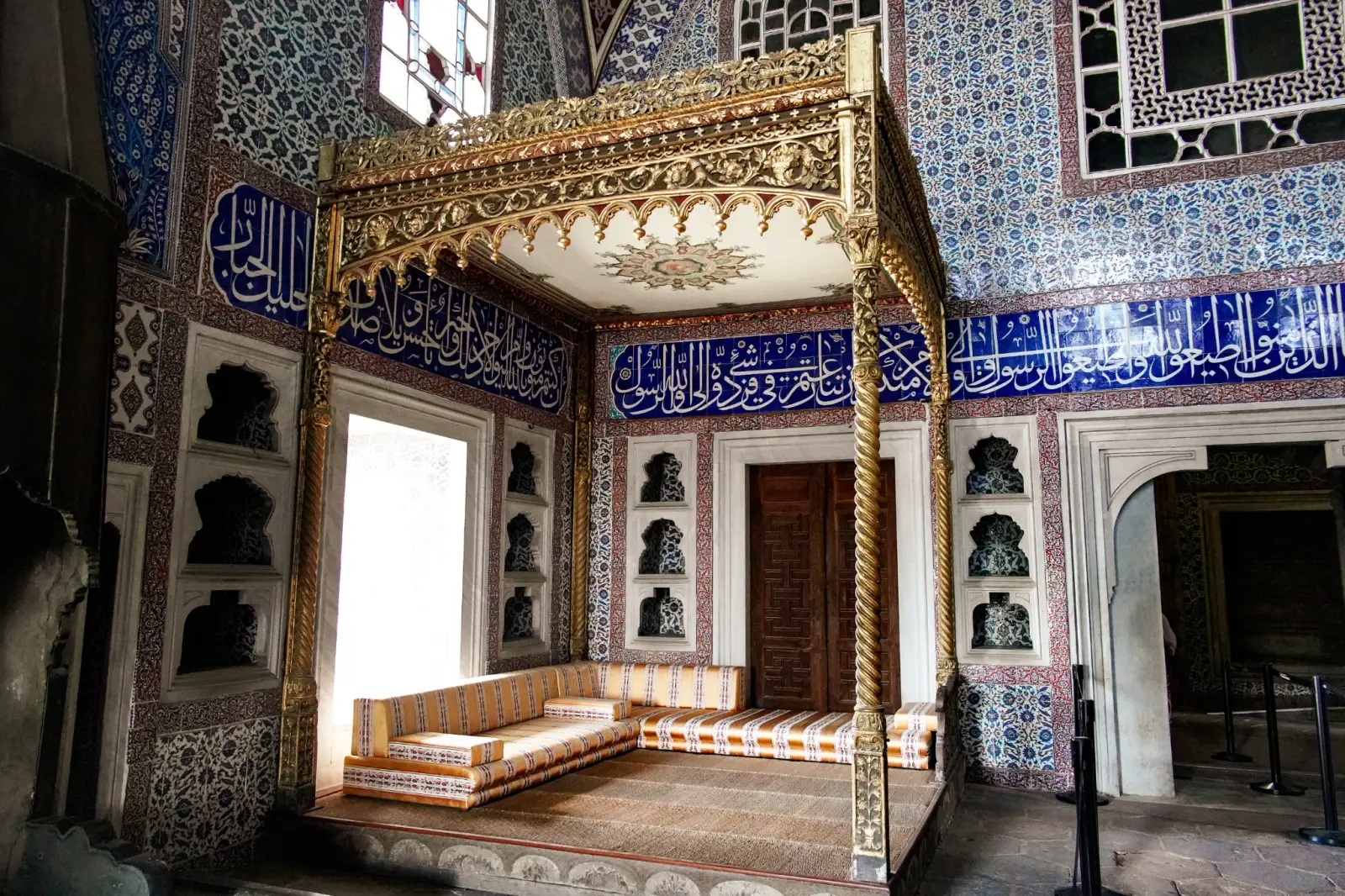
A Day in the Life of an Ottoman Sultan at Topkapi Palace
From the attendant who woke him before first light to the last prayer of the night — the ablutions, the councils, the two meals and the ceremony that shaped every hour in the private apartments.
Before Dawn – Waking Up and Dawn Prayer
The sultan typically rose before or at first light. A trusted attendant often a senior eunuch or page would enter the private apartments, sometimes gently touching the sultan’s foot and offering a short prayer or greeting. Ritual ablution or “abdest” followed at a marble fountain within the private chambers.
He then performed the dawn sabah prayer, frequently joining the pages and officers of the Enderun at the Ağalar Mosque or praying privately. After prayer came a period of Quran reading, silent remembrance (zikr), or brief consultation of religious texts. The continuous recitation of the Quran in the Chamber of the Sacred Relics formed a constant spiritual backdrop to palace life.
Morning – Dressing, Breakfast, and Official Business
Attendants dressed the sultan in a fine kaftan. Pockets were traditionally filled with gold and silver coins intended for distribution as rewards or alms during the day; whatever remained at nightfall belonged to the bedchamber officer.
Breakfast was taken alone. It was a rule formalized under Mehmed II. No family members shared the sultan’s table. The meal was simple by later standards: bread, cheese, honey, yogurt, fruit, and sometimes light sherbet or milk. Food for the sultan was prepared in a dedicated kitchen often the “Kuşhane”, tasted by a food-taster (çeşnici), covered with a cloth, and sealed with a ribbon for security before being carried to him.
After breakfast the sultan moved to the Has Oda (Privy Chamber) or other working spaces in the Enderun. Much of the morning was devoted to state affairs: reviewing petitions, receiving reports from the Grand Vizier or other high officials, and on designated days(commonly Tuesdays and sometimes Sundays, monitoring the Imperial Council (Divan) that met in the Kubbealtı. The sultan could listen unseen through a latticed “Window of Justice.” A single knock on the grille could halt proceedings.
Audiences with the Grand Vizier, the Şeyhülislam, or foreign ambassadors occurred according to strict protocol. Silence and hierarchical order governed the courtyards and corridors.
Midday – The Principal Meal and Rest
The main meal of the day (taam) was served around midday or early afternoon. It was far more elaborate than breakfast including multiple courses of pilaf, meats, vegetables, and sweets prepared under tight security. Again the sultan ate alone or with only the most intimate attendants present.
A short rest often followed, sometimes on embroidered mattresses.
Afternoon – Leisure, Gardens, or Private Time
Afternoons allowed more personal freedom when state business permitted. The sultan might walk or ride in the palace gardens among cypresses, plane trees, fountains, and aviaries; cross to the Asian shore of the Bosphorus, practice archery or horsemanship, listen to music, read or pursue individual interests like poetry, calligraphy, map-making, tulip cultivation, or craftsmanship, depending on the Sultan.
Later in the afternoon he frequently entered the Harem. There he might receive the Valide Sultan, visit favored consorts or hold a more formal reception in the Hünkâr Sofası (Imperial Hall). The Harem was a highly structured household, not merely a place of pleasure but rather its daily rhythm was governed by prayer, education of the young women and children, and the authority of the Valide Sultan and the Chief Black Eunuch.
Evening – Final Prayers, Lighter Meal, and Night
Sunset (maghrib) and night (yatsı) prayers closed the formal religious obligations of the day. A lighter evening meal followed.
Gates of the palace were locked after the evening prayer; keys were held under strict custody. The vast complex of several thousand inhabitants settled into a quieter, self-contained night under the watch of the night guard.
The sultan’s private night could include reading, conversation with scholars or musicians, or time with a consort. Protocol required that certain nights notably Friday into Saturday be spent with a legal wife when the sultan had one. The continuous Quran recitation in the Sacred Relics chamber continued through the night without interruption.
In short, a Sultan’s daily life can be summarized at those aspects:
- The entire day was framed by the five daily prayers and by an elaborate hierarchy of silence, proximity, and access.
- The sultan’s person was carefully protected. Sultan’s food security, restricted movement of others and layers of eunuchs and pages.
- Life inside Topkapı was more disciplined and pious than the Orientalist fantasies of endless luxury and sensuality suggest. Many sultans were deeply engaged with religious study, statecraft, and personal crafts.
- Seasonal variation, individual temperament, age, and whether the empire was at war all modified this pattern. Friday brought the public Cuma Selamlığı procession to a mosque, one of the few regular occasions when the wider population could see the sultan.
This reconstruction draws on palace protocol codes, contemporary European ambassadorial reports, Ottoman chronicles, and later scholarly studies of Topkapı’s daily rhythms. It reflects the classical secluded court rather than the more Europeanized routines of the 19th-century sultans who preferred other residences.
From Page to Palace
Reading about the history is only the beginning. Book your visit today and walk the same corridors as the Sultans.