
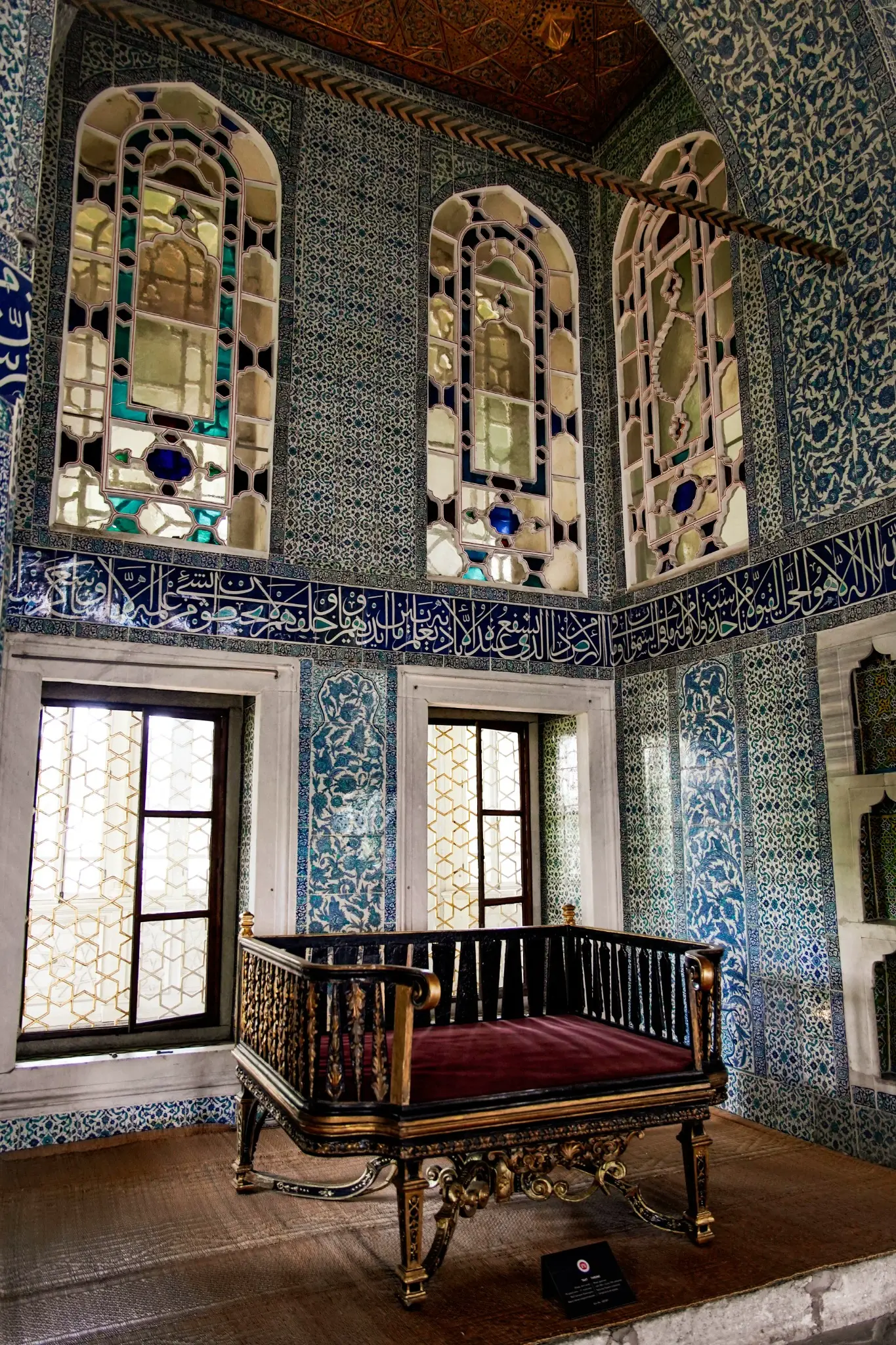
What Was Life Really Like Inside the Topkapi Palace Harem?
Not the sensual playground of Western fantasy but a disciplined household and school of several hundred people: the sultan’s mother, his consorts, their children and the staff who ran it.
The Imperial Harem (Harem-i Hümâyûn) of Topkapı Palace was not the sensual playground of Western fantasy. It was a large, highly disciplined, hierarchical household and educational institution that housed the sultan’s mother, consorts, children, female relatives and a large staff of enslaved women and eunuchs. At its peak, it contained several hundred people sometimes approaching or exceeding a thousand when counting children and servants. Its primary purposes were dynastic reproduction, the education of future mothers of sultans and high-ranking wives of officials, the management of the imperial household especially in the 16th and 17th centuries significant political influence.
Physical Setting and Seclusion
The harem occupied a large, multi-courtyard complex on the western side of the palace, with more than 300–400 rooms at its height. Access was tightly controlled. Unrelated men were forbidden; the only males allowed inside were the sultan himself, young princes, and the corps of eunuchs primarily Black eunuchs under the Chief Black Eunuch also known as the “Kızlar Ağası” or “Dârüssaâde Ağası”
Key spaces included the Courtyard of the Black Eunuchs, the Courtyard and apartments of the Valide Sultan, the Imperial Hall (Hünkâr Sofası), private chambers of the sultan and his consorts, dormitories for ordinary concubines (cariyes), baths (hamams), kitchens, laundry, schools, and service areas. Architecture emphasized privacy, supervision and hierarchy through narrow corridors, screened windows and successive courtyards of increasing restriction.
Strict Hierarchy
Status determined everything including living quarters, clothing, income, servants, and proximity to power:
- Valide Sultan (Queen Mother): The highest-ranking woman. She ruled the harem, controlled its budget, advised her son the sultan,and often wielded empire-wide influence especially during the “Sultanate of Women”.
- Haseki Lady (chief consort or official consorts): Mothers of princes or favored women of high rank. They had private apartments and substantial households.
- İkbal and Gözde: The ladies who are secondary favourites of Sultan.
- Kalfas and Ustas: Senior female administrators and teachers who ran departments such as the treasury, wardrobe or kitchens.
- Concubines (Cariyes): The enslaved women mostly of non-Muslim origin such as Circassian, Georgian, Russian, Balkan, African, etc. The majority never became sexual partners of the sultan but rather they served as household staff.
Most women entered as young girls often delivered as gifts, spoils as captives or purchases, converted to Islam and received new names.
Education — A Finishing School for the Elite
The harem functioned as a rigorous school. New arrivals underwent years of training similar in discipline to the male Enderun palace school:
- Adab (Manner): Turkish language and Ottoman court etiquette.
- Theology: Islamic religion, Quran, and basic religious practice.
- Literature: Reading and writing Ottoman Turkish sometimes Arabic and Persian.
- Arts: Music, singing, embroidery, sewing, and other craftsmanship.
- Life Lessons: Household management and service skills.
Talented women could rise through merit to administrative posts. Those were not chosen for the sultan’s intimacy were often married with dowries to high officials or palace pages to spread palace culture outward. Many remained as career servants and teachers.
Daily Rhythm
Life followed a structured, prayer-centered schedule, not idleness:
- Pre-dawn: Ablutions and morning prayer often in the harem mosque.
- Morning: Light breakfast including bread, cheese, honey, yogurt, coffee. The reports to the Valide Sultan, household duties and lessons for the young.
- Midday: Principal meal (taam), served according to rank.
- Afternoon: Rest, baths, further lessons or work, gardens, music practice, or embroidery. The sultan often visited in the late afternoon.
- Evening: Lighter meal, night prayer and settling for the night.
Gates were locked after evening prayer. Competition for favor existed but so did routine labor, education, and mutual dependence. Illness, aging, and political shifts affected everyone’s status.
The Role of Eunuchs
Black eunuchs who are castrated African men or often enslaved young guarded the harem and controlled communication with the outside world. The Chief Black Eunuch ranked among the highest officials of the empire and served as the crucial intermediary between the Valide Sultan and the sultan or Grand Vizier. White eunuchs mainly served the outer/male sections of the palace.
Political Reality
Especially from the mid-16th to mid-17th centuries, powerful women of the harem such as Hürrem, Nurbanu, Safiye, Kösem, Turhan, and others nfluenced appointments, diplomacy, charitable foundations and succession. Their power derived from their roles as mothers of potential or reigning sultans and from the household networks they controlled. It is not primarily from personal seduction. European observers barred from entry invented much of the erotic mythology that still lingers.
Outcomes and Limits
- A small minority became mothers of princes and rose dramatically in status.
- Many served lifelong as staff.
- Others left through marriage.
- The system was hierarchical and restrictive, with limited personal freedom, yet it offered education, material security, and pathways to influence unavailable to most women outside the palace.
Topkapı Harem was a self-contained world of discipline, education, status competition, maternal politics and carefully regulated intimacy tht is far closer to a royal household and elite academy than to the fantasy of endless leisure and sensuality. Recent restorations of previously closed sections of concubine quarters, laundry, kitchens, baths continue to make this structured daily reality more visible to visitors.
From Page to Palace
Reading about the history is only the beginning. Book your visit today and walk the same corridors as the Sultans.