
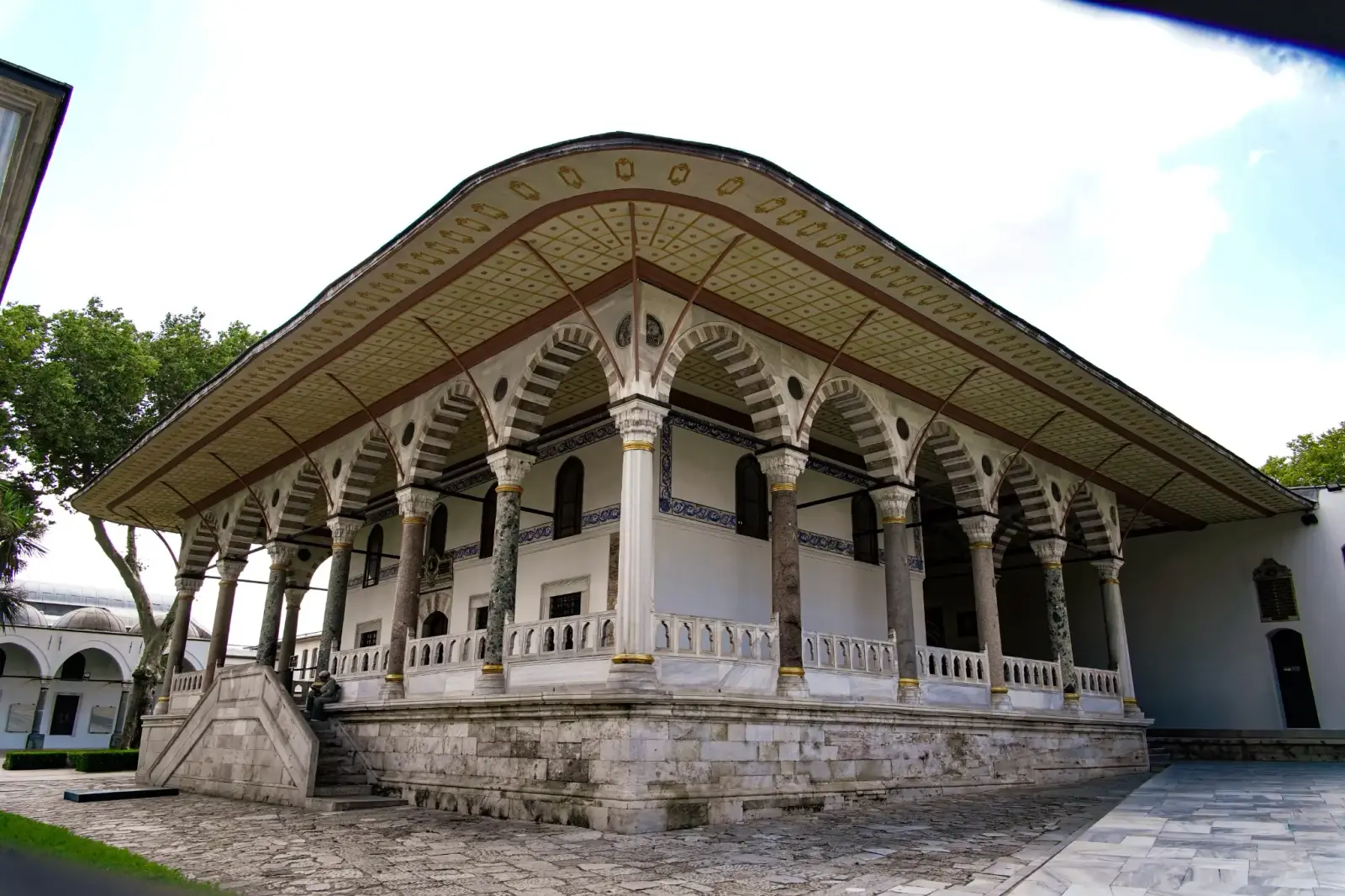
Ottoman Sultans who Called Topkapi Palace as Home
For nearly four centuries the palace on the old Byzantine acropolis was both residence and seat of government. The sultans who lived in it, from Mehmed II to Abdülmecid I.
For nearly four centuries, Topkapı Palace stood at the heart of the Ottoman Empire as both the primary residence of the sultans and the administrative center of a vast multi-continental state. Built on the ancient acropolis of Byzantine Constantinople by overlooking the Golden Horn, the Bosphorus and the Sea of Marmara. Topkapi Palace had embodied the power, seclusion and ceremonial order of Ottoman sovereignty. From the late fifteenth century until the mid-nineteenth century, successive sultans lived, ruled and shaped imperial policy within its walls.
Foundation and the First Residents
Construction began under Mehmed II the Conqueror (r. 1451–1481), shortly after the fall of Constantinople in 1453. Mehmed deliberately chose the site of the former Byzantine acropolis to symbolize the transfer of imperial authority. The new palace initially called the New Palace or “Saray-ı Cedid” was designed as a series of courtyards of increasing privacy, reflecting both Islamic traditions of seclusion and the practical needs of a conquering dynasty. Mehmed took up residence there around 1478, establishing the basic layout that would endure for centuries: the outer public courts, the intermediate administrative zones and the innermost private quarters of the sultan and his household.
His son Bayezid II (r. 1481–1512) continued to use and modestly expand the complex. The palace remained the principal seat of power even as Edirne retained some ceremonial importance in the early years.
The Classical Age: Süleyman and the Consolidation of Power
The most transformative period came under Süleyman I (r. 1520–1566), known as the Magnificent or the Lawgiver. During his long reign, the palace reached its classical form. Major architectural expansions occurred and crucially his wife Hürrem Sultan permanently relocated the imperial harem from the Old Palace into Topkapı itself. This decision turned the complex into a true family residence as well as a seat of government. The harem’s integration increased the political weight of the inner palace and set the stage for the later “Sultanate of Women”
Süleyman’s successors in the later sixteenth century like Selim II, Murad III, and Mehmed III continued to reside and rule from Topkapı. The palace now housed not only the sultan but also a large household of students of Enderun schools, eunuchs, the harem, kitchens capable of feeding thousands, treasuries, libraries and council chambers. Strict ceremonial protocols governed movement between courtyards, reinforcing the sultan’s semi-sacred seclusion.
The Seventeenth and Eighteenth Centuries: Continuity Amid Change
Throughout the seventeenth century, sultans such as Ahmed I, Murad IV, Ibrahim I, and Mehmed IV continued to call Topkapı home, even as the empire faced military and fiscal challenges. The palace remained the stage for the rise of powerful Valide Sultans like Kösem and Turhan among them who exercised influence from within the harem while the formal machinery of state still operated in the outer courts.
In the eighteenth century the palace retained its status as the official residence, though some sultans began to favor seasonal or alternative dwellings along the Bosphorus. Nevertheless, coronations, major audiences, the storage of the imperial treasury and sacred relics and the daily rhythms of court life continued to center on Topkapı. Sultans of this era, including Ahmed III, Mahmud I and others still governed from its Divan chamber and private apartments.
The Nineteenth-Century Transition
By the early nineteenth century, Topkapı increasingly appeared outdated to sultans influenced by European models of monarchy and comfort. Mahmud II (r. 1808–1839) and his successors still used the palace but the desire for a modern, Western-style residence grew. The decisive break came under Abdülmecid I (r. 1839–1861). In 1856 he moved the imperial court to the newly completed Dolmabahçe Palace on the Bosphorus.
From that point Topkapı ceased to be the primary home of the sultans. Later rulers like Abdülaziz I, Abdülhamid II, Mehmed V, and Mehmed VI resided mainly at Dolmabahçe or Yıldız Palace. Topkapı retained important ceremonial, treasury and religious functions including the continuous Quran recitation in the Chamber of the Sacred Relics, but it was no longer the living heart of the dynasty.
Legacy
In total, approximately thirty Ottoman sultans used Topkapı Palace as their principal residence and seat of government between the late fifteenth and mid-nineteenth centuries. The palace witnessed the empire at its territorial peak under Süleyman, the political experiments of the Sultanate of Women, periods of crisis and reform and the gradual shift toward Europeanized court culture.
More than a collection of buildings, Topkapı was a carefully designed machine of sovereignty. It was a place where architecture, ceremony, hierarchy and seclusion combined to project the sultan’s authority. When the court finally left for Dolmabahçe in 1856, an entire era of Ottoman imperial life came to an end. Today the palace stands as a museum, preserving the spaces in which generations of sultans lived, ruled, prayed and shaped the history of one of the world’s most enduring empires.
From Page to Palace
Reading about the history is only the beginning. Book your visit today and walk the same corridors as the Sultans.