
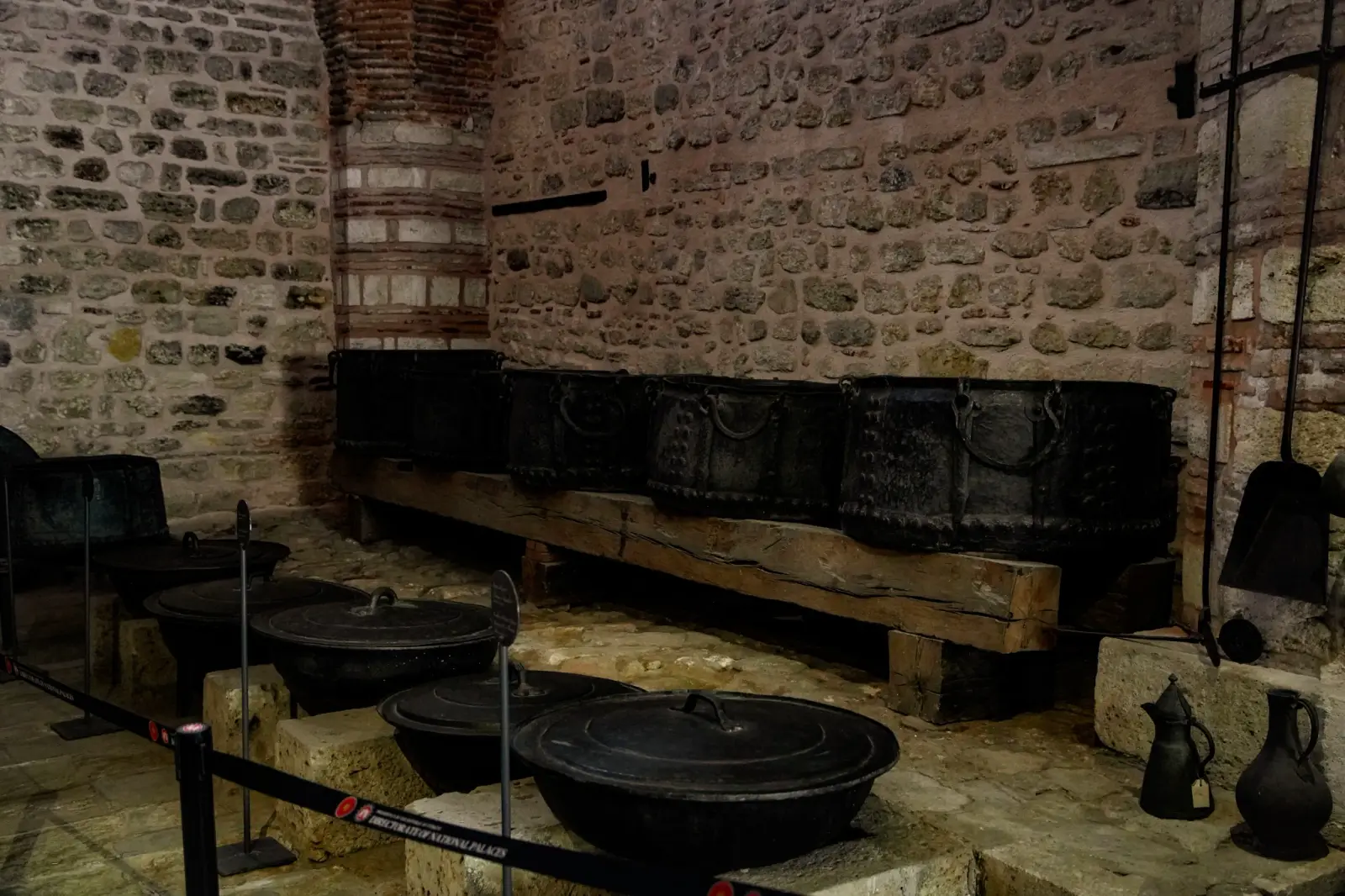
The Imperial Kitchens of Topkapi Palace: Feeding an Empire
Ten specialised cooking units under conical chimneys, 5,250 square metres, and four to five thousand meals a day — rebuilt by Mimar Sinan after the fire of 1574.
The Imperial Kitchens occupied a large complex on the right side of the Second Courtyard of Topkapı Palace. First established in the late 15th century under Mehmed II the Conqueror and significantly rebuilt by the great architect Mimar Sinan after a major fire in 1574, they formed one of the most impressive logistical operations of the Ottoman court.
At their height the kitchens were a vast, factory-like institution covering roughly 5,250 square meters with about ten specialized cooking units crowned by distinctive conical chimneys. They prepared food every day for 4,000 to 5,000 people including the sultan and his household, the harem, the pages of the Enderun, outer-service officials known as “Birun” members of the Imperial Council on meeting days, and various guests. On special occasions such as the quarterly distribution of military pay “ulûfe” or major ceremonies, the number could rise to 10,000–15,000.
The organization was highly hierarchical and specialized, modeled in part on military discipline. A Kitchen Superintendent “Matbah Emini” oversaw the whole operation under the higher authority of the Imperial Cellar-master “Kilercibaşı”. Teams of master cooks and hundreds of apprentices specialized in particular tasks: rice and pilaf, kebabs and meats, vegetables, dough and pastries, sweets, and beverages. Separate sections existed for different ranks:
- The Kuşhane (Birdhouse Kitchen) prepared the sultan’s personal meals under the strictest security.
- The Has Mutfak cooked for the Valide Sultan, princes, and high-ranking harem women.
- General kitchens served the broader palace population.
- The Helvahane specialized in desserts, pastes (macun), and confectionery.
- The Şerbethane produced sherbets, jams, and drinks.
The kitchens were far more than a practical necessity. They symbolized the sultan’s power, generosity and ability to provision a miniature city. Feeding the Janissaries on payday with soup, pilaf, and sweet named “zerde” was a political ritual that reinforced loyalty. The complex also housed dormitories, baths, a small mosque and storerooms for the palace staff. One of the world’s finest collections of Chinese porcelain especially celadonware, traditionally believed to change color in the presence of poison was kept and used here, reflecting both luxury and concern for the sultan’s safety. Meals for the ruler were tasted by a chief taster and often sealed with a cloth and ribbon before being carried to him.
Most Favored and Characteristic Dishes
Ottoman palace cuisine prized balance, seasonal ingredients, and often a sophisticated interplay of sweet and savory flavors. Tomatoes, potatoes, and other New World ingredients were absent until much later. Favorite and representative dishes included:
Meat and savory mains:
- Mutancana: Lamb (or mutton) slowly cooked with dried apricots, plums, figs, raisins, almonds, shallots, and honey. This sweet-savory stew was especially associated with Mehmed the Conqueror and remained a palace classic.
- Various lamb kebabs, stews and rmeat roasts.
- Mahmudiye: Chicken cooked with dried fruits, almonds, honey, cinnamon, and a touch of lemon or sour notes.
- Stuffed melon: A hollowed melon filled with minced meat, rice, almonds, currants and spices then baked.
- Poultry of many kinds like chicken, quail, pigeon, duck, goose prepared in refined ways.
Rice and grain dishes
- Pilafs enriched with almonds, pistachios, currants, saffron or chickpeas. Pilaf was often the centerpiece of a meal rather than a mere side dish.
- Zerde: A sweet saffron rice pudding frequently served to troops and at celebrations.
Soups, pastries, and vegetables
- Light soups like lentil, tarhana, yogurt-based or as such to begin meals.
- “Börek” and other layered or stuffed pastries.
- Eggplant preparations that later periods saw the development of dishes such as “Hünkar Beğendi”.
Desserts and sweets produced in Helvahane
- Multiple varieties of “helva”, especially the luxurious “Helva-i Hakani” made for the sultan with saffron, honey, and fine nuts.
- Baklava and other syrup-soaked pastries.
- “Aşure” or Noah’s pudding especially during Muharram month related with Hicri Calender.
- Light milk or starch-based sweets such as Lion’s Eye or “Terkib-i Çeşm-i Şir.”
- Fruit preserves, jams, and aromatic pastes called “Macun”.
Drinks
- Fruit and flower sherbets made out from rose, tamarind, sour cherry, quince and as such were preferred over plain water and accompanied nearly every meal.
The sultan usually ate alone or with minimal company, following a measured sequence of dishes served on fine porcelain or silver. The overall style emphasized refinement and variety according to season and rank and the projection of imperial munificence. The kitchens of Topkapı thus stand as one of the clearest windows into the daily material culture, hierarchical order and sophisticated taste of the Ottoman court at its height.
The Imperial Kitchens were a masterpiece of Ottoman organization. A demonstration that the empire could feed thousands with precision, hierarchy and prosperous every single day.
From Page to Palace
Reading about the history is only the beginning. Book your visit today and walk the same corridors as the Sultans.