
Topkapi Palace in Movies, TV Series and Popular Culture
From Jules Dassin’s 1964 heist film to Turkish period drama: how the palace became shorthand on screen for intrigue, treasure and the Ottoman court.
Topkapı Palace has long captured the imagination of filmmakers and audiences. As the former seat of the Ottoman Empire with its courtyards, Harem, treasury and legendary treasures, it offers an irresistible blend of history, mystery and visual splendor. Both Turkish productions and international films have used the palace either as an actual filming location, a meticulously recreated set or a powerful narrative setting.
International Cinema: The Landmark Heist Film
The single most famous appearance of Topkapı Palace in world cinema is the 1964 American heist comedy “Topkapi”, directed by Jules Dassin.
Starring Melina Mercouri, Peter Ustinov, Maximilian Schell, and Robert Morley, the film follows a glamorous gang of thieves who plot to steal the emerald-studded Topkapı Dagger from the Imperial Treasury. Ustinov won an Academy Award for Best Supporting Actor for his role as the reluctant small-time crook forced to help the gang while also reporting to the Turkish police.
The movie was partially filmed on location in Istanbul including at the palace itself. Its elaborate heist sequence particularly the scene of a thief suspended by ropes above the dagger became highly influential. It later inspired similar tension-filled set pieces in the “Mission: Impossible” television series and the 1996 “Mission: Impossible” film starring Tom Cruise. The real Topkapı Dagger, still on display in the palace treasury gained lasting international fame through this film.
Other international productions have used Istanbul’s historic peninsula and Topkapı occasionally appears as a backdrop or reference point in films set in the city, reinforcing its status as a symbol of Ottoman grandeur and intrigue.
Turkish Television: The Palace as Living History
In Turkey, Topkapı Palace has been central to the enormous popularity of historical television dramas.
The most influential example is “Muhteşem Yüzyıl” (The Magnificent Century aired between 2011–2014). This global phenomenon which reached hundreds of millions of viewers, dramatized the reign of Süleyman the Magnificent and the rise of Hürrem Sultan. Although many interior Harem and private chamber scenes were shot on studio sets due to the fragility of the real interiors and museum restrictions, numerous exterior and courtyard sequences were filmed at the actual palace. The real Topkapı, its gates, courtyards, pavilions, and Bosphorus views became inextricably linked in the public imagination with the series’ depiction of sixteenth-century court life, power struggles and romance.
Later Turkish historical series have continued this tradition. Productions such as “Payitaht: Abdülhamid” and other Ottoman-era dramas frequently reference or recreate the palace, treating it as the enduring symbol of imperial authority. Even when filming takes place primarily on sets, the real Topkapı remains the authentic reference point that gives these stories their visual and historical credibility.
Broader Popular Culture
Beyond narrative films and series, Topkapı Palace appears regularly in documentaries about the Ottoman Empire, Islamic art and the history of Istanbul. Its treasures especially the Spoonmaker’s Diamond and the Topkapı Dagger are frequently highlighted in programs about the world’s greatest jewels and museum collections.
The palace also features in travel media, photography, literature and video games such as “Assassin’s Creed: Revelations” that draw on Ottoman history. Its image as a place of hidden riches, intricate intrigue, and imperial splendor has become a lasting cultural shorthand for the Ottoman world.
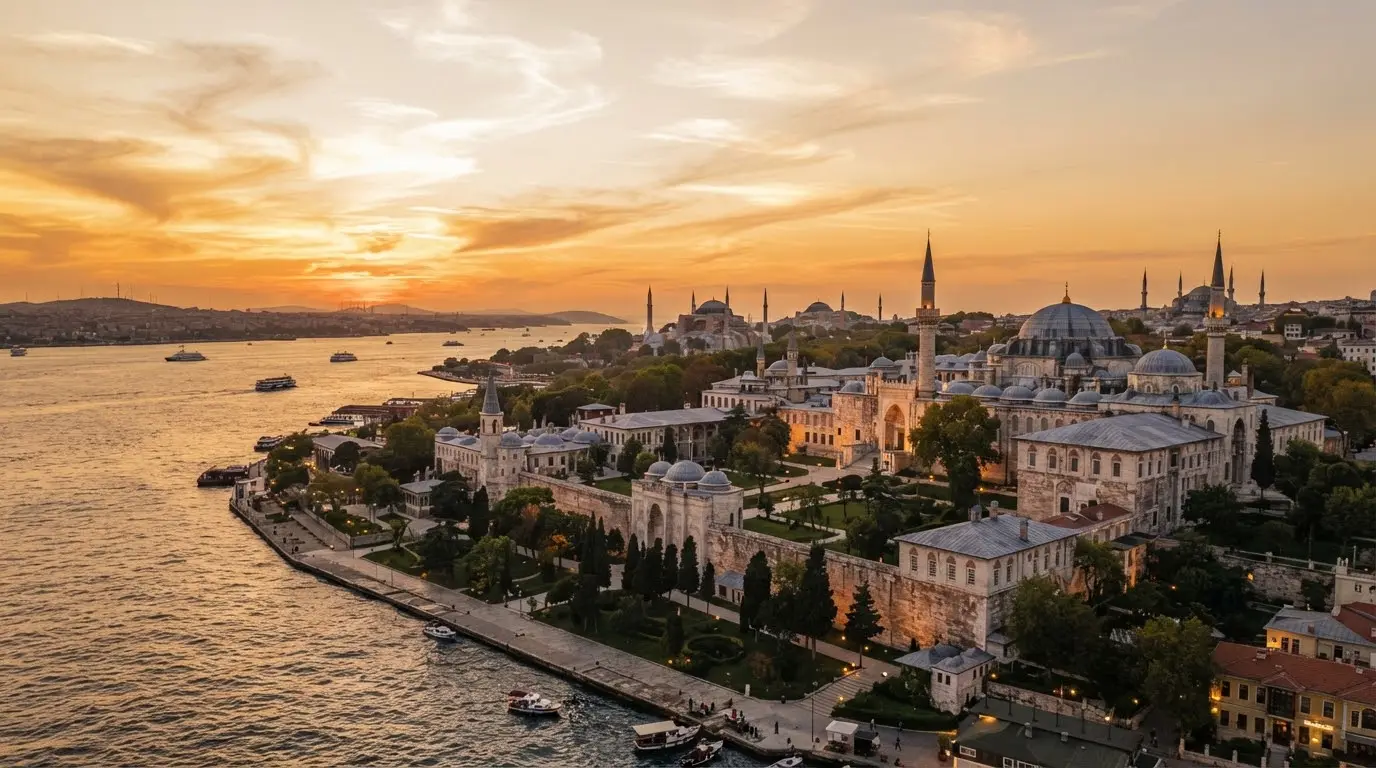
Topkapı’s enduring appeal in popular culture rests on several qualities. Architecturally, its sequence of courtyards and gates creates natural dramatic spaces. Historically, it was the real stage for centuries of political drama, dynastic conflict and cultural achievement. The combination of İznik tiles, pavilions, gardens and panoramic views of the Bosphorus offers filmmakers an unmatched visual setting. And symbolically, it represents both the height of Ottoman power and the mystery of a world once closed to outsiders.
From the stylish international heist of “Topkapi” (1964) to the sweeping historical storytelling of “Muhteşem Yüzyıl”, the palace has proven remarkably adaptable. Whether appearing as itself or inspiring elaborate studio recreations, Topkapı continues to serve as one of the most evocative backdrops in both Turkish and global popular culture that a place where history, legend and cinema meet.
From Page to Palace
Reading about the history is only the beginning. Book your visit today and walk the same corridors as the Sultans.