
Topkapi Palace vs Dolmabahce Palace: Two Eras of the Ottoman Empire
Two imperial residences from two different worlds — the classical court of courtyards and seclusion against a nineteenth-century palace built to be read by Europe.
Topkapı Palace and Dolmabahçe Palace stand as the two most important imperial residences of the Ottoman Empire yet they belong to profoundly different worlds. Topkapi embodies the classical order of a multi-continental Islamic empire at its height while Dolmabahçe reflects the empire’s nineteenth-century struggle to modernize and present itself as a contemporary European-style power. Their differences in historical, political, architectural and contextual illuminate the transformation of Ottoman sovereignty itself.
Historical Context
Topkapı Palace was founded by Mehmed II the Conqueror shortly after the conquest of Constantinople in 1453. Construction began in the late 1450s and the sultan took up residence around 1478. For nearly four centuries, Topkapi Palace had served as the primary residence and administrative center of the empire. Approximately thirty sultans ruled from its courtyards. It remained the official seat of power until 1856.
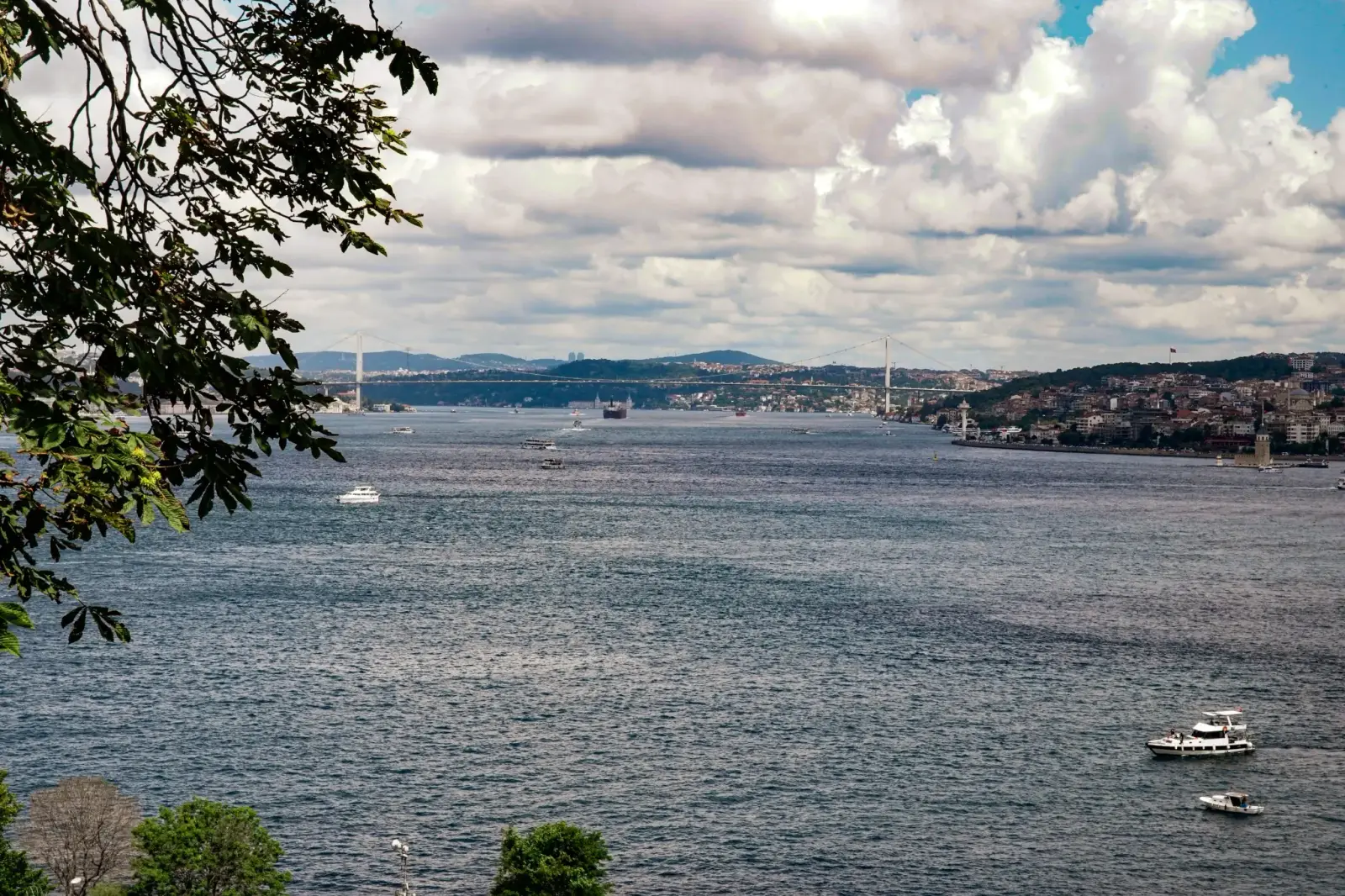
Dolmabahçe Palace was commissioned by Sultan Abdülmecid I and built between 1843 and 1856 on the shores of the Bosphorus. In 1856, the imperial court formally moved there that ended Topkapi Palace’s role as the main residence. Dolmabahçe Palace and later Yıldız Palace housed the later sultans until the end of the empire. It represents the final phase of Ottoman imperial life.
Political Meaning
Topkapı expressed a classical Ottoman conception of concentrated power. Authority was hierarchical, semi-sacred and carefully staged through controlled access and progressive seclusion. The sultan was the “Shadow of God on Earth,” whose presence was mediated by gates, courtyards, the Imperial Council and the possibility of unseen observation from the Tower of Justice. The palace was both the machine of government and the physical embodiment of dynastic continuity and Islamic legitimacy especially after the Sacred Relics arrived in 1517.
Dolmabahçe belonged to the Tanzimat era of reform and Westernization. By the mid-nineteenth century the empire faced military setbacks, financial pressure and the need to engage European powers on more equal terms. A traditional, inward-looking palace no longer projected the image of a modern state. Dolmabahçe was designed to impress foreign ambassadors and to signal that the Ottoman Empire could speak the architectural and ceremonial language of contemporary Europe. The move was a political statement of modernization even as the empire’s actual power continued to decline.
Architectural Contrast
The architectural differences are striking and deliberate. Topkapı Palace is a sprawling, low-rise complex organized around four successive courtyards of increasing privacy. Its design is non-axial, organic and topographically adaptive. Buildings are mostly one or two stories, pavilion-like and inward-facing. The emphasis is on hierarchy of access, controlled visibility and the experience of moving through thresholds of power. Materials are traditional: stone, brick, timber, lead roofs, marble, and extensive İznik tilework. Ornament is rich internally but restrained on the exterior. The overall effect is horizontal, sequential and deeply rooted in Islamic and Ottoman spatial traditions.
Meanwhile, Dolmabahçe Palace is a single, monumental, European-style palace. Designed primarily by the Armenian Ottoman architects Garabet Balyan and his son Nikoğos Balyan, it presents a long, symmetrical façade facing the Bosphorus. Its style is an eclectic blend of Baroque, Rococo and Neoclassical elements with some Ottoman features. The interior is lavish with crystal staircases, vast reception halls, gilded decoration and European furnishings. Unlike Topkapı’s additive, courtyard-based growth, Dolmabahçe was conceived as a unified, modern residence intended to rival the palaces of Western monarchs in comfort, scale and visual impact.
Where Topkapı hides power behind successive gates and lattices, Dolmabahçe displays it openly through a grand waterfront elevation and sumptuous public rooms designed for diplomatic reception.
Contextual and Cultural Differences
Topkapı functioned as a self-contained palace-city. It housed the Imperial Council, the palace school (Enderun), the Harem, the treasury, the kitchens that fed thousands and the Chamber of the Sacred Relics. Daily life was governed by strict protocol, seclusion and a complex household hierarchy. It was the product of an empire confident in its own traditions.
Dolmabahçe belonged to an empire under pressure to reform. It was built at enormous expense partly financed through loans from West that contributed to later debt problems as a deliberate break with the past. Its European appearance, modern amenities and location on the Bosphorus reflected the Tanzimat desire to orient the state toward the West. The palace symbolized aspiration as much as reality: an attempt to project strength and modernity at a time when the empire was increasingly described as the “sick man of Europe.”
Two Eras, Two Visions of Sovereignty
Topkapı Palace represents the classical Ottoman synthesis of Islamic reign, hierarchical order and carefully staged seclusion. It was the architectural expression of an empire that saw itself as the center of its own world.
Dolmabahçe Palace represents the empire’s nineteenth-century reinvention or attempted reinvention under the pressure of European power, enlightening public and internal reform. It is the architecture of transition of an old order trying to speak a new language.
Together the two palaces form a powerful historical pair. One looks inward to tradition, hierarchy and the sacred while the other looks outward to Europe, diplomacy and the modern state. Moving from Topkapı to Dolmabahçe in 1856 was not merely a change of address. It marked the passage from one era of Ottoman history into another.
From Page to Palace
Reading about the history is only the beginning. Book your visit today and walk the same corridors as the Sultans.