
What Did Ottoman Sultans Eat at Topkapi Palace?
Cooked in the Kuşhane, tasted by the çeşnicibaşı, sealed and carried to a sultan who usually ate alone. Lamb, pilaf and sherbet — and no tomatoes or peppers in the classical period.
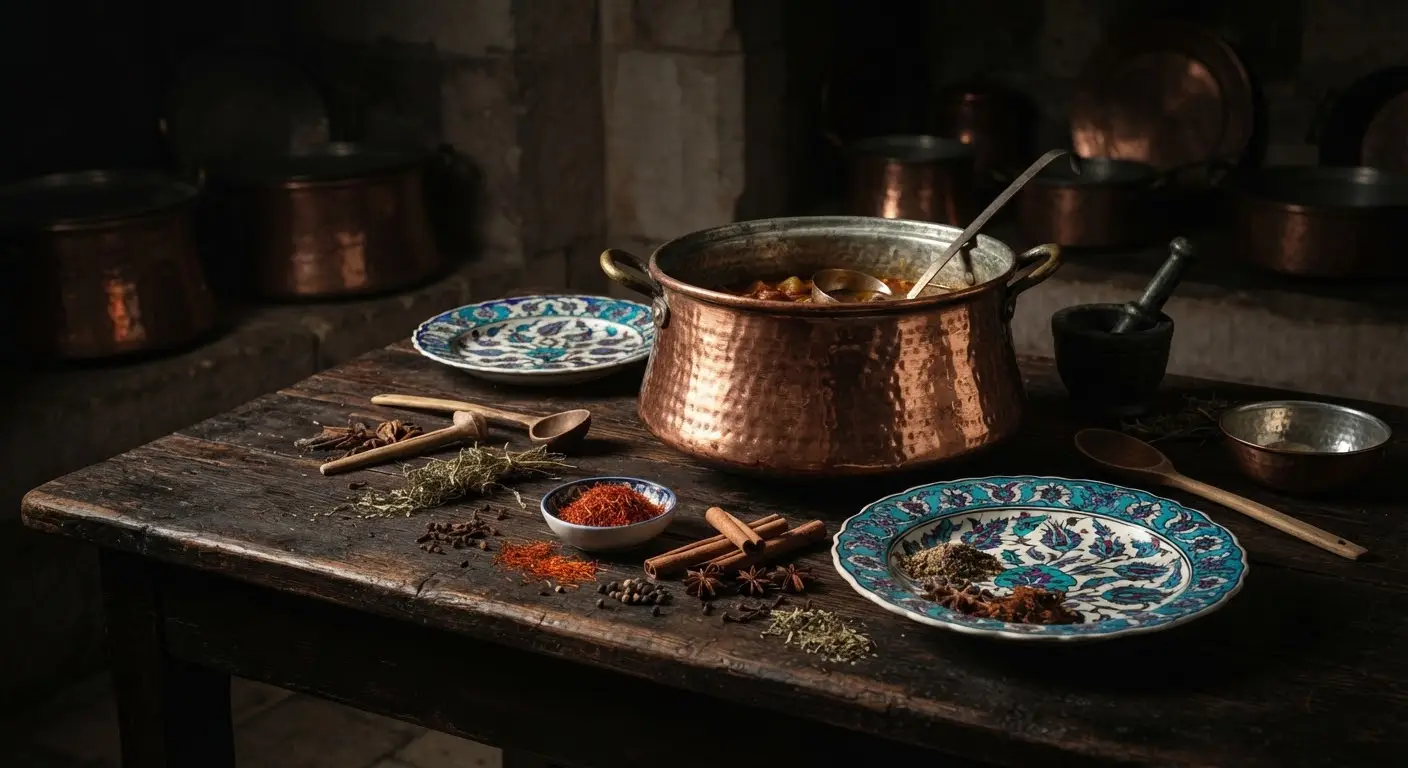
Ottoman sultans at Topkapı Palace followed a refined, hierarchical and carefully controlled cuisine. Meals were prepared in the specialized in “Kuşhane” the sultan’s private kitchen within the large Matbah-ı Âmire complex. Food was tasted by a chief taster named “Çeşnicibaşı” then often covered and sealed before being carried to the sultan who usually ate alone or with very few attendants.
Palace cuisine emphasized balance, seasonal ingredients, elegant presentation and frequent combinations of sweet and savory flavors. Tomatoes, potatoes, peppers and other New World foods were absent in the classical period. Lamb and mutton were the preferred red meats while poultry like chicken, quail, pigeon, duck, goose were highly valued. The rice pilafs were central and desserts and sherbets completed nearly every meal.
Sultans typically ate two main meals a day a lighter morning or mid-morning meal and a more substantial midday or afternoon meal though they could request food at other times. Rank determined the quality of bread, the fineness of ingredients and the variety of dishes.
Typical Structure of a Sultan’s Meal
- Light soup or starter
- Meat or poultry main dish often with fruit or nuts
- Pilaf
- Vegetable or pastry side
- Dessert especially helva or fruit-based sweets
- Sherbet (fruit or flower cordial) instead of plain water
Most Favorite and Characteristic Dishes
1. Mutancana: One of the most famous and frequently cited favorites, especially linked to Mehmed the Conqueror. This sweet-savory lamb stew is a hallmark of early palace cuisine. A rich, glossy stew that balances the savory depth of lamb with the sweetness of fruit and the nuttiness of almonds.
- Main protein: Lamb or mutton cut into pieces and slowly cooked until tender.
- Dried fruits: Dried apricots, plums or damson plums, figs and raisins or Razaki grapes. These provide natural sweetness and soft texture as they cook down.
- Nuts: Blanched almonds sometimes toasted for crunch and richness.
- Aromatics and seasoning: Shallots or onions, honey for glazing and extra sweetness and mild spices.
2. Pilafs: The daily centerpiece rather than a side dish which was elevated to an art form as well as a measurement of a cook’s mastership. Pilaf often accompanied or followed the meat course and was considered essential.
- Base: High-quality rice, washed and cooked so grains remain separate.
- Side Ingredients: Almonds, pistachios, currants or raisins, saffron for color and aroma, sometimes chickpeas.
- Fat and flavor: Butter or clarified butter occasionally meat broth.
- Variations: Plain buttery pilaf for everyday and saffron-almond-currant versions for more formal tables.
3. Mahmudiye: Tender chicken meal in a lightly sweet, aromatic sauce that mixes savory meat with fruit and spice.
- Main protein: Chicken pieces.
- Dried fruits: Dried apricots, raisins or Razaki grapes.
- Nuts: Almonds.
- Sweet-sour elements: Honey, cinnamon and a touch of lemon juice or sour notes.
4. Stuffed Melon or Kavun Dolması: It functioned as both a main and a visually impressive course. An inventive and surprising dish.
- Vessel: A small, fragrant melon hollowed out.
- Filling: Minced lamb or beef, rice, almonds, currants, fresh mint, and spices.
- Cooking: The stuffed melon is baked whole so the fruit’s sweetness infuses the savory filling.
5. Helva or especially Helva-i Hakani the Sultan’s Helva: Multiple helva varieties existed with almond, rose, musk, etc. It was a frequent dessert and also had ceremonial importance.
Prepared in the dedicated Helvahane.
- Base: Flour or semolina cooked slowly in butter.
- Sweeteners: Honey or sugar.
- Luxurious additions for the sultan’s version: Saffron, fine pistachios or other nuts and sometimes musk or rose water.
6. Other Notable Favorites and Staples
- Zerde: Sweet saffron rice pudding often served at celebrations and to troops.
- Various kebabs and stews: Lamb cooked simply or with subtle spices; milky kebab which lamb meet simmered in milk to be tenderized then grilled.
- Soups: Light options such as lentil, tarhana, yogurt-based or more elaborate broths to open the meal.
- Sherbets: Diluted or hot brewed fruit or flower syrups rose, tamarind/demirhindi, sour cherry, quince, violet served throughout.
- Later periods added dishes such as Hünkar Beğendi the smoky and mashed eggplant interior with lamb but the classical Topkapı style remained centered on the sweet-savory lamb and pilaf combinations above.
Key Characteristics of Sultanic Mealtime
- The sultan ate the finest white bread.
- Meals were moderate in portion despite the variety that excess was not the goal.
- Presentation on Chinese porcelain especially celadon or silver mattered.
- Security and purity of food were paramount.
- Individual preferences existed like Mehmed II the Conqueror is linked to Mutancana and also enjoyed seafood and eggs. Then, later sultans had their own simple favorites but the overall repertoire of fruit-enhanced meats, luxurious pilafs and refined helvas remained consistent across the classical centuries at Topkapı.
This cuisine reflected the empire’s resources, hierarchical order and sophisticated taste: abundant yet controlled, prosperous, luxurious yet balanced and always designed to display the sultan’s status through the quality and refinement of what reached his table.
From Page to Palace
Reading about the history is only the beginning. Book your visit today and walk the same corridors as the Sultans.