
Why the Ottoman Sultans Moved from Topkapı to Dolmabahçe Palace
In 1856 Abdülmecid I moved the court to the Bosphorus. Not a change of address: a Tanzimat-era statement about what kind of state the empire now meant to be.
In 1856, Sultan Abdülmecid I formally transferred the imperial residence and administrative center from Topkapı Palace to the newly completed Dolmabahçe Palace on the Bosphorus. This was not a casual change of address. It marked a profound symbolic and practical break with centuries of Ottoman tradition and reflected the deep transformations underway in the empire during the mid-nineteenth century.
Historical Context: The Tanzimat Era and the Pressure to Modernize
By the early 1800s, the Ottoman Empire was under severe strain. Military defeats, territorial losses, economic difficulties and the rising power of European states created an urgent sense that the empire needed to reform or risk further decline. The Tanzimat (Reorganization) period formally launched with the Gülhane Edict of 1839 under Abdülmecid, aimed to modernize the military, administration, legal system and society along European lines while preserving the empire’s integrity.
In this atmosphere, the physical seat of the sultan himself became a matter of image and politics. European monarchs lived in grand, unified, and relatively accessible palaces that served as stages for diplomacy and displays of power. Topkapı by contrast, still embodied the classical Ottoman model of seclusion, hierarchical courtyards and a complex of pavilions accumulated over centuries. To many observers and increasingly to the sultans themselves it looked medieval and outdated.
Why Topkapı No Longer Sufficed
Several practical and symbolic shortcomings made continued residence at Topkapı untenable for a reforming court:
- Lack of modern comfort and luxury: Topkapı lacked the heating, plumbing, spacious reception halls and contemporary amenities that European courts took for granted. Its layout of successive courtyards and restricted access felt incompatible with the more open diplomatic style the empire now needed.
- Architectural inflexibility: Completely renovating the sprawling, historic complex on the crowded Historical Peninsula would have been enormously difficult and destructive. Building an entirely new palace was judged more practical.
- Ceremonial and political mismatch: The strict protocols of seclusion that had defined Topkapı for centuries no longer aligned with the Tanzimat desire to project a modern, European-style monarchy capable of receiving ambassadors and conducting state business in a grand, visible manner.
- Symbolic orientation toward the West: Locating the new palace on the Bosphorus waterfront, closer to the European districts of Galata and Pera sent a clear message of openness to the West and participation in the contemporary world of great powers.
The Necessity of the Move
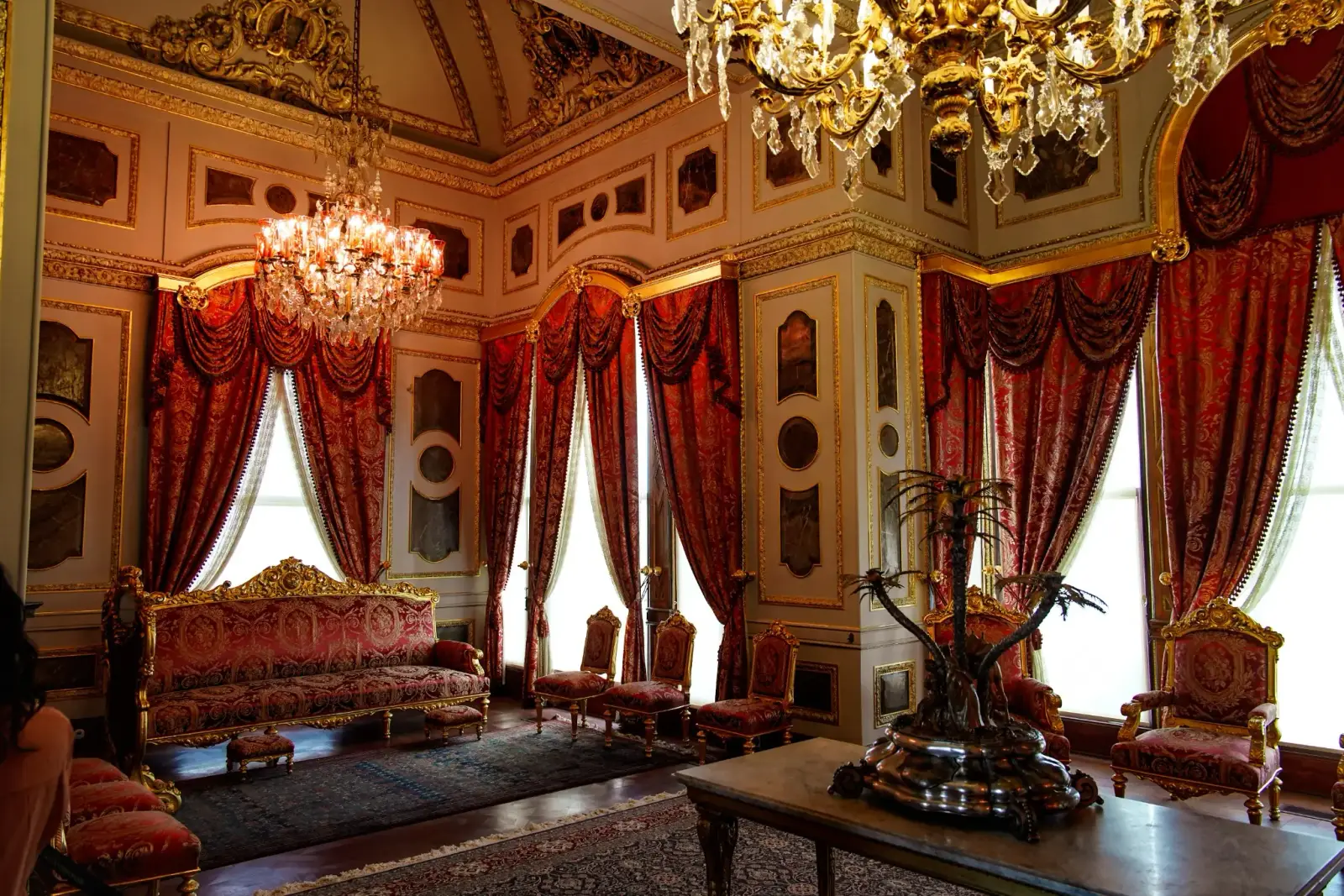
The move was driven by a perceived political necessity. Abdülmecid and his advisors believed that the empire needed to look modern and powerful in order to be treated as an equal by European states. A magnificent new palace in the latest eclectic European styles including Baroque, Rococo, and Neoclassical elements blended with Ottoman features was intended to demonstrate that the Ottoman state was still vigorous, reforming, and capable of matching Western standards of grandeur.
Dolmabahçe was therefore both a residence and a statement. Its vast scale, crystal staircases, gilded halls and waterfront presence were meant to impress foreign dignitaries and to embody the Tanzimat ideal of renewal. In this sense the palace was an architectural counterpart to the legal and administrative reforms of the era.
Costs and Consequences
The project was extraordinarily expensive that estimated place the cost at the equivalent of a huge portion of annual state revenue, financed in part through loans and monetary measures that contributed to the empire’s growing debt problems. Abdülmecid himself reportedly expressed some regret at the extravagance. Nevertheless, once completed in 1856, Dolmabahçe became the official imperial residence. Subsequent sultans continued to use it or nearby Yıldız Palace, while Topkapı was relegated mainly to ceremonial, treasury and museum-like functions.
The sultans left Topkapı because the old palace no longer matched the image, comfort, diplomatic needs or reformist ambitions of the nineteenth-century Ottoman state. The move to Dolmabahçe was a deliberate act of self-presentation which attempt to signal modernity, strength and alignment with Europe at a moment when the empire felt its survival depended on being seen as a contemporary great power. In doing so, it permanently altered both the urban geography of Istanbul and the visual language of Ottoman sovereignty.
From Page to Palace
Reading about the history is only the beginning. Book your visit today and walk the same corridors as the Sultans.