
The Imperial Treasury: Priceless Treasures of the Ottoman Empire
Four centuries of war booty, diplomatic gifts and workshop commissions kept in the Conqueror’s Pavilion as the Enderun Hazine — the dynasty’s own wealth, under the strictest control.
The Imperial Treasury is one of the richest collections of its kind in the world. It is housed in the Fatih (Conqueror’s) Pavilion in the Third Courtyard of Topkapı Palace that was originally a private reception rooms built under Mehmed II the Conqueror that later became the secure storehouse for the dynasty’s most valuable possessions.
For centuries, this was the Inner Treasury also known as “Enderun Hazine” the sultan’s personal and dynastic wealth, kept under the strictest control. It accumulated war booty, diplomatic gifts, items made by the palace workshops and objects inherited or purchased over more than 400 years. After the palace became a museum in 1924, selected masterpieces were placed on public display. The rooms are relatively small and often crowded; the most famous objects are shown under focused lighting in secure cases.
Below are the principal treasures and valuable objects typically exhibited, described one by one.
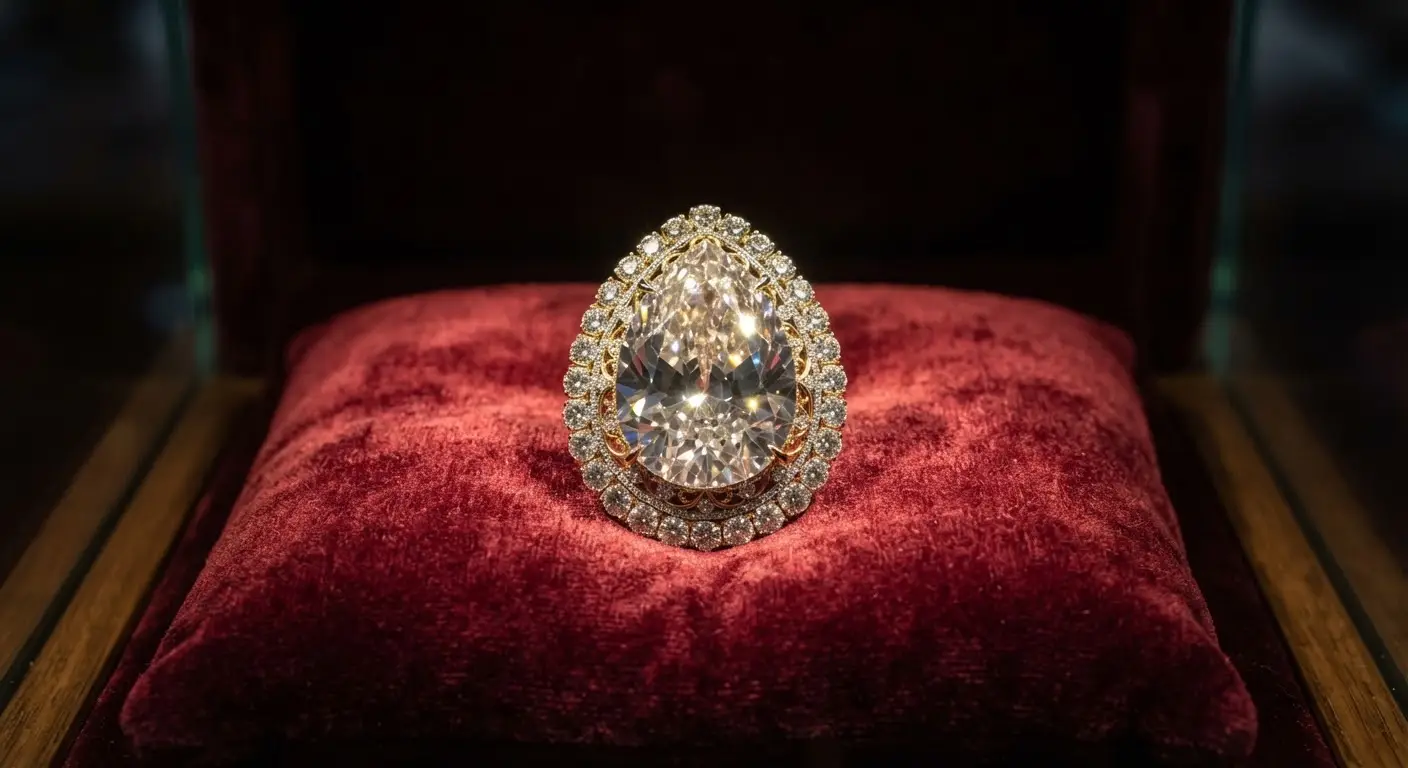
The Spoonmaker’s Diamond
An 86-carat pear-shaped diamond, one of the largest diamonds on public display anywhere. It is set in silver and surrounded by a double row of 49 smaller diamonds. Its exact origin is unknown and surrounded by legend regarding with a popular story claims a poor man found it and traded it for three wooden spoons. It was already in the Ottoman treasury by the 17th century and received its present setting in the early 19th century. It is the undisputed star of the collection.
The Topkapı Dagger
A ceremonial curved dagger made around 1746–1747. The hilt is set with three very large emeralds; a fourth emerald on the pommel conceals a small working watch. The scabbard is richly decorated with diamonds and enamel. Commissioned by Sultan Mahmud I as a diplomatic gift for Nadir Shah of Persia, it was never delivered because the Shah was assassinated. It returned to the Ottoman treasury and later became world-famous through the 1964 film “Topkapi”.
The Golden Festival (Bayram / Arife) Throne
A solid-gold ceremonial throne used by the sultans during accession ceremonies and major religious holidays. It is one of the heaviest and most magnificent thrones in the collection and embodies the splendor of the dynasty on state occasions.
The Throne of Nadir Shah (Persian / Indian Throne)
An elaborately decorated throne of Iranian-Indian origin covered in gold, pearls, emeralds, rubies and other precious stones. It was presented to Sultan Mahmud I by Nadir Shah of Persia as part of the mid-18th-century diplomatic gift exchange the same exchange that produced the Topkapı Dagger.
The Throne of Ahmed I
A magnificent throne inlaid with mother-of-pearl and tortoiseshell designed by Sedefkâr Mehmed Ağa who was the architect of the Blue Mosque. It is one of the finest examples of Ottoman inlay work.
Emerald Aigrettes (Sorguçlar)
Jeweled plumes and turban ornaments worn by the sultans. These aigrettes set with large emeralds, diamonds, rubies, and pearls were important symbols of sovereignty and were worn on ceremonial occasions.
Golden Cradle
A pure-gold cradle made for newborn Ottoman princes also known as “şehzade”. It symbolizes the continuity of the dynasty and the extreme luxury surrounding imperial births.
Ceremonial and Historic Swords
Sword of Mehmed the Conqueror
Ceremonial sword of Süleyman the Magnificent often with a distinctive hilt
Other jeweled or inscribed swords belonging to various sultans that those weapons combine military symbolism with outstanding craftsmanship.
Gold and Jewel-Encrusted Objects
A wide range of luxury items produced by the palace workshops or received as gifts, including:
Gold flasks and vessels set with emeralds, rubies, and pearls
Gold pen-boxes and writing sets
Jeweled candlesticks and incense burners
Enamelled and diamond-set pendants and ornaments that some of those pendants are bearing a sultan’s monogram or “Tuğra”
Other Notable Treasures
Ceremonial armor and helmets
Precious clocks and scientific instruments (European and Ottoman)
Gold and silver tableware and sweetmeat sets
Rare manuscripts and illuminated pages occasionally shown in the treasury context
Various war trophies and diplomatic gifts from Persia, India, and Europe
The collection within the Imperial Treasury as a whole demonstrates the immense wealth of the Ottoman Empire, the skill of its court artisans and the role of luxury objects in diplomacy and ceremonial display. While only a selection of the thousands of items once held in the treasury is on view at any time, the pieces listed above form the core of what visitors experience today. The Spoonmaker’s Diamond and the Topkapı Dagger remain the two objects that almost every visitor specifically seeks out.
From Page to Palace
Reading about the history is only the beginning. Book your visit today and walk the same corridors as the Sultans.