
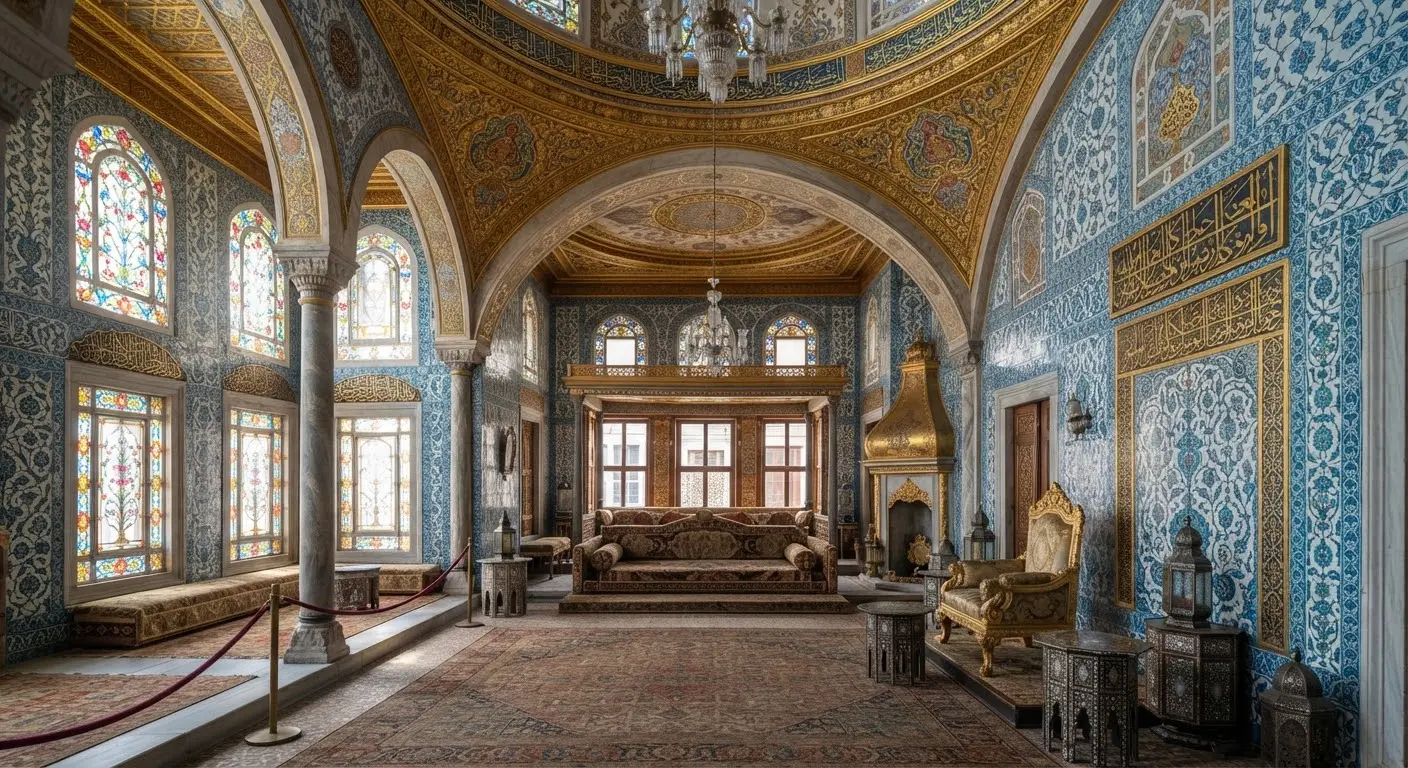
The Most Powerful Women Who Lived in Topkapi Palace
Kösem, Hürrem, Nurbanu, Safiye and Turhan — five women whose hold over the court, the treasury and the succession outlasted most of the sultans they served.
Here are the most significant figures ranked by the depth and duration of their power with a focus on their historical importance:
1. Kösem Sultan (c. 1589–1651) — The Most Powerful Overall
Often considered the single most powerful woman in Ottoman history.
- Of Greek origin possibly from Tinos, she entered the harem as a slave and became the favorite Haseki and later legal wife of Sultan Ahmed I.
- She was mother of two sultans Murad IV and Ibrahim and grandmother of Mehmed IV.
- She served as formal regent (Naibe-i Saltanat) three times during Murad IV’s minority (1623–1632), during parts of Ibrahim’s unstable reign and again for the young Mehmed IV (1648–1651).
- She attended Divan meetings from behind a screen, appointed and dismissed officials, managed state finances, influenced foreign policy and built a vast network of alliances through her daughters’ marriages to high officials.
- She was assassinated in 1651 in a power struggle with her daughter-in-law Turhan Sultan.
Her historical importance was held more sustained, institutionalized power than any other Ottoman woman. She effectively ruled the empire during periods of weak or underage sultans, helped stabilize the state amid crises and marked the peak of female political authority. Her career demonstrated how a woman of slave origin could reach the apex of the imperial system through motherhood, political skill and household networks.
2. Hürrem Sultan (Roxelana, c. 1502/05–1558) — The Trailblazer
The woman who began the Sultanate of Women from Ukrainian origin, she rose from concubine to the legal wife of Süleyman the Magnificent, the first such marriage by an Ottoman sultan in centuries.
- She bore multiple children including the future Selim II and remained in Istanbul instead of being sent to the provinces with a son, breaking long-standing tradition.
- She moved the imperial harem into Topkapı Palace itself by making it a permanent center of family and political life.
- She influenced appointments including the fall of Grand Vizier Pargalı Ibrahim Pasha, corresponded with foreign rulers and engaged in extensive architectural patronage such as mosques, hospitals, schools, baths in Istanbul, Edirne, Jerusalem, Mecca, and Medina.
Hürrem revolutionized the role of the imperial consort. By becoming a legal wife, remaining at the center of power and participating in state affairs. She created the model that later “Haseki” and “Valide” sultans followed. She transformed the harem from a more peripheral institution into a key political arena.
3. Nurbanu Sultan (c. 1525–1583): She was one of the favorite and later wife of Selim II; mother of Murad III.
- As Valide Sultan she effectively directed much of state policy in the 1570s, especially during Murad’s early reign.
- Venetian reports credit her with major influence over appointments and diplomacy that she was linked to pro-Venetian policies.
- She was a major architectural patron.
She consolidated and formalized the power of the Valide Sultan making the queen mother’s role more institutionalized.
4. Safiye Sultan (c. 1550–1619): She was favorite of Murad III and Valide to Mehmed III.
- She exercised strong control over appointments and finances; contemporary European diplomats described her as the de facto ruler at times.
- She corresponded with Queen Elizabeth I of England.
- She extended harem influence into international diplomacy and maintained female authority into the early 17th century.
5. Turhan Sultan (c. 1627–1683)
- Mother of Mehmed IV.
- She defeated Kösem in the 1651 power struggle, became Valide and regent and later co-ruled with her son.
- She was a significant architectural patron notably the Yeni Mosque complex in Istanbul and supported military fortifications.
She was the last major figure of the Sultanate of Women. After her, the political power of imperial women declined sharply as the Köprülü grand viziers reasserted male bureaucratic control.
Broader Historical Significance
These women lived and exercised power primarily from within Topkapı’s harem. Their authority rested on:
- Motherhood of the reigning or future sultan
- Control of the harem household and its networks of eunuchs, clients and married daughters
- The relative weakness of youth for certain sultans in the late 16th and 17th centuries
They were not rulers in the formal European sense but they shaped succession, appointments, diplomacy, and patronage on a scale unmatched by Ottoman women before or after. Their era remains one of the most distinctive features of Ottoman political history.
Kösem Sultan stands at the summit in terms of duration, formal authority and direct governance. While Hürrem Sultan remains the foundational figure who made that later power possible.
From Page to Palace
Reading about the history is only the beginning. Book your visit today and walk the same corridors as the Sultans.