
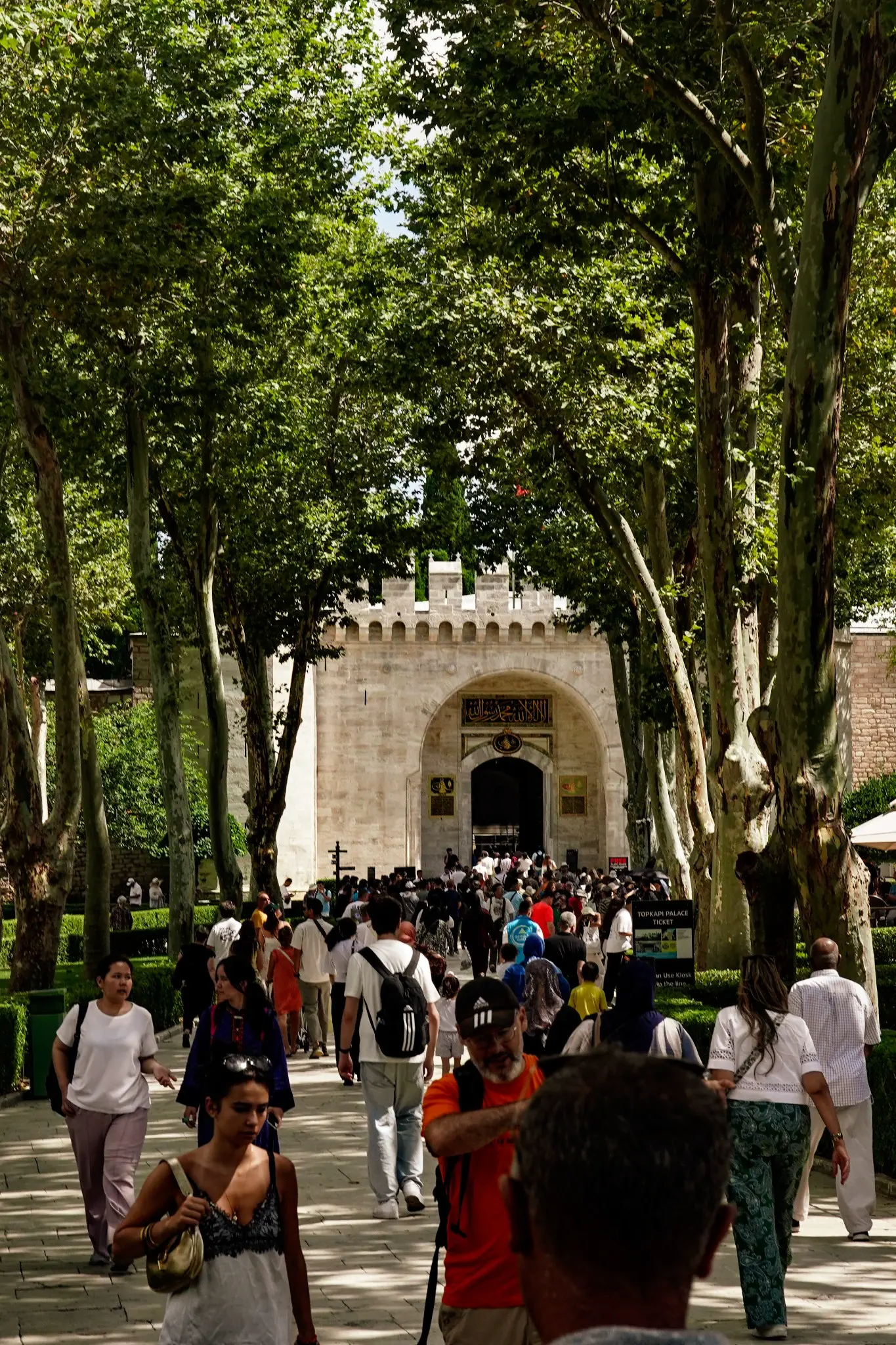
From Palace to Museum: How Topkapi Palace Opened to the Public
The court left in 1856, the sultanate ended in 1922, and in 1924 the palace passed to the nation and opened its gates as one of the young Republic’s first museums.
Topkapı Palace ceased to be the primary residence of the Ottoman sultans in 1856 by Abdülmecid I moved the court to the newly built Dolmabahçe Palace. For the next several decades it retained important ceremonial, treasury and religious functions especially the guardianship of the Sacred Relics. But it was no longer the living center of imperial life. Parts of the complex gradually fell into partial disuse although the treasury and certain sections continued to be maintained.
The decisive change came with the end of the Ottoman monarchy and the founding of the Republic of Turkey. After the abolition of the sultanate in 1922 and the caliphate on 3 March 1924, the former imperial properties passed to the nation. Article 9 of the law abolishing the caliphate stated that the furnishings, artworks and movable property of the abolished imperial residences belonged to the Turkish people.
On 3 April 1924, by decision of the Council of Ministers and on the order of Mustafa Kemal Atatürk, Topkapı Palace was officially converted into a museum. It was placed under the administration of the Istanbul Directorate of Antiquities Museums also known as Âsâr-ı Atika Müzeleri. This made Topkapı the first museum established by the new Republic.
After basic administrative arrangements and minor repairs, the palace was opened to visitors on 9 October 1924. The first sections made accessible included:
- The Imperial Council (Kubbealtı)
- The Audience Chamber (Arz Odası)
- The Mecidiye Kiosk
- The Chief Physician’s Room
- The Mustafa Pasha Kiosk
- The Baghdad Kiosk
In the following years additional areas were gradually prepared and opened. The Imperial Treasury was reorganized and opened in 1927 after objects that had been sent to Anatolia for safekeeping during the First World War were returned. Parts of the Harem began to be opened to the public around 1930. Over subsequent decades more sections were restored and made visitable.
In its first years the museum was attached to the Istanbul Archaeological Museums. In 1928, it became an independent directorate. One of the most important early figures was Tahsin Öz who served as museum director and oversaw significant restoration and organization work helping to transform the former palace into a properly functioning museum institution.
The conversion of Topkapı Palace into a museum was a deliberate act of the early Republic. It preserved one of the greatest architectural and cultural complexes of the Ottoman Empire while making it accessible to the public as a national heritage site. The decision reflected the new state’s desire both to break with the monarchical past and to safeguard its historical treasures for the nation and for future generations.
Today Topkapı Palace Museum remains one of the most visited museums in Turkey and forms part of the UNESCO World Heritage Site “Historic Areas of Istanbul” inscribed in 1985. It continues to be administered under the Presidency of National Palaces.
From Page to Palace
Reading about the history is only the beginning. Book your visit today and walk the same corridors as the Sultans.